


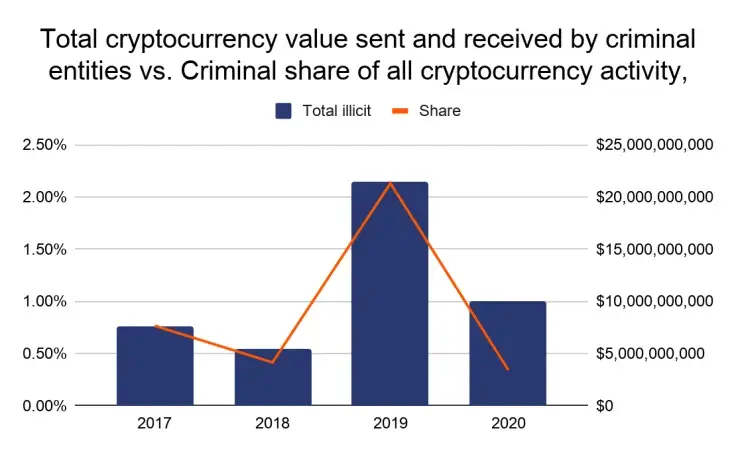
As Bitcoin rallied over 300 percent in 2020, cryptocurrency-related crime fell over 53 percent, according to a new Chainalysis report.
Only a minuscule 0.34 percent (or $10 billion) of the total cryptocurrency transaction volume was tainted with illicit activities. In 2019, criminals were significantly more prolific with a 2.1 percent share.
PlusToken is still haunting the industry
Despite Elon Musk and Bill Gates tweeting a Bitcoin giveaway scam and Ripple taking YouTube to court over fraudulent streams last year, there was actually a gargantuan 71 percent decline in the total amount of funds received by scammers.
However, Chainalysis expects the 2020 numbers to go up since not all addresses related to the PlusToken Ponzi scheme have been identified:
Some are related to previously unreported ransomware attacks. For that reason, we should expect 2020's reported criminal activity numbers to rise over time as well.
Following their arrest in July, PlusToken's 27 operators were sent to jail in early December after stealing over $2.25 billion from uninitiated investors.

Ransomware attacks are growing in scope
Ransomware, on the other hand, was front and center last year. While its total share of crypto crime is still only 7.1 percent, payments to extortionists grew by an alarming 311 percent, dwarfing darknet markets.
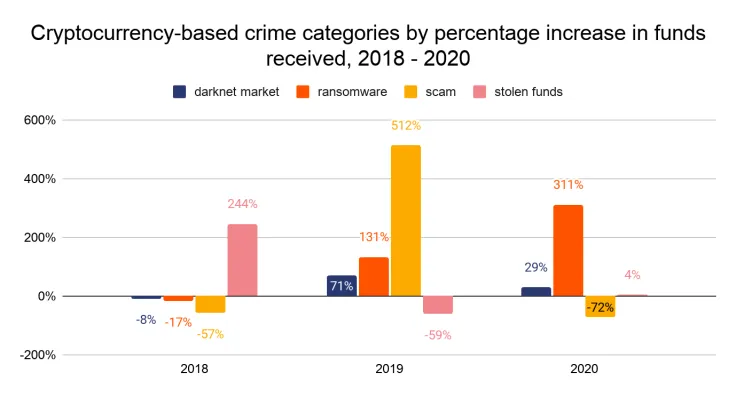
In 2020, ransomware ringleaders managed to successfully attack major corporations, U.S. universities, hospitals and even local governments to cajole them into sending hefty amounts of Bitcoin.
Chainalysis also adds that the actual figure could be significantly higher due to underreporting:
Keep in mind also that ransomware estimates should always be considered lower bounds due to underreporting, and that the 2020 figure for total ransomware payments will likely grow as we identify more addresses associated with different strains, particularly in the later months of the year.
 Dan Burgin
 U.Today Editorial Team
