

Disclaimer: The opinions expressed by our writers are their own and do not represent the views of U.Today. The financial and market information provided on U.Today is intended for informational purposes only. U.Today is not liable for any financial losses incurred while trading cryptocurrencies. Conduct your own research by contacting financial experts before making any investment decisions. We believe that all content is accurate as of the date of publication, but certain offers mentioned may no longer be available.

Exchange balances for Bitcoin have plummeted to new multiyear lows, falling to about 2.19 million BTC, a level not seen in a very long time. On paper, that sounds like the perfect setup for a classic supply shock: fewer coins available for sale, rising scarcity and the potential for an outsized upside reaction once demand reignites.
Bitcoin's price outlook
The chart of exchange balances shows an unbroken, steady decline over the past year. This is not just a short-term blip — it is a structural trend. Simultaneously, Bitcoin has been steadily declining from the $110,000-$120,000 range, failing to maintain any significant support as it returns to the high-$80,000s.
A bullish narrative is typically supported by a declining supply, but price action indicates that demand is not strong enough to take advantage of it. If anything, the market has been absorbing reduced sell-side pressure with surprisingly weak buying interest.
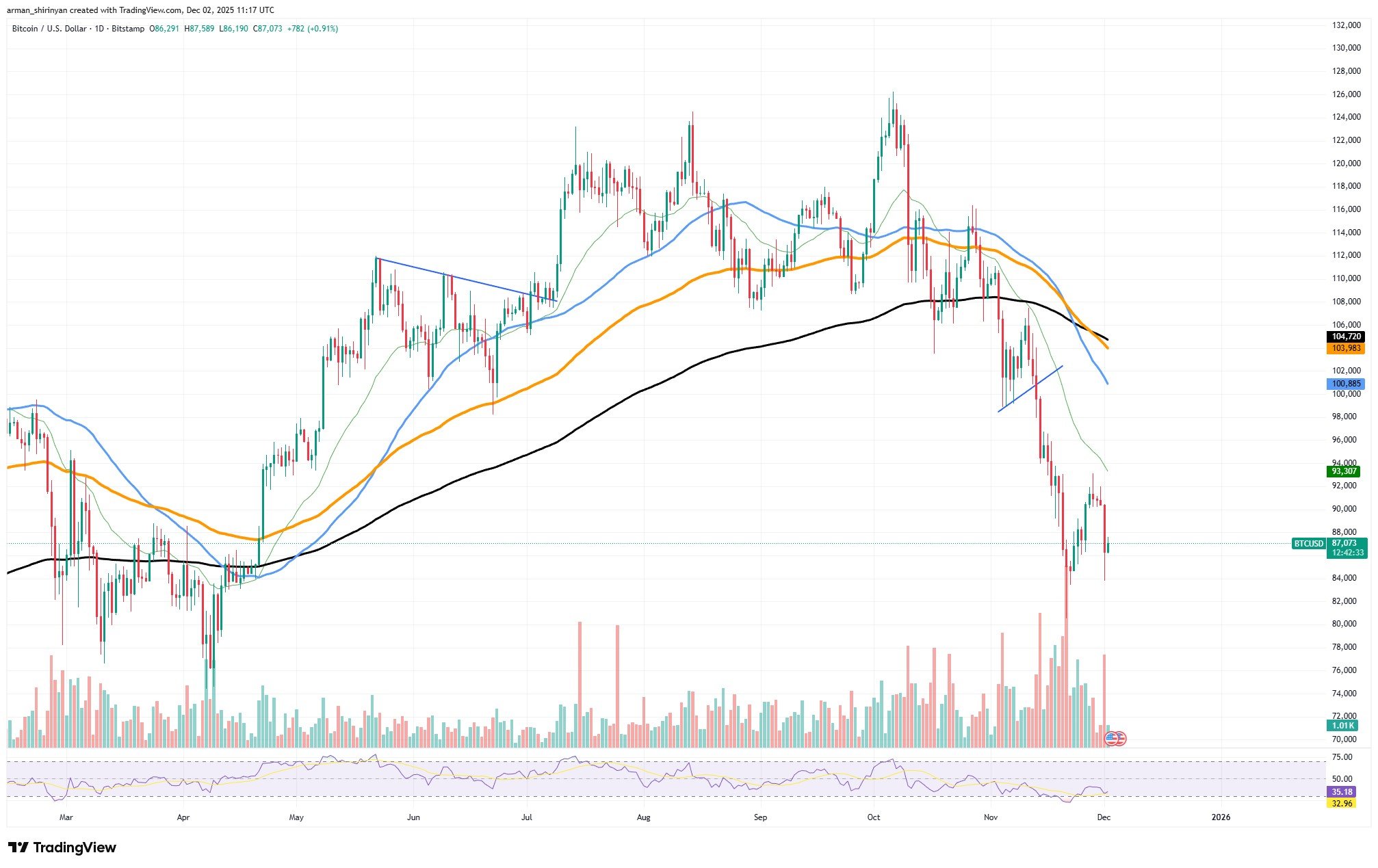
Looking at the BTC/USD chart in greater detail, we can see that Bitcoin is still trapped below the 50-, 100- and 200-day EMAs, a complete bearish stack. The breakdown from the rising wedge in November triggered a clean trend reversal, and every bounce since has been shallow, low-volume and unable to reclaim resistance. The RSI recovering from oversold territory is normal after a big flush, but it does not signal strength by itself.
Exchange reserves are thin
What implications does this have for the supply shock argument? There is potential. Thin exchange reserves would amplify the move if demand suddenly increased due to ETF flows, macro easing or the return of liquidity. But the current market environment is the exact opposite: declining spot demand, weakened momentum, miners under pressure and a broadly risk-off backdrop. A supply shock only becomes significant when demand is excessive. Right now, it is not even mildly impressive.

In short, Bitcoin’s low exchange reserves are a bullish long-term structural signal — but they are not enough to move the market on their own. A true supply shock is more wishful thinking than a plausible scenario until Bitcoin can regain important resistances and buyers demonstrate genuine conviction.
 Dan Burgin
 U.Today Editorial Team
