
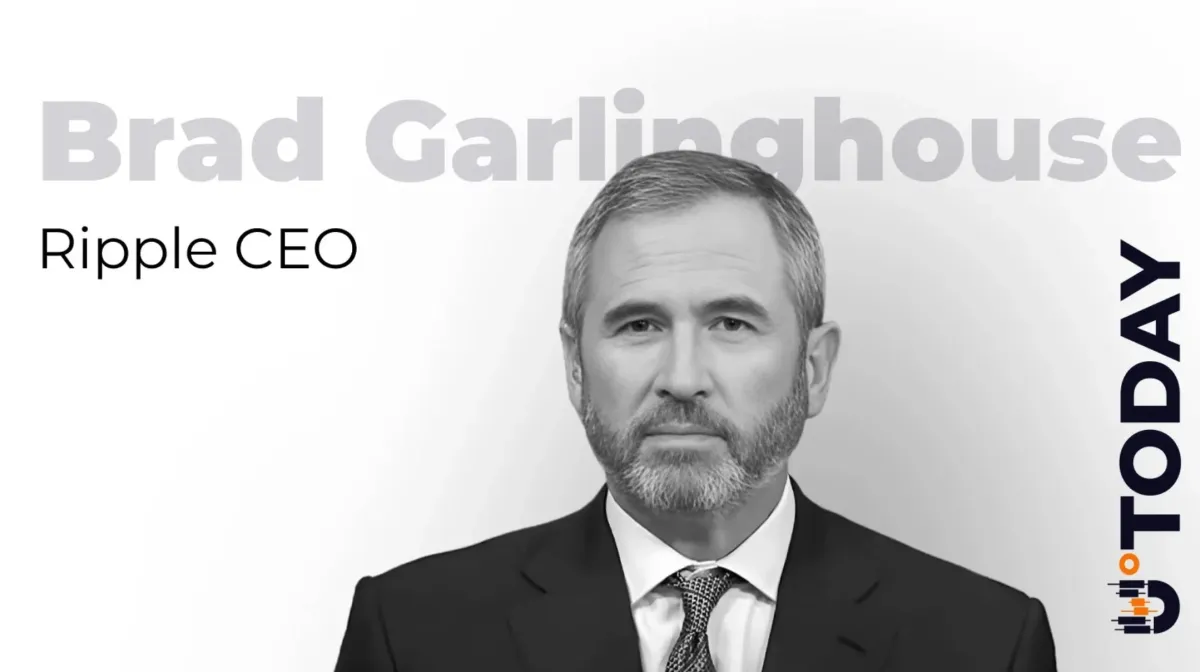

Ripple CEO Brad Garlinghouse is still confident that the United States can potentially emerge as the global center of the cryptocurrency industry.
According to the influential Ripple executive, the goal remains within reach despite ongoing regulatory and legislative uncertainty.
"Proud to be in the room. Making America the crypto capital of the world is within reach - let’s finish the job," Garlinghouse wrote on X.
His comments came after CFTC Chairman Michael Selig thanked President Donald Trump for hosting leading figures from the U.S. innovation sector at the White House. Selig said the administration was working to ensure that "the new frontier of finance" would be built in the United States.

The White House event was held on Aug. 19. It brought together senior administration officials as well as executives from across the technology and financial industries. As reported by U.Today, Garlinghouse attended the Aug. 19 White House gathering alongside Coinbase CEO Brian Armstrong, Robinhood CEO Vlad Tenev, Kraken co-CEO Arjun Sethi, Nasdaq CEO Adena Friedman, ICE Chairman and CEO Jeffrey Sprecher, Gemini co-founders Cameron and Tyler Winklevoss, Chainlink co-founder Sergey Nazarov and other industry leaders. The meeting brought crypto executives together with SEC Chairman Paul Atkins and CFTC Chairman Michael Selig.
The White House used the meeting to make it absolutely clear that the administration intends to keep the United States at the forefront of cryptocurrency and financial technology.
According to remarks from the president, the gathering was intended to bring together prominent figures from finance, crypto and technology ahead of the first meeting of the CFTC’s Innovation Advisory Committee. The White House has separately made becoming the "crypto capital of the world" an explicit policy objective.
More uncertainty
Meanwhile, the CLARITY Act, the major crypto bill that was the main topic of the discussion during the recent White House meeting, is facing a rather perilous moment.
As reported by U.Today, the Senate is expected to hold an initial vote on Sept. 15, but the House will only be in session for four days afterward. This leaves little time to consider and pass the Senate’s version.
Crypto analysts warn the bill could therefore be pushed into the post-midterm "lame duck" period.
 Dan Burgin
 U.Today Editorial Team
