


Hardware wallets have become the gold standard for protecting digital assets, but they all share one persistent weakness: recovering access if the wallet is lost or damaged.
For most users, the weakest link isn't the hardware wallet itself but the seed phrase, which is often written on paper, stored in a drawer, or saved in an insecure digital format.
Instead of treating recovery as something that should remain hidden in a safe, UKey is reimagining it as something users can wear every day.
Its newest product, the UKey Seed Ring, combines passive NFC technology with a minimalist ceramic ring to create a physical recovery device that is always within reach.
Rather than replacing a hardware wallet, the Seed Ring is designed to complement it by making backup and recovery both more convenient and potentially more resilient.
What is the UKey Seed Ring?
The UKey Seed Ring is a battery-free NFC recovery ring designed for backing up and restoring cryptocurrency seed phrases. Unlike a traditional hardware wallet, it cannot generate wallets, store private keys for signing transactions, or execute transfers on its own. Its role is much more focused: securely assisting with seed phrase recovery.
The ring works alongside the UKey Wallet ecosystem and compatible UKey hardware devices. During setup, users bind the ring through the UKey application. If wallet recovery is ever required, the ring is placed near an NFC-enabled device to assist with the restoration process.
This clear separation between signing and recovery is central to UKey's broader security philosophy.
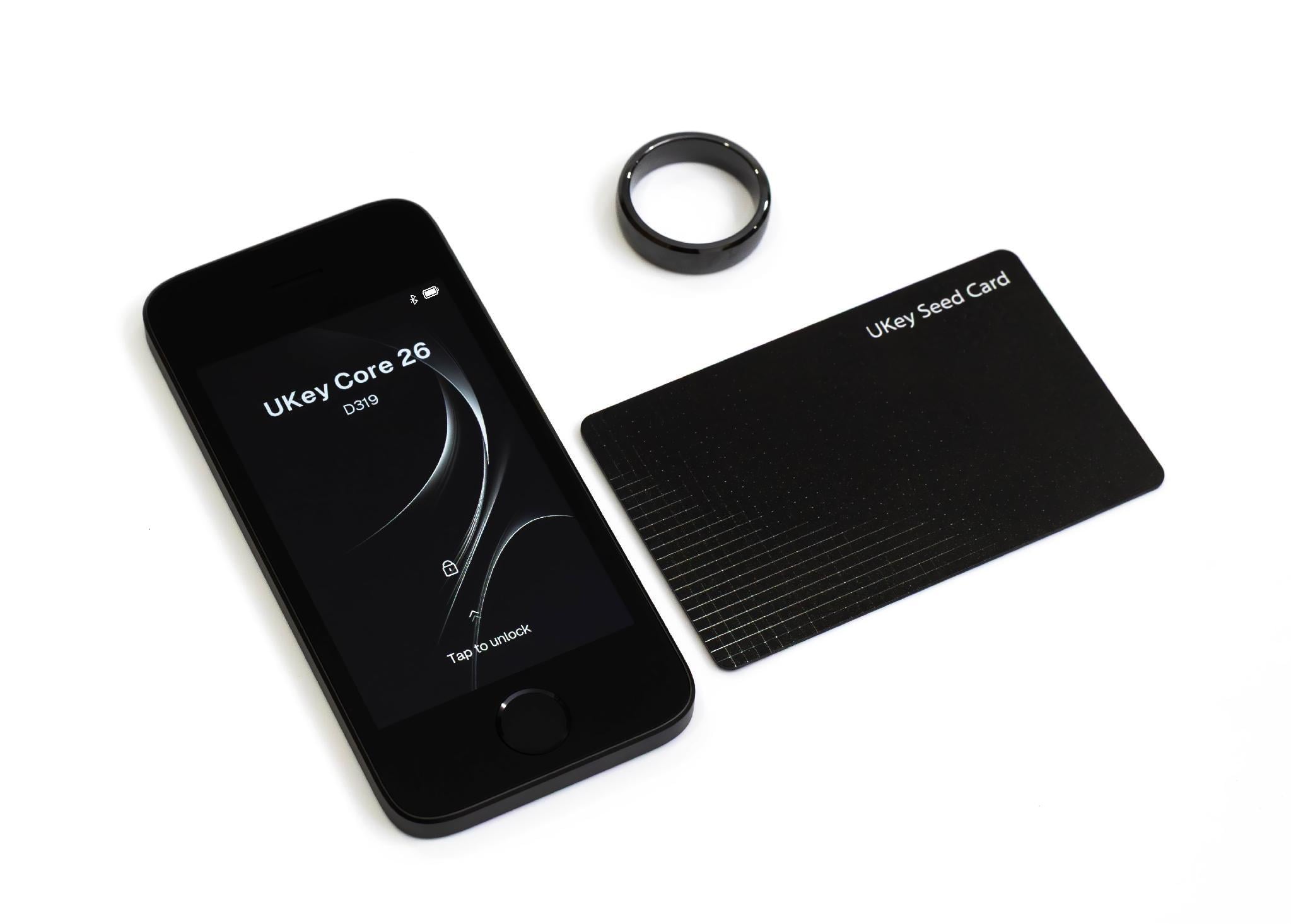
The company argues that many crypto losses occur not because signing devices are compromised, but because seed phrases are misplaced, destroyed, photographed, or otherwise exposed. The Seed Ring attempts to reduce those risks by replacing paper-based backups with a wearable recovery medium.
This makes the product feel less like a conventional hardware accessory and more like a piece of everyday jewelry with a specialized security function.
The biggest differentiator is obvious from the moment you see it. Unlike USB hardware wallets or metal backup plates that spend most of their lives inside safes, the Seed Ring is designed to stay with its owner throughout the day.
Its ceramic construction offers several practical advantages. The material is scratch-resistant, lightweight and does not interfere with NFC communication. Visually, it resembles an ordinary ring rather than a security device, making it relatively discreet compared with traditional crypto hardware.
The concept reflects UKey's broader vision of bringing hardware signing and recovery into everyday life instead of treating self-custody as something that only happens during occasional wallet maintenance.
Passive NFC for simplicity
One of the more interesting technical choices is the use of passive NFC. The Seed Ring contains no battery and requires no charging. Instead, it is briefly powered by the electromagnetic field generated by an NFC-enabled device whenever it is placed nearby. Once removed, it immediately powers down again.
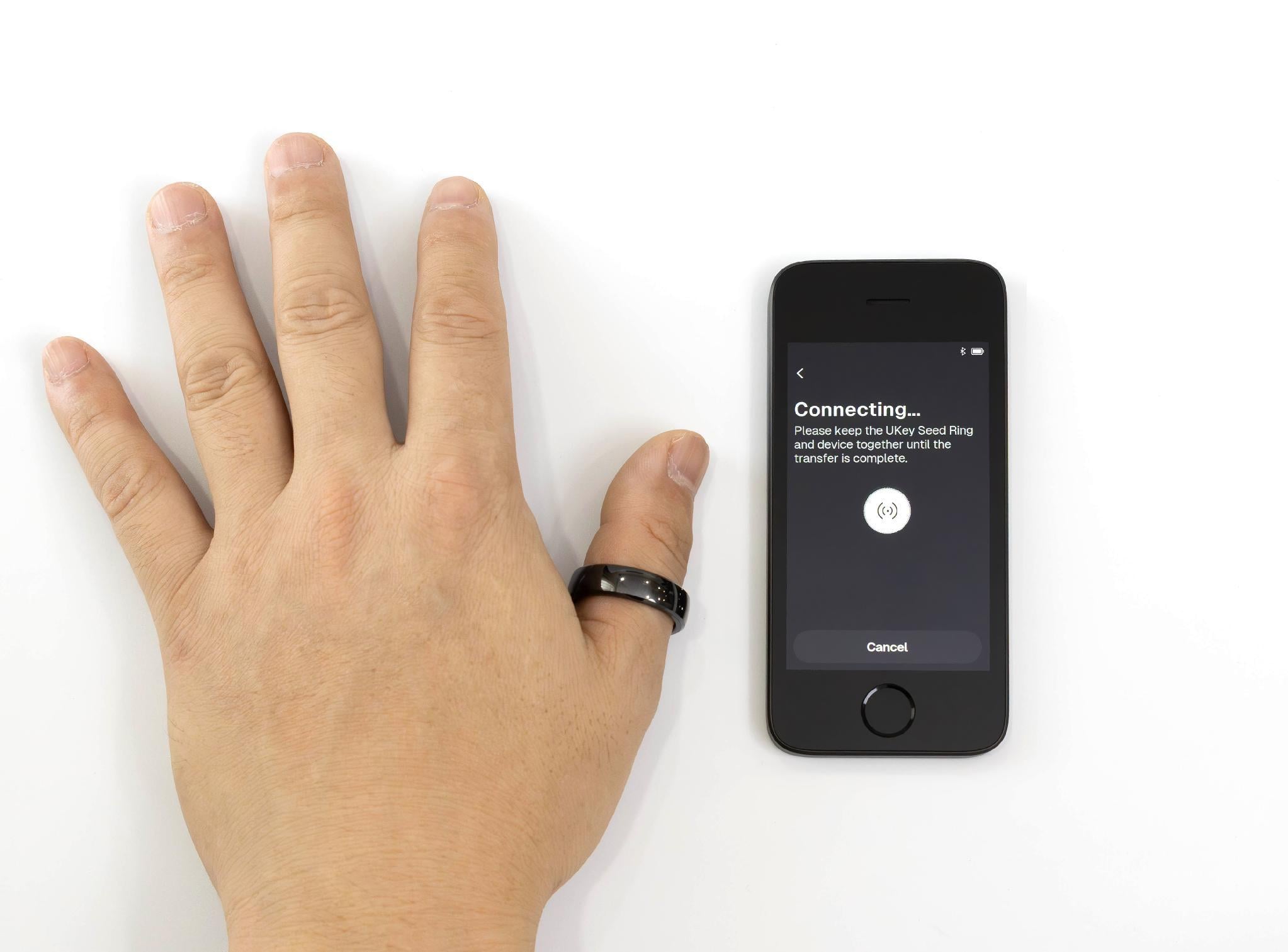
This offers several practical benefits:
| Feature | Benefit |
|---|---|
| Battery-free operation | No charging or battery degradation over time |
| Passive NFC | Activated only when held close to a compatible device |
| No continuous operation | Reduces digital exposure |
| No remote connectivity | Cannot be accessed over Bluetooth or Wi-Fi |
| Compact wearable form | Recovery device is always close at hand |
Because the ring only operates within a very short NFC range, it also avoids many of the connectivity concerns associated with always-on wearable devices. Perhaps the most notable design philosophy is what the Seed Ring deliberately does not do:
- It cannot initiate transactions
- It cannot sign transactions
- It cannot function as an independent wallet
Instead, it focuses solely on backup and recovery. According to UKey, the ring stores recovery-related index information, sequence structures and validation data rather than a complete plaintext seed phrase. This architecture is intended to minimize the consequences should the physical device be lost.
Restricting functionality in this way reduces the potential attack surface while keeping responsibilities clearly separated between recovery hardware and signing hardware.
Larger ecosystem
The Seed Ring is not intended to operate as a standalone product. Instead, it forms part of UKey's broader self-custody ecosystem, which includes hardware wallets, the UKey Wallet software, the Seed Card, and Seed Ti backup products. Together, these products separate everyday wallet management from sensitive signing and recovery operations.
Users prepare transactions within the software wallet, confirm sensitive actions on dedicated hardware devices and maintain offline recovery options through physical backup products such as the Seed Ring.
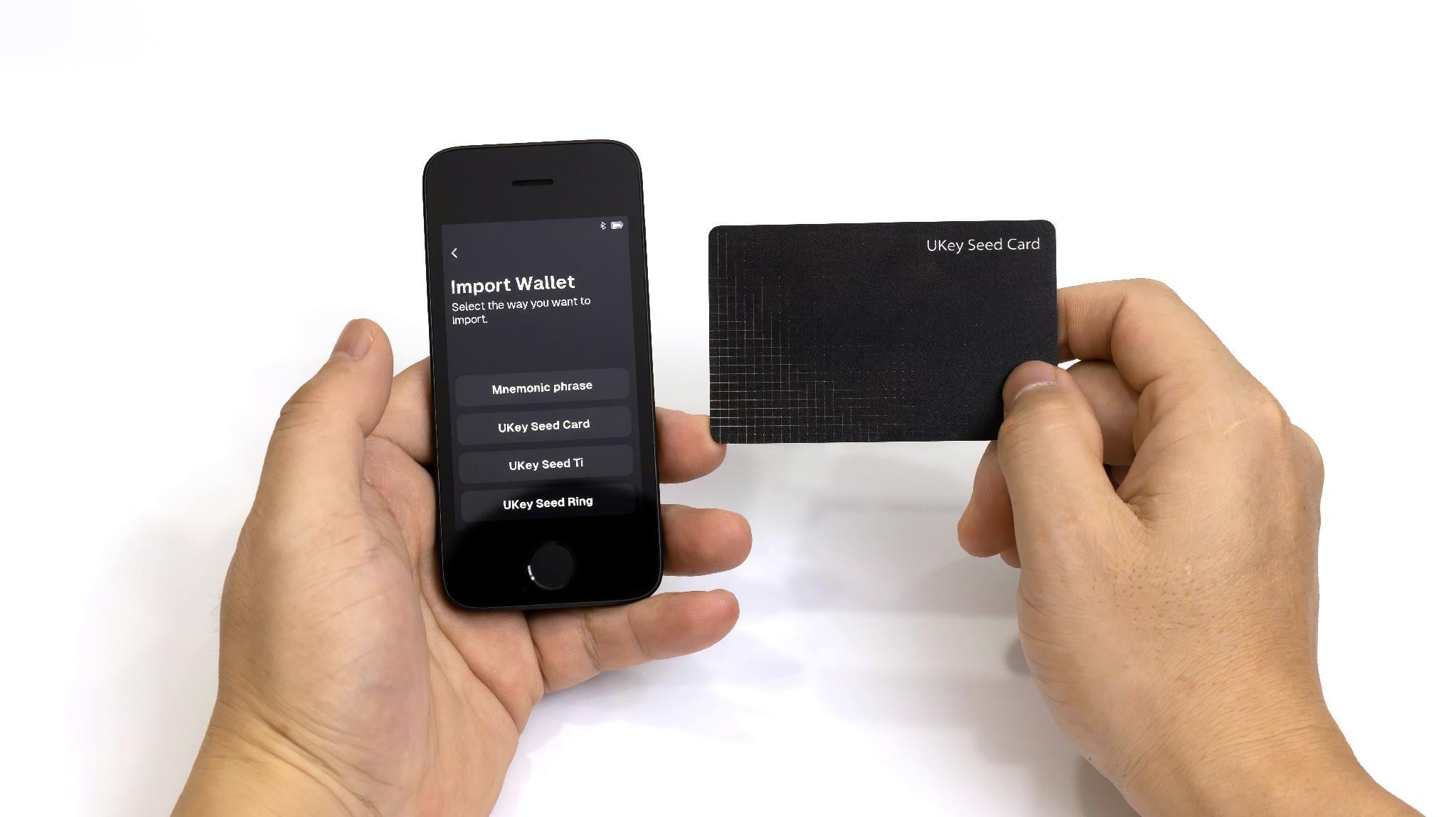
This layered approach follows established self-custody principles while introducing more flexibility in how recovery information is stored.
For many crypto users, convenience often conflicts with security. Paper backups are inexpensive but vulnerable to loss, fire, water damage or accidental disposal. Metal seed storage products improve durability but typically remain hidden away, making them less accessible when needed. The Seed Ring attempts to bridge those two approaches.
Because it is designed to be worn daily, users may be less likely to forget where their recovery device is stored. At the same time, its appearance resembles ordinary jewelry rather than specialized crypto hardware, offering an additional degree of discretion.
Pros and considerations
The Seed Ring's greatest strength is originality. Rather than competing directly with existing hardware wallets, it focuses on one of the least glamorous yet most important aspects of self-custody: recovery.
Other advantages include its battery-free design, passive NFC operation, durable ceramic construction and seamless integration with the wider UKey ecosystem. Users looking for a portable recovery option may also appreciate the fact that the device blends naturally into everyday wear instead of resembling a piece of specialized hardware.
There are, however, some practical considerations. The Seed Ring is not a replacement for a hardware wallet, and users expecting a wearable device capable of signing transactions may misunderstand its purpose.
Its functionality also depends on compatibility with the UKey ecosystem, meaning its usefulness is currently tied to the company's software and hardware products.
Verdict
The UKey Seed Ring introduces one of the more original ideas to emerge in crypto self-custody in recent years. Rather than trying to reinvent hardware wallets themselves, it focuses on improving one of the ecosystem's most persistent challenges: secure seed phrase backup and recovery.
Its wearable design, battery-free NFC operation and intentionally limited functionality create a product that prioritizes simplicity over feature complexity. While it will not replace a traditional hardware wallet, it complements one by addressing a different stage of the self-custody process.
For users who value self-custody but want a more practical alternative to paper or metal seed backups, it offers a fresh take on an often-overlooked aspect of digital asset security.
 Dan Burgin
 U.Today Editorial Team
