
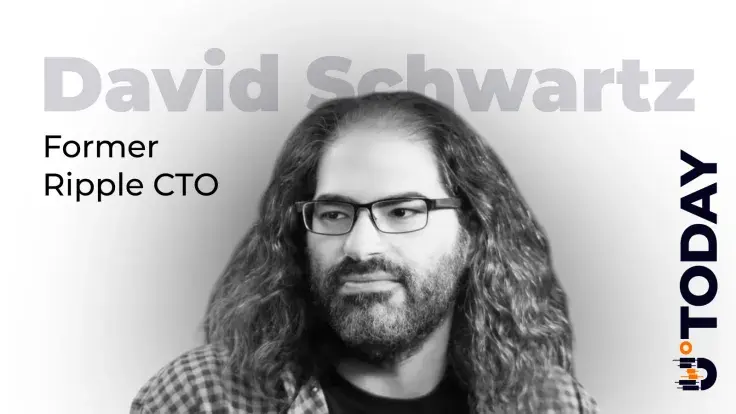
An online discussion involving members of the XRP community prompted a public response from Ripple’s Chief Technology Officer Emeritus David Schwartz, who addressed claims circulating on X that attempted to link Ripple and Stellar to Jeffrey Epstein.
On Friday, the U.S. Department of Justice released millions of new files related to Jeffrey Epstein.
The exchange began when X user Cobb alleged that “Ripple and Stellar are in the Epstein emails,” a claim that quickly drew attention within crypto circles.
Another user, JT Marlin XRP Financial, tagged Schwartz and asked whether the matter was covered by a non-disclosure agreement and if he could provide further clarification.
Schwartz responded directly, stating that he is not aware of any connections between Jeffrey Epstein and Ripple, XRP, or Stellar. He added that he knows of no evidence suggesting that anyone at Ripple or Stellar ever met Epstein or individuals closely associated with him.
Schwartz also acknowledged that there are indirect links between Epstein and some individuals connected to Bitcoin, but noted that such connections are not unusual given Epstein’s proximity to extremely wealthy figures across various industries.
Ripple and PayPal: The "non-profit" controversy
The conversation later shifted toward Ripple’s long-standing business structure and regulatory scrutiny. JT Marlin questioned whether these issues were connected to Ripple’s past tensions with payment platforms such as PayPal, and why Ripple, as a for-profit company, faced more criticism than Stellar, which adopted a non-profit structure.
In response, Schwartz reflected on early internal discussions at Ripple, explaining that he had been strongly opposed to pursuing a non-profit model at the time. He said he felt that creating a non-profit organization whose success was closely tied to private financial gains would have been misleading and potentially unlawful.
Schwartz likened the idea to a large corporation creating a non-profit entity to promote its own commercial interests.
Schwartz later clarified that his views have evolved, emphasizing that these discussions took place well before regulators began debating whether cryptocurrencies could be classified as securities, and before initial coin offerings became widespread.
He also noted that, at the time, few people anticipated that simply distributing the majority of a cryptocurrency’s supply could generate tens of billions of dollars in value.
 Dan Burgin
 Gamza Khanzadaev
 Arman Shirinyan