
Disclaimer: The opinions expressed by our writers are their own and do not represent the views of U.Today. The financial and market information provided on U.Today is intended for informational purposes only. U.Today is not liable for any financial losses incurred while trading cryptocurrencies. Conduct your own research by contacting financial experts before making any investment decisions. We believe that all content is accurate as of the date of publication, but certain offers mentioned may no longer be available.

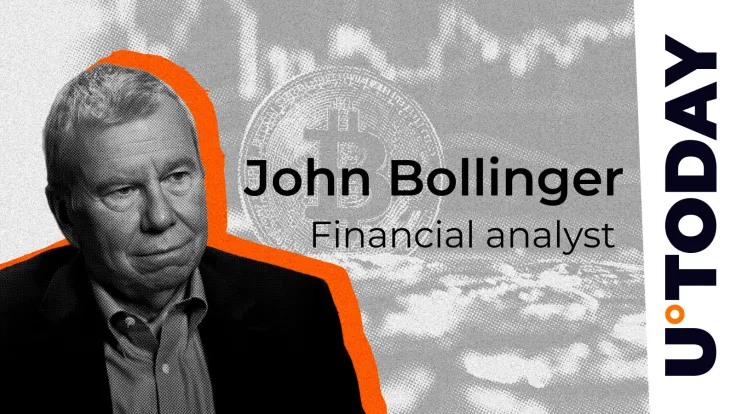
John Bollinger, the creator of the famous "Bollinger Bands" indicator, broke a long silence on cryptocurrencies by publishing a resonant post on X. The legendary trader directly links the sluggish crypto market performance to the capital drain by government-affiliated entities.
In his message, John Bollinger expressed doubts about the actions of the current U.S. administration, asking whether it was "done sucking capital out of the crypto space".
He called on the community to assess the scale of capital outflows and the impact of this process on the market, emphasizing that "it would be nice to get back to business" - a phrase that reflects the general sentiment of large investors tired of prolonged uncertainty.
Against the backdrop of easing tensions in the Middle East and Bitcoin stabilizing above $75,000, Bollinger's question appears as an attempt to identify a bottom in the cycle of government pressure.
Does the Fed's new direction align with Bollinger's vision?
Bollinger's remarks came against the backdrop of a notable statement from a potential successor to Jerome Powell. During hearings in the Senate Banking Committee, Kevin Warsh, responding to a question from Senator Cynthia Lummis about the need to integrate digital assets into the U.S. financial industry, answered "Yes", stating that digital assets are already part of the fabric of the financial services industry in the United States.

The hearings on Kevin Warsh's nomination for the position of Federal Reserve Chair may give the market hope for a softening of financial policy, which could become the very "return of capital" John Bollinger is referring to.
If calculations confirm the exhaustion of "sellers in offices", the market may be ready to restore the very axis of capital inflow that John Bollinger described earlier in January.
 U.Today Editorial Team
 Dan Burgin
