

Disclaimer: The opinions expressed by our writers are their own and do not represent the views of U.Today. The financial and market information provided on U.Today is intended for informational purposes only. U.Today is not liable for any financial losses incurred while trading cryptocurrencies. Conduct your own research by contacting financial experts before making any investment decisions. We believe that all content is accurate as of the date of publication, but certain offers mentioned may no longer be available.

Long-term owners often ignore the signal that Shiba Inu is flashing until it is too late. The 82 trillion SHIB level, which has historically been associated with persistent downward pressure rather than upside breakouts, is once again being approached by exchange reserves. This is not a transient variation. There is a gradual structural change in the location of supply.
Shiba Inu exchange deposits spike
Rising exchange reserves indicate that over time more SHIB is being deposited onto exchanges than is being taken out. That significantly tilts the market in favor of sellers, but it does not immediately cause a sell-off. Exchange-parked tokens are a liquid supply. They are not meant to be kept for long-term conviction plays, but rather to be sold, hedged or utilized as collateral. This imbalance is already evident in price action.
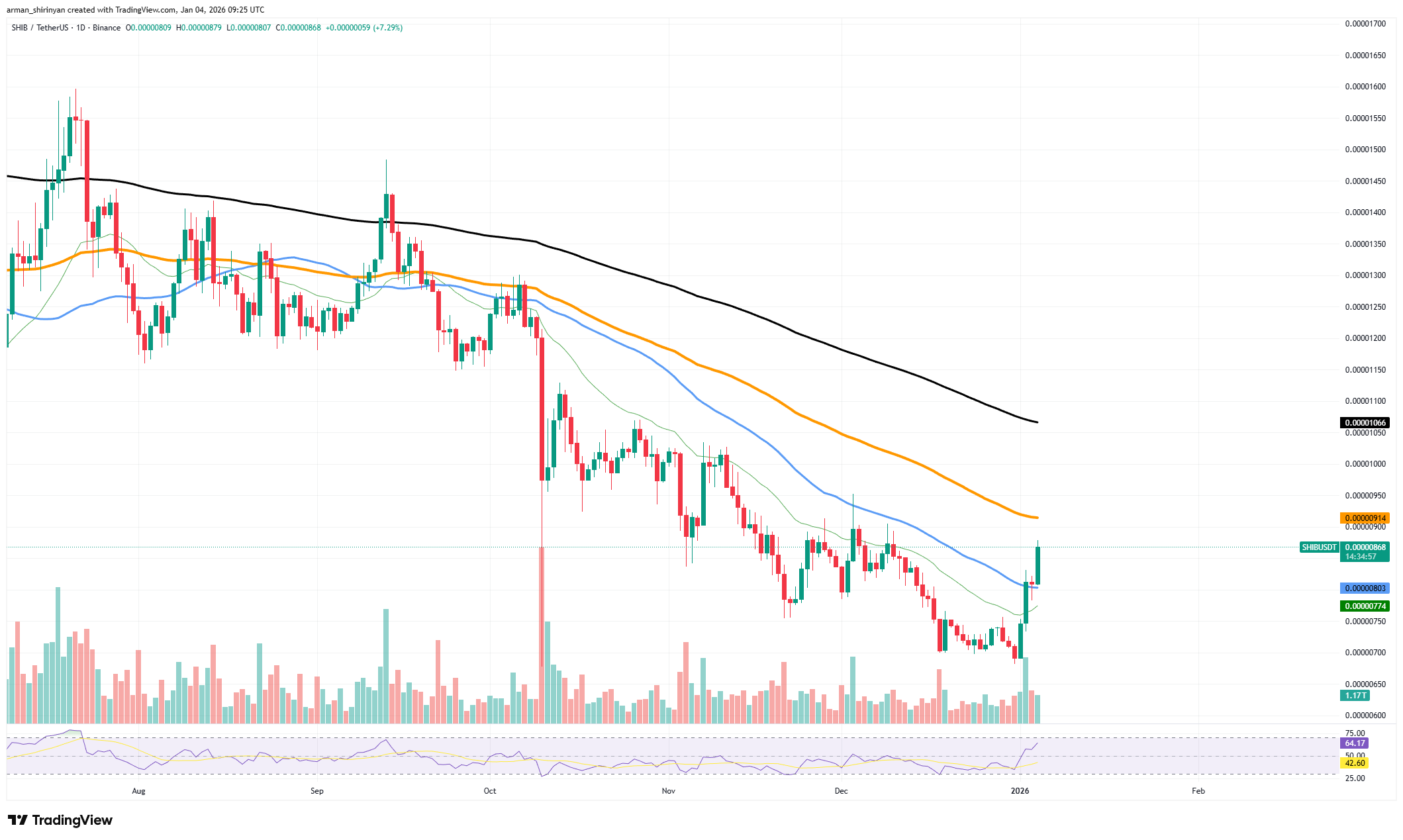
On the daily chart, SHIB's recent surge appears aggressive, but context is important. After months of consistent decline, the move comes from extremely low levels. The asset is still below its important long-term moving averages, and all previous rallies in comparable circumstances have ended when overhead supply intervened. There are currently no structural changes.
The reserve data's persistence is what raises more red flags. Arbitrage or panic are not the causes here. The exchange balances are steadily improving. This implies that rather than lowering exposure, larger holders are taking a defensive stance by preparing liquidity.
That is distribution behavior, not accumulation in the context of the market. Although there has been a slight increase in transaction activity, the situation has still not improved.

When exchange reserves rise, more transactions are frequently the result of churn rather than natural demand. If the overall result is still supply concentration on exchanges, then more transfers do not equate to more buyers. What does SHIB possibly have coming up?
A bearish bias and ongoing volatility constitute the base case. Particularly as the price gets closer to earlier breakdown zones, rallies are more likely to be sold into than prolonged.
The likelihood of another leg down increases significantly if exchange reserves push cleanly through the 82 trillion level and remain there, either through a gradual bleed or a sharp rejection after an unsuccessful breakout attempt.
 Dan Burgin
 U.Today Editorial Team
