
Disclaimer: The opinions expressed by our writers are their own and do not represent the views of U.Today. The financial and market information provided on U.Today is intended for informational purposes only. U.Today is not liable for any financial losses incurred while trading cryptocurrencies. Conduct your own research by contacting financial experts before making any investment decisions. We believe that all content is accurate as of the date of publication, but certain offers mentioned may no longer be available.

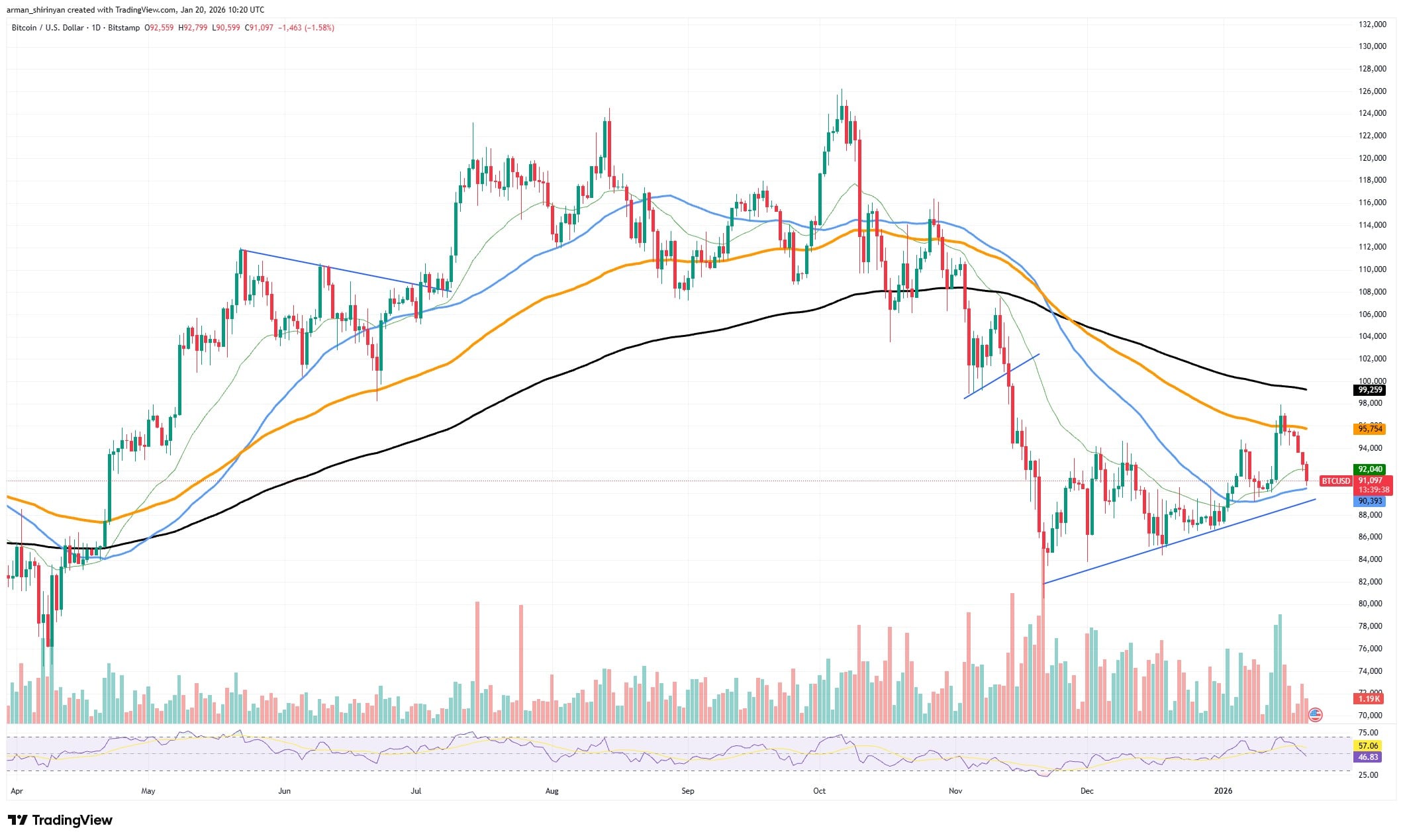
The price of Bitcoin still under pressure while the network hashrate is rolling over. In bullish times, that combination is rarely seen. The economics of protecting the network are becoming difficult, especially for those who are not major institutions — even though Bitcoin itself is not broken.
It is unprofitable
A declining hashrate indicates that miners are either reducing their expansion or turning off their machines. This is not the result of miners abruptly losing faith in Bitcoin. Even in areas with inexpensive electricity mining, it is no longer financially feasible for the majority of participants. Margins are quickly destroyed when legal operations tax compliance, cooling hardware depreciation and infrastructure costs are taken into account.
In a sense, retail mining has died. The notion that a single person or small operation can make a significant contribution to the network or obtain a discernible portion of the hashrate is unrealistic now. Now institutional miners are in charge. They run optimized fleets that maximize efficiency, negotiate electricity contracts that no retail miner can access and operate on a massive scale.
The margins are thin even then. Everyone else sees it as a losing game. The hashrate chart clearly illustrates that reality. Weaker miners began to withdraw as the price declined and remained suppressed. This is typical miner capitulation behavior: a steady bleed rather than an abrupt crash. Mining incentives quickly disappear when Bitcoin does not trend sharply higher. This matters from the standpoint of the market.

A declining hashrate frequently corresponds with late-stage corrections or consolidation. Although it lessens the immediate sell pressure from miners who can no longer afford to dump newly mined Bitcoin, it also draws attention to the short-term vulnerability of network economics. Although there is no existential threat to Bitcoin, sentiment regarding its growth is obviously cooling.
Why it cannot go down
Expectations for investors should be realistic. Bitcoin is not going into a downward spiral, but it is also not in a stage where miners are rapidly growing or outpacing the market. The hashrate will not be able to reach new heights until the price significantly recovers and remains there.
The unsettling reality is straightforward: retail players are excluded from Bitcoin mining, which has turned into an institutional game. That merely modifies who gains from protecting Bitcoin — not who eliminates it. Investors should anticipate more range-bound behavior, cautious accumulation and ongoing pressure until the price regains control over mining costs.
 Dan Burgin
 U.Today Editorial Team
