

Disclaimer: The opinions expressed by our writers are their own and do not represent the views of U.Today. The financial and market information provided on U.Today is intended for informational purposes only. U.Today is not liable for any financial losses incurred while trading cryptocurrencies. Conduct your own research by contacting financial experts before making any investment decisions. We believe that all content is accurate as of the date of publication, but certain offers mentioned may no longer be available.

The market for cryptocurrencies has recently undergone a severe reset caused by the rising political and economic tension in the world. Overleveraged positions were eliminated by nearly $875 million in liquidations over the course of the last 24 hours, and the damage was brutal.
Bitcoin hits with liquidation train
With a significant portion of forced closures, Bitcoin dominated the liquidation map. With the rest of the market bleeding in sympathy, ETH trailed closely behind. This was not motivated by a single disastrous news story. A classic leverage flush was used. Even as the price began to stall, open interest remained steadfastly high, long/short ratios were high and funding was biased toward longs. The cascade was unavoidable as soon as BTC lost its intraday support.
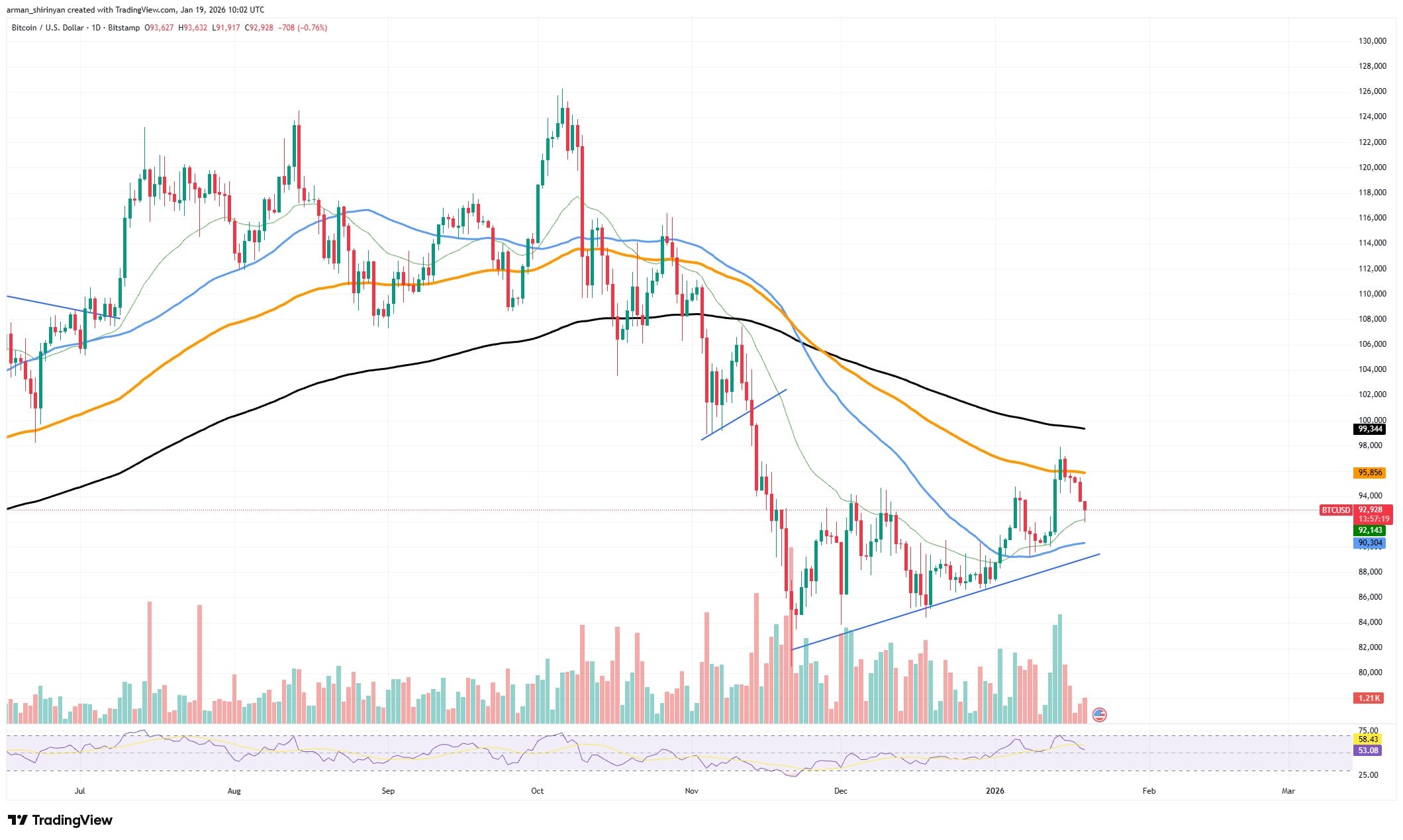
The structure behind this move is particularly uncomfortable. Long positions dominated liquidations, indicating that traders were leaning bullish into weakness rather than awaiting confirmation. Local tops typically form in this manner. The market resolves the issue violently when prices cease to trend and leverage continues to accumulate.
Choppy market begins?
Volatility is probably going to remain high in the near future. The price frequently chops rather than immediately recovers following liquidation-heavy events. Participants hesitate because market makers extend spreads and liquidity dries up. This fosters a culture of poor follow-through and frequent fake bounces. It is likely that investors who anticipate a neat V-shaped recovery are overestimating.

However, this kind of carnage is not always a sign of impending doom. Market resets are typically caused by large liquidation events. Funding returns to normal weak hands are pushed out and leverage decreases. This actually lowers downside risk from a structural standpoint once conditions stabilize.
The market still needs to demonstrate that consumers are prepared to take over without borrowing funds. The most important lesson for investors is straightforward: risk is once again an option. This is not the time to rashly pursue rebounds. For the time being, patience is more important than belief.
The market took a blow to the face, not as simple as a dip. What happens next — not what broke — will determine whether this becomes a healthy reset or the beginning of a more serious correction.
 Dan Burgin
 U.Today Editorial Team
