
Disclaimer: The opinions expressed by our writers are their own and do not represent the views of U.Today. The financial and market information provided on U.Today is intended for informational purposes only. U.Today is not liable for any financial losses incurred while trading cryptocurrencies. Conduct your own research by contacting financial experts before making any investment decisions. We believe that all content is accurate as of the date of publication, but certain offers mentioned may no longer be available.

- Exchanges Remain the Practical Gateway for Capital Entering the Crypto System
- From Trade Matching to Asset Management: Shifting Functional Boundaries
- Custody as a Structural Boundary in Financial Convergence
- Progress and Limits of Transparency Mechanisms
- Education and Charity as “Non-Trading Infrastructureâ€
- CoinEx’s Position and Boundaries
- Conclusion
Over the past year, the center of discussion in the crypto industry has begun to shift.
The approval of spot ETFs, the broader adoption of institutional-grade custody solutions, and the continued investment by traditional financial institutions in digital asset infrastructure have signaled that Web3 is no longer an experimental system operating entirely outside existing financial frameworks. Instead, it is increasingly being embedded into real-world financial structures. This process is often described as “financial convergence.”
Against this backdrop, the role of crypto exchanges is being reassessed. They are no longer viewed merely as trading gateways for early markets, but are gradually evolving into intermediate infrastructure connecting traditional financial logic with on-chain financial practices.
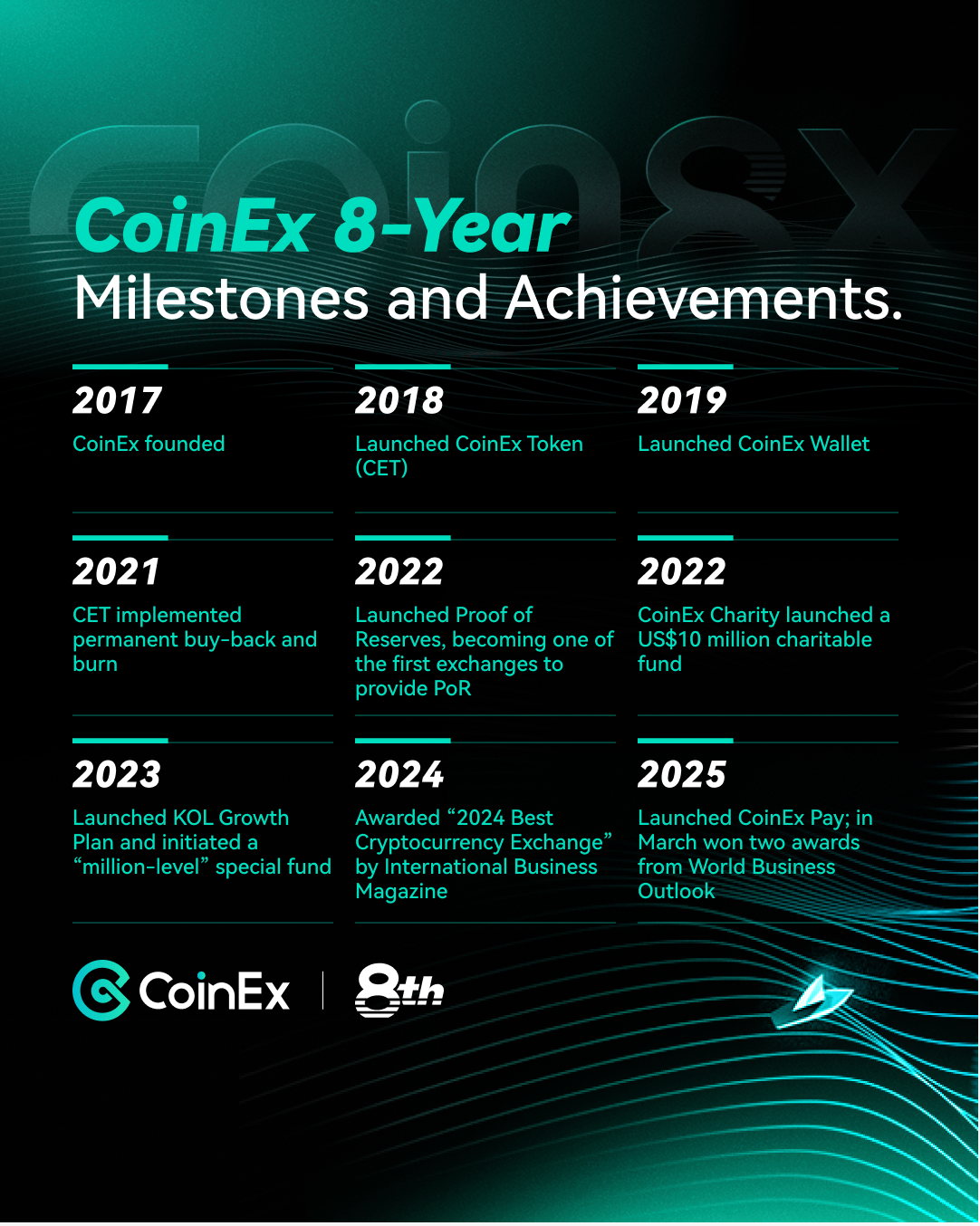
Founded in 2017 and having experienced full market cycles, CoinEx offers a relatively complete case study for observing this transition.
Exchanges Remain the Practical Gateway for Capital Entering the Crypto System
Despite the continued expansion of decentralized finance in both functionality and scale, most new capital still enters the crypto ecosystem through centralized platforms, where initial allocation, risk screening, and liquidity conversion take place.
This reality suggests that, in the foreseeable future, exchanges will continue to fulfill three core functions:
asset access, risk filtering, and liquidity coordination.
In multiple industry studies, The Block has pointed out that “financial convergence” does not imply a full migration of traditional finance (TradFi) onto blockchains. Instead, it unfolds through gradual overlaps in asset management, custody models, security mechanisms, and compliance logic.
CoinEx’s product and structural adjustments have taken place within this broader context.
From Trade Matching to Asset Management: Shifting Functional Boundaries
Early crypto exchanges relied heavily on trade matching and transaction fees as their primary business model. As the market has matured and product homogeneity increased, the marginal returns of this model have begun to decline.
In recent years, CoinEx’s functional expansion has shown a clear shift toward asset management.
Beyond spot and derivatives trading, the platform has progressively introduced savings, staking, and lending products, integrating yield management into users’ daily asset allocation behavior through CoinEx Earn.
Rather than positioning this shift as “innovation,” it more closely mirrors traditional financial logic:
trading is only one phase in the asset lifecycle, while allocation and yield management represent longer-term needs.
From an industry analysis perspective, this evolution reflects exchanges moving toward more comprehensive financial service structures, rather than attempting to directly replace DeFi.
Custody as a Structural Boundary in Financial Convergence
Among the challenges of convergence between TradFi and Web3, custody remains one of the most difficult issues to reconcile.
Traditional finance emphasizes professional custody and clearly defined responsibility, while Web3 prioritizes private key ownership and asset sovereignty. This fundamental difference makes control over assets a central point of tension.
CoinEx’s approach reflects a pragmatic compromise.
While maintaining its platform-based custody system, CoinEx introduced CoinEx Vault in 2025, offering multi-signature and offline storage structures primarily for institutional and high-net-worth users.
This parallel model does not reject platform custody, but rather acknowledges that user risk preferences and asset control requirements have become increasingly stratified. Within The Block’s analytical framework, such structures are viewed as practical solutions during the convergence phase, rather than final endpoints.
Progress and Limits of Transparency Mechanisms
If custody highlights structural differences, transparency is an area where TradFi and Web3 increasingly converge.
In traditional finance, trust is built through audits, disclosures, and regulatory reporting. In crypto, on-chain verifiability offers new technical pathways for information disclosure.
CoinEx introduced a Merkle Tree-based proof-of-reserves mechanism in 2022 and incorporated it into an ongoing disclosure process. This reduced information asymmetry between the platform and users by enabling asset verification.
However, it must be noted that such mechanisms do not cover operational risk, compliance risk, or external platform risks. This is precisely why TradFi continues to rely on institutional audits and regulatory oversight rather than purely technical solutions.
In this sense, CoinEx’s transparency practices function as complementary mechanisms, not replacements.
Education and Charity as “Non-Trading Infrastructure”
Financial convergence does not occur solely at the product or institutional level—it also manifests in user understanding and approaches to risk management.
CoinEx continues to build educational content within its platform and, through CoinEx Charity, has implemented digital education, network infrastructure, and disaster relief initiatives across multiple countries. These efforts do not directly increase trading volume, but as financial instruments grow more complex, education itself becomes a form of risk management.
From The Block’s perspective, such “soft infrastructure” is not financial innovation per se, but a necessary component of financial system maturity.
CoinEx’s Position and Boundaries
Taken together, CoinEx’s position in the wave of financial convergence is relatively clear.
It does not attempt to replace the traditional financial system, nor does it pursue an extreme form of decentralization. Instead, it operates as an intermediate platform, seeking workable balances across asset management, custody structures, and transparency mechanisms.
Its boundaries are equally clear:
- As a centralized platform, CoinEx cannot avoid governance and custody responsibilities
- Transparency mechanisms must complement broader institutional frameworks
- Regulatory alignment and deep institutional integration remain in early stages
Conclusion
Financial convergence is not a one-time transformation, but a long-term process.
In this process, crypto exchanges are no longer merely tools for Web3-native markets; they are increasingly assuming intermediary roles that connect crypto systems with real-world financial structures. CoinEx’s practices may not represent the industry’s final form, but they provide a case worthy of continued observation.
When exchanges begin to systematically address asset management, custody choice, transparency, and user education, they start to encounter the real boundaries of the financial system.
For the industry, this proximity to reality may be more instructive than any grand narrative.
About CoinEx
Established in 2017, CoinEx is an award-winning cryptocurrency exchange designed with users in mind. Since its launch by the industry-leading mining pool ViaBTC, the platform has been one of the earliest crypto exchanges to release proof-of-reserves to protect 100% of user assets. CoinEx provides over 1400 coins, supported by professional-grade features and services, for its 10+ million users across 200+ countries and regions. CoinEx is also home to its native token, CET, incentivizing user activities while empowering its ecosystem.
To learn more about CoinEx, visit: Website | Twitter | Telegram | LinkedIn | Facebook | Instagram | YouTube
 Dan Burgin
 U.Today Editorial Team
