
Disclaimer: The opinions expressed by our writers are their own and do not represent the views of U.Today. The financial and market information provided on U.Today is intended for informational purposes only. U.Today is not liable for any financial losses incurred while trading cryptocurrencies. Conduct your own research by contacting financial experts before making any investment decisions. We believe that all content is accurate as of the date of publication, but certain offers mentioned may no longer be available.

BNY is getting ready to delve further into digital assets. According to reports, the biggest custodian bank in the world intends to start offering cryptocurrency custody services in Abu Dhabi, initially concentrating on Bitcoin and Ethereum.
Institutional adoption intensifies
The decision has significant ramifications for institutional adoption throughout the cryptocurrency market, given that BNY is in charge of about $59 trillion in assets under custody. The timing is important. Digital assets have already seen significant growth in April and the first part of May.
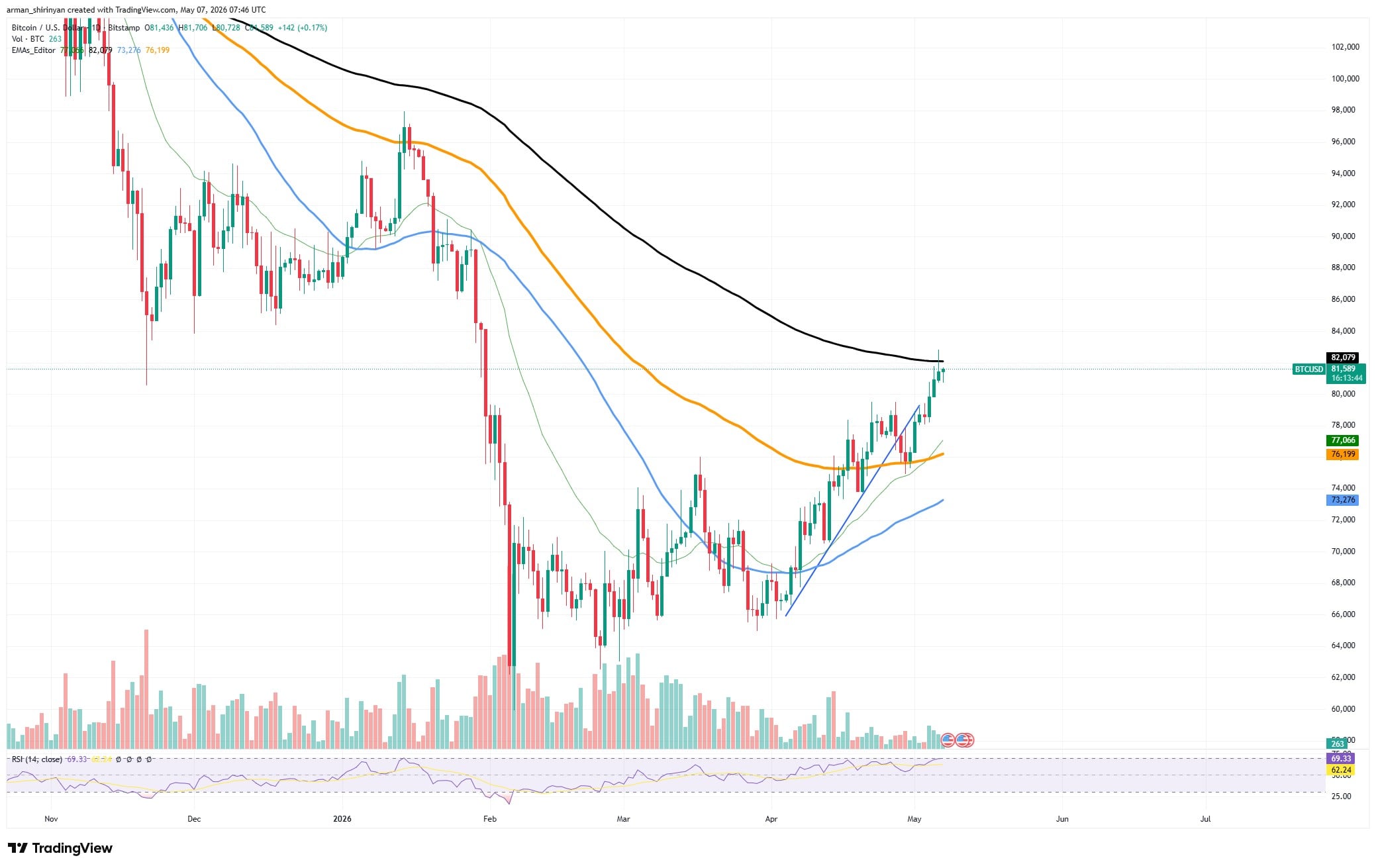
While Ethereum stabilized following months of poor performance, Bitcoin vigorously recovered from earlier weakness and pushed back above important resistance zones close to the low $80,000 range. Infrastructure tokens, meme coins, and privacy assets all saw significant speculative inflows as risk appetite returned across all altcoins.
In light of this, BNY's entry into the market through Abu Dhabi suggests something more than a straightforward regional expansion. It illustrates how traditional financial institutions are growing more at ease with cryptocurrency infrastructure as customer demand keeps rising.
Why custody is important
One of the most significant institutional bottlenecks in cryptocurrency is still custody. Without operational security, compliance frameworks, and regulated storage, big financial institutions cannot just transfer billions into digital assets. By providing custody services, a bank like BNY alters the situation by granting institutions access via a reputable and well-known infrastructure supplier.
In the long run, the implications are bullish for Ethereum and Bitcoin in particular. For pension funds, sovereign wealth funds, and sizable private capital groups that were previously on the sidelines, institutional custody services improve accessibility and reduce obstacles. Additionally, the signaling effect is more extensive.

The market finds it more difficult to maintain that cryptocurrency stays outside of traditional finance when the biggest custodian bank in the world publicly grows its operations for digital assets. The industry is becoming more and more integrated into the banking system.
Trading conditions will continue to be dominated by short-term volatility, particularly following the recent market rally. Nevertheless, advancements such as these bolster the long-term institutional narrative surrounding Ethereum and Bitcoin and support the notion that digital assets are integrating into rather than operating outside of mainstream global finance.
 Dan Burgin
 U.Today Editorial Team
