


Nick Szabo, one of the top candidates to be Satoshi Nakamoto, had some interesting things to say about gold as it continues to hit record highs and the cryptocurrency market breaks through recent lows, a move Peter Schiff immediately framed as "proof" that the market is waking up.
The essence of the debate Szabo weighed into was the question — if gold was so perfect, why did it lose its monetary role? Szabo's point on this matter is pretty straightforward: gold did not fail because people stopped valuing it but failed as money because centralization broke it.
Once the metal was locked away in bank vaults and the whole system relied on trust and custody, the door opened for abuse.
Put simply, gold's weakness as money was not down to its volatility or scarcity. It was more about the fact that humans had to store it somewhere and trust the entity guarding it.
He went on to explain that gold's main weakness was its poor resistance to theft. Moving large amounts of gold was tricky, slow and risky, so bills of exchange were used to make high-value transfers. Telegraphy made the change even faster; merchants liked how quick it was to settle payments remotely instead of risking shipping metal across borders.
Bitcoin vs. gold
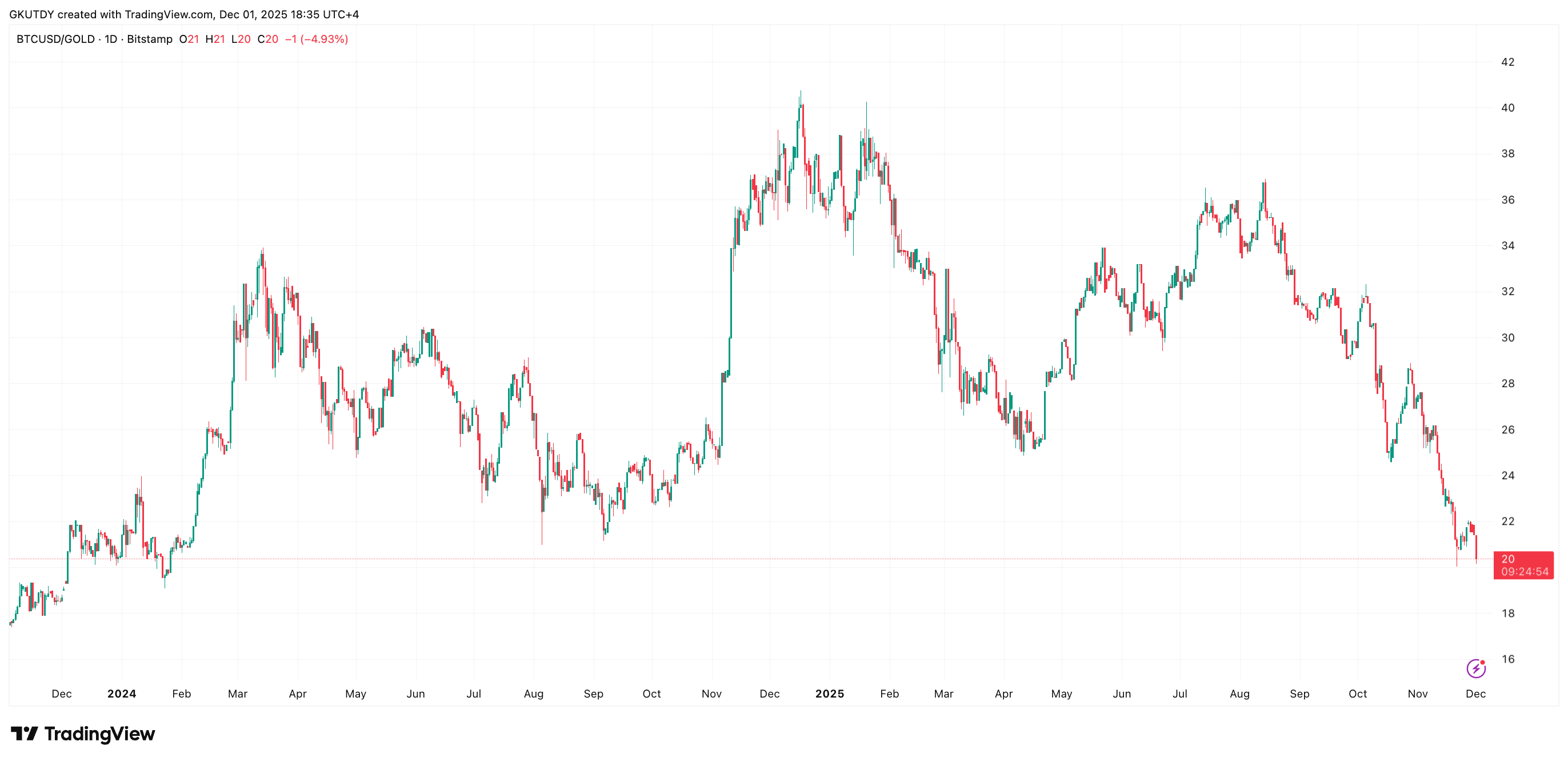
The timing of Szabo's comments is important because the BTC/gold ratio has just dropped to the low-20s after being above 30 for months, making it the perfect moment for gold supporters to claim victory.
But the long-term picture still looks optimistic for the crypto. If gold fails because custodians capture it, and if Bitcoin's entire design removes that risk, then every spike in gold's relative performance becomes less a validation of metal and more a reminder of why a bearer digital asset was invented in the first place.
 Dan Burgin
 U.Today Editorial Team
