
Disclaimer: The opinions expressed by our writers are their own and do not represent the views of U.Today. The financial and market information provided on U.Today is intended for informational purposes only. U.Today is not liable for any financial losses incurred while trading cryptocurrencies. Conduct your own research by contacting financial experts before making any investment decisions. We believe that all content is accurate as of the date of publication, but certain offers mentioned may no longer be available.

At the start of the new week, two major treasury transactions were recorded in the stablecoin market, clearly illustrating the division of digital capital into two parallel and non-overlapping directions.
According to on-chain tracker, Ripple carried out a scheduled issuance of $10 million in RLUSD stablecoins on the XRP Ledger. Almost simultaneously, Tether conducted a routine issuance of $1 billion in USDT on the Tron blockchain, increasing its treasury inventory on the network to $91 billion.
The difference in volume is explained by the fundamentally different business models of the two issuers.

With its enormous turnover, Tether serves the needs of the mass retail market and crypto trading, where immediate access to deep liquidity is critical.
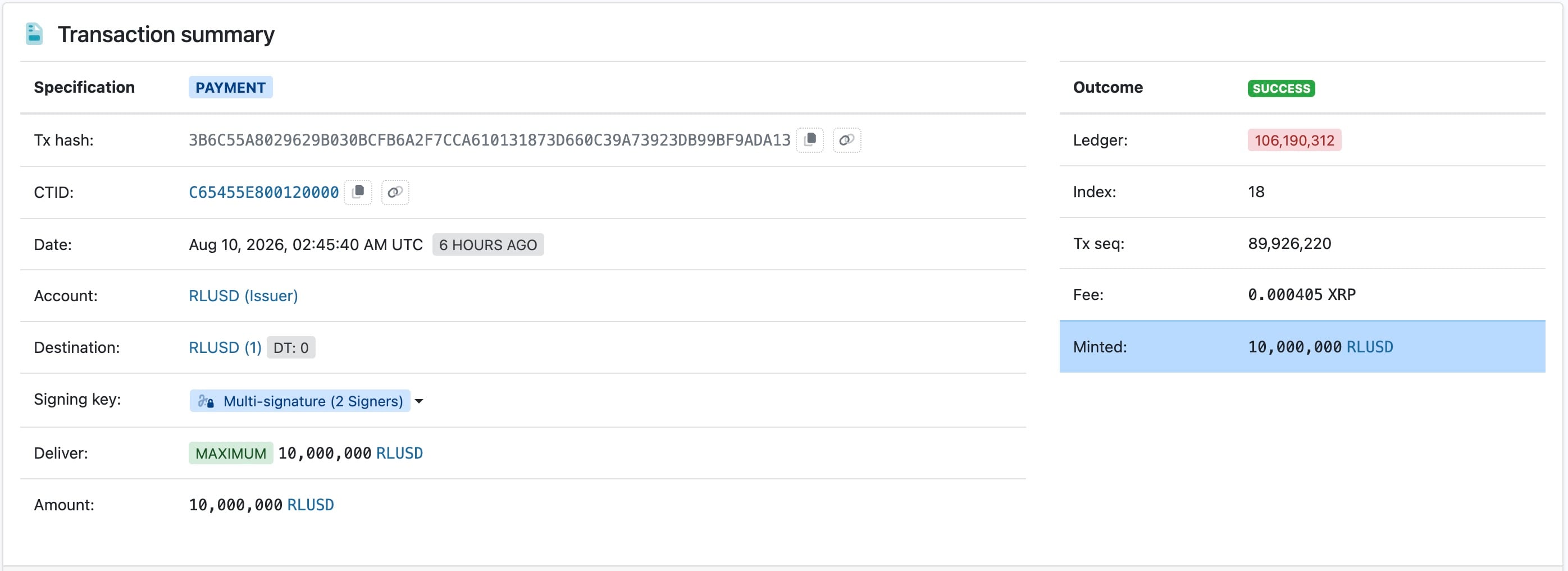
Ripple, in turn, is not attempting to compete in the mass-market segment. RLUSD currently has a market capitalization of $1.52 billion, approximately 20% below its May peaks, while the token is issued selectively to meet specific B2B requests from commercial companies through the Ripple Mint platform.
Whales defend $1 XRP floor as Ripple injects fresh capital
The latest $10 million mint coincided with a major increase in large-investor activity on the spot market. While Ripple's treasury regulates the stablecoin's supply under NYDFS supervision, large holders, or whales, began aggressively moving funds and accumulated more than 380 million XRP over the past week.
These maneuvers unfolded around the psychologically important $1 level for XRP, which major players are defending as a key support level.

Ultimately, these developments reflect the current status quo. While Tether retains its position as the main settlement instrument in retail crypto transactions, Ripple is testing its B2B product within the narrow corporate payments niche and undergoing technical adaptation as large investors build positions ahead of a potential breakout from the market's prolonged summer consolidation.
 U.Today Editorial Team
 Dan Burgin
