

Disclaimer: The opinions expressed by our writers are their own and do not represent the views of U.Today. The financial and market information provided on U.Today is intended for informational purposes only. U.Today is not liable for any financial losses incurred while trading cryptocurrencies. Conduct your own research by contacting financial experts before making any investment decisions. We believe that all content is accurate as of the date of publication, but certain offers mentioned may no longer be available.

Ethereum has experienced a steady surge in large-scale accumulation over the last few months that has gradually gotten stronger and is becoming more difficult to ignore. Whales are actively buying ETH through over-the-counter channels, even though market price action is still relatively restrained.
Because of this discrepancy between price and accumulation, Ethereum has once again come under close scrutiny. It is difficult to ignore the most recent example. An OTC whale address (0xFB7) purchased an additional 20,013 ETH, or roughly $59 million, a few hours ago.
What's happening?
Since November 2025, Ethereum has seen regular large inflows from whale wallets, suggesting coordinated or at the very least extremely confident accumulation behavior rather than speculative noise. The absence of clear pressure to sell makes this more intriguing.
It appears that validators are not in a rush to depart or liquidate because Ethereum's validation queue is essentially empty. In other words, people are choosing not to sell when they have the chance. By itself, that removes a major source of structural downside pressure on the market and reinforces the idea that ETH is seen as a long-term asset rather than a short-term investment.
Why would it happen?
Nevertheless, the reason for this buildup is still a mystery. One catalyst, a major upgrade announcement or a clear macro trigger, cannot account for the volume of purchases. This ambiguity makes the situation special. Whales are positioned but do not react. Organizations like Bitmine, which have been steadily increasing their profile without offering any public explanation regarding recent advancements, have been especially active.

From a market perspective, volatility is typically preceded by this behavior rather than stopped. During periods of weak or sideways price action, heavy accumulation often results in an accumulation of pressure. Because there is less supply and late buyers are forced to catch up, the price typically moves quickly when it does.
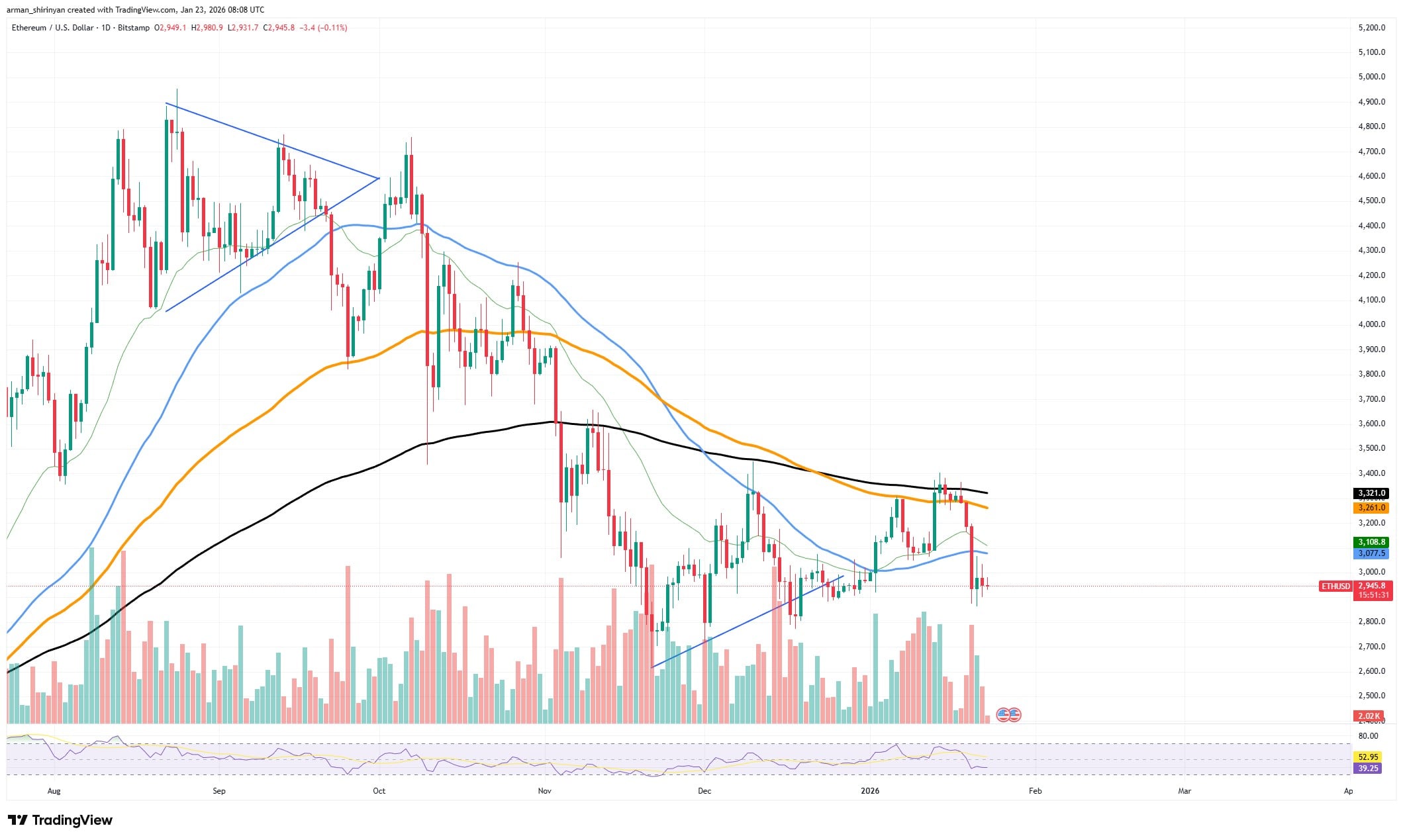
However, accumulation does not guarantee success on its own. There is not enough technical confirmation, and the price of Ethereum is still struggling with levels of overhead resistance.
 Dan Burgin
 U.Today Editorial Team
