
Disclaimer: The opinions expressed by our writers are their own and do not represent the views of U.Today. The financial and market information provided on U.Today is intended for informational purposes only. U.Today is not liable for any financial losses incurred while trading cryptocurrencies. Conduct your own research by contacting financial experts before making any investment decisions. We believe that all content is accurate as of the date of publication, but certain offers mentioned may no longer be available.

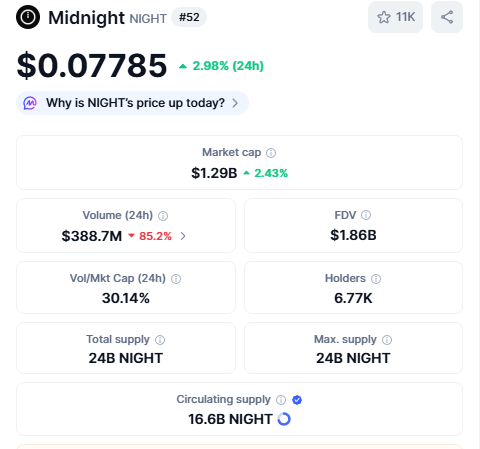
A long-standing problem in cryptocurrency is directly addressed by Charles Hoskinson's recent statement that legacy finance is trying to build what XRP and Midnight are already doing at a scale 100x beyond their ambitions. Price hype is not at the center of the argument. It concerns architectural intent, infrastructure maturity and the difference between Web3-native systems and institutional rebrandings of the same concepts.
XRP and Cardano ahead
According to Hoskinson, XRP Ledger and Cardano operationalized decentralized settlement identity and compliance-aware design years ago. High-throughput low-cost institutional settlement was XRP's initial focus. Cardano pursued a regulated-friendly model without compromising decentralization with its layered design and forthcoming Midnight privacy stack.
These issues are essentially being rediscovered by Canton and other TradFi-led projects but with more stringent governance, more limited permissioning and longer iteration cycles. The 100x framing originates from this. And Hoskinson is not talking about the price of the aforementioned assets, but the depth of development.
Cardano is far ahead of most enterprise chains that still rely on off-chain guarantees and trusted validators thanks to its formal verification stack extended UTXO model and on-chain governance.

The disparity is not only quantitative but also qualitative. This is partially reflected in the market structure. Long compression phases have been experienced by XRP and ADA instead of parabolic excess. The assets displayed on the charts have already undergone years of redistribution drawdowns and speculation.
Mature infrastructure
That is typically the appearance of mature infrastructure prior to capital rotation not following. Long cycles, delayed recognition and eventual repricing once fundamentals overcome narrative fatigue are all consistent with Hoskinson's previous prediction that Bitcoin could hit $250,000 in 2026.
The fact that XRP and Cardano are assured moonshots is not the main lesson. The issue is that they have already resolved issues that TradFi is just now acknowledging. Institutional capital will not reimagine Web3 if it genuinely wants programmable settlement privacy with compliance and global-scale neutrality; instead, it will integrate with what already functions.
Hoskinson's criticism is direct but true: legacy finance continues to confuse control for innovation. There was never a marketing advantage to Web3. It was surviving chaos shipping first and remaining here.
 Dan Burgin
 U.Today Editorial Team
