
Disclaimer: The opinions expressed by our writers are their own and do not represent the views of U.Today. The financial and market information provided on U.Today is intended for informational purposes only. U.Today is not liable for any financial losses incurred while trading cryptocurrencies. Conduct your own research by contacting financial experts before making any investment decisions. We believe that all content is accurate as of the date of publication, but certain offers mentioned may no longer be available.

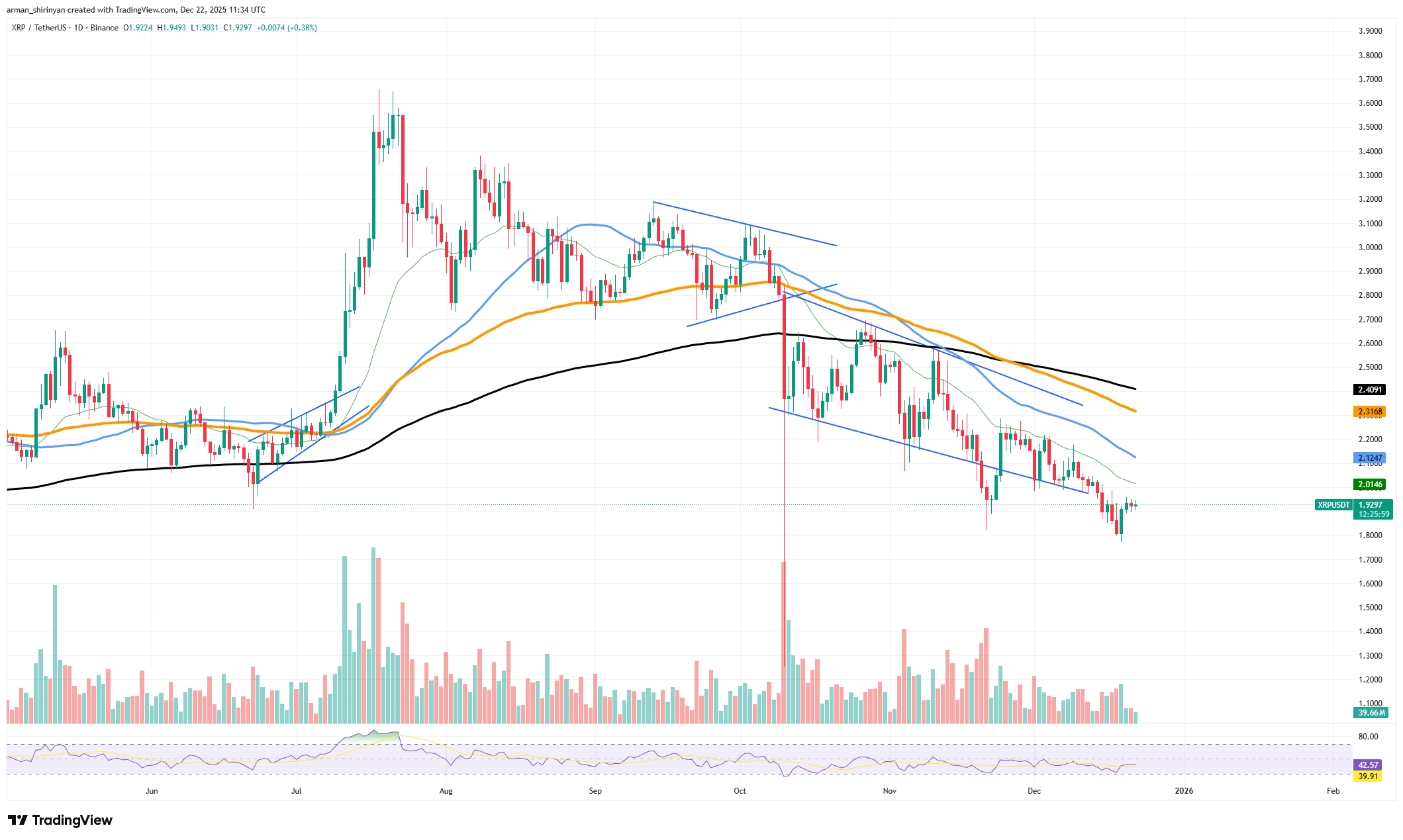
XRP’s recent price behavior looks ugly on the surface, especially when framed against wallets that appear to be sitting on losses approaching 90% from prior highs. The price is hovering around the lower end of its multimonth range, trend structure remains bearish and XRP is still trading below its major moving averages. For a lot of market participants, this looks like exhaustion or failure.
XRP's cooldown takes too long
What’s actually happening is compression. XRP has gone through a prolonged cooldown phase, where volatility has collapsed, directional conviction is low and speculative excess has been flushed out. The sharp breakdown earlier in the quarter reset leverage aggressively, and since then, price action has been grinding rather than cascading. That matters. Markets do not transition directly from panic to euphoria; they stall first.
One of the most important signals here is not price, it is network activity. Historically, XRP payment volume tends to spike after price cools off, not during the hype phase. That pattern is repeating. Each time the network sees a lull in speculative trading, on-chain payment volume quietly starts expanding again. These bursts do not immediately translate into vertical price moves, but they do change the underlying demand profile. Utility comes back before narrative.
Not your classic recovery
From an investor perspective, this is where expectations need to be recalibrated. This is not a clean V-shaped recovery setup. XRP is more likely to experience uneven rebounds: sharp recoveries followed by pullbacks, then consolidation again. That is typical when larger players are building exposure without chasing the price.

The “almost 90% loss” framing misses an important point: long-term holders sitting deep underwater have not capitulated en masse. Selling pressure has diminished, volume on down moves is weaker, and recent lows are being defended without panic. That does not mean XRP is bullish right now, but it does suggest the worst forced selling is likely behind it.
If history is any guide, the next phase is not explosive upside, it is intermittent recovery waves tied to bursts in payment activity and liquidity rotation. Investors should expect chop, false starts and sudden rallies that fade. That is how accumulation phases look in real time.
 Dan Burgin
 U.Today Editorial Team
