
Disclaimer: The opinions expressed by our writers are their own and do not represent the views of U.Today. The financial and market information provided on U.Today is intended for informational purposes only. U.Today is not liable for any financial losses incurred while trading cryptocurrencies. Conduct your own research by contacting financial experts before making any investment decisions. We believe that all content is accurate as of the date of publication, but certain offers mentioned may no longer be available.

One of the most notable divergences in the current cryptocurrency market is seen on Shiba Inu, where price action is still trying to break free from a wider downtrend, despite massive activity growth in derivatives and spot flows. Will price eventually follow liquidity or is this merely short-term speculation? That is the key question raised by the recent spike in futures and spot inflows, which was shown on the futures market and surge by 7,021.14% (increase in net flow over the hourly time frame).
SHIB's market recovery
SHIB's chart still shows a market recovering from strong selling pressure, despite impressive flow numbers. The asset is still in a long-term downward trend, struggling to make higher lows that can be sustained, and trading below important moving averages. The most recent leg down pushed SHIB near multimonth support zones, and while recent candles indicate attempts at stabilization, momentum is still precarious.
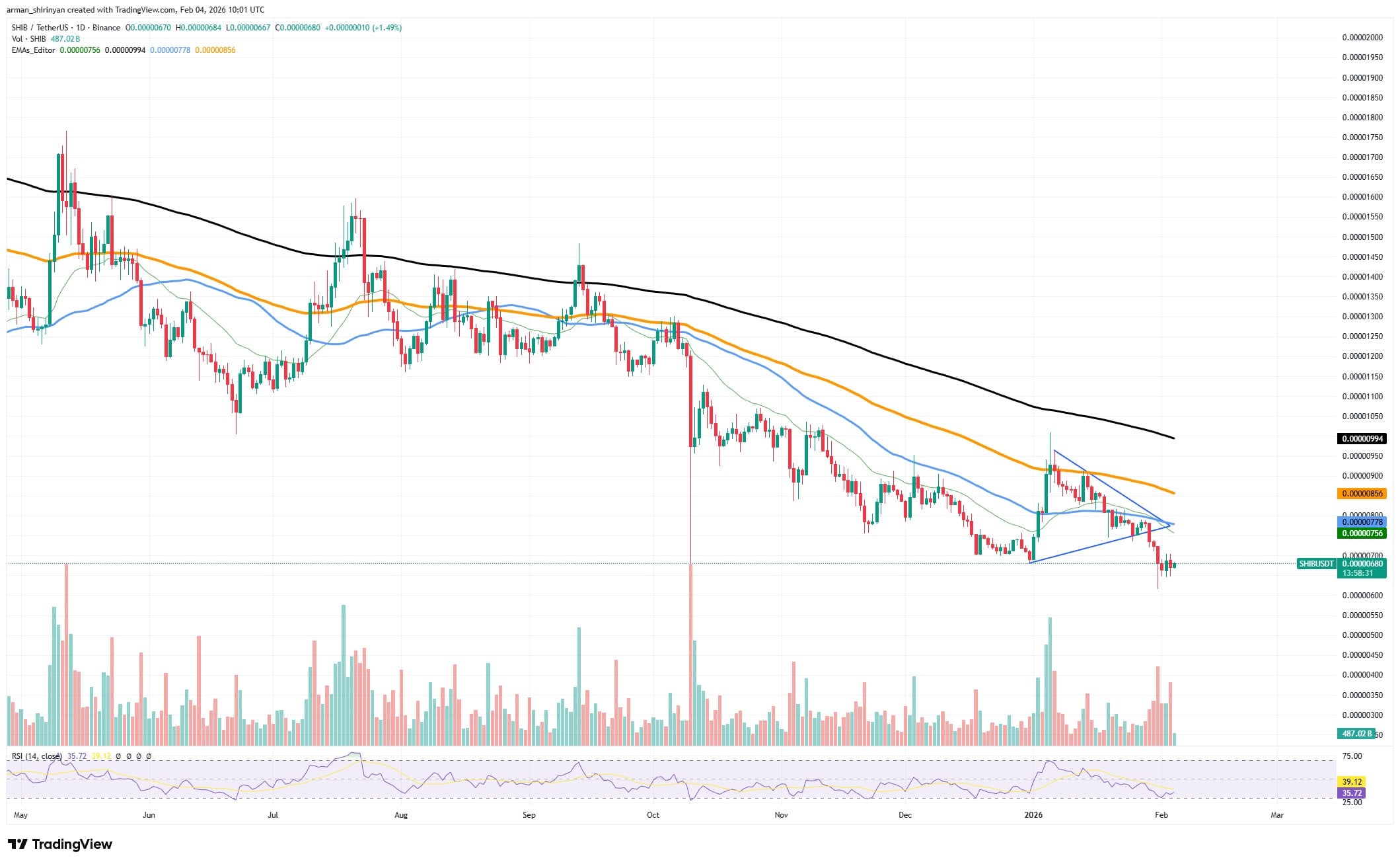
On the other hand, flow data presents a more dynamic image. A number of intervals show aggressive inflows, particularly in the one- and four-hour windows, according to short-term metrics. The fact that traders and speculators are returning suggests that they may be trying to catch a local bottom or setting up for a rebound. When traders use short-covering or bounce plays to predict volatility, futures activity frequently increases.
Do inflows matter?
Inflows by themselves, however, do not ensure recovery. Some of these flows may not be the result of long-term accumulation but rather of leveraged positioning. Leveraged long positions could rapidly unwind and produce another round of downside pressure if the price is unable to recover adjacent resistance zones.

Instead of an instant recovery, investors should now expect increased volatility. For SHIB to demonstrate that inflows are converting into actual buying interest, rather than speculative activity, it must recover short-term moving averages and maintain above recent support.
In the short term, traders should keep an eye on whether volume keeps increasing while prices stabilize. SHIB may establish a recovery structure if inflows continue and sell pressure lessens. If not, the asset runs the risk of staying stuck in a gradual decline, even in the face of spikes in activity. Liquidity has temporarily increased, but price confirmation is still lacking.
 U.Today Editorial Team
 Dan Burgin
