
Disclaimer: The opinions expressed by our writers are their own and do not represent the views of U.Today. The financial and market information provided on U.Today is intended for informational purposes only. U.Today is not liable for any financial losses incurred while trading cryptocurrencies. Conduct your own research by contacting financial experts before making any investment decisions. We believe that all content is accurate as of the date of publication, but certain offers mentioned may no longer be available.

In a brief period of time, XRP Ledger recently recorded the creation of 3,203 new accounts, which is a significant increase in network adoption compared to recent baselines.
XRP strong inside, weak outside
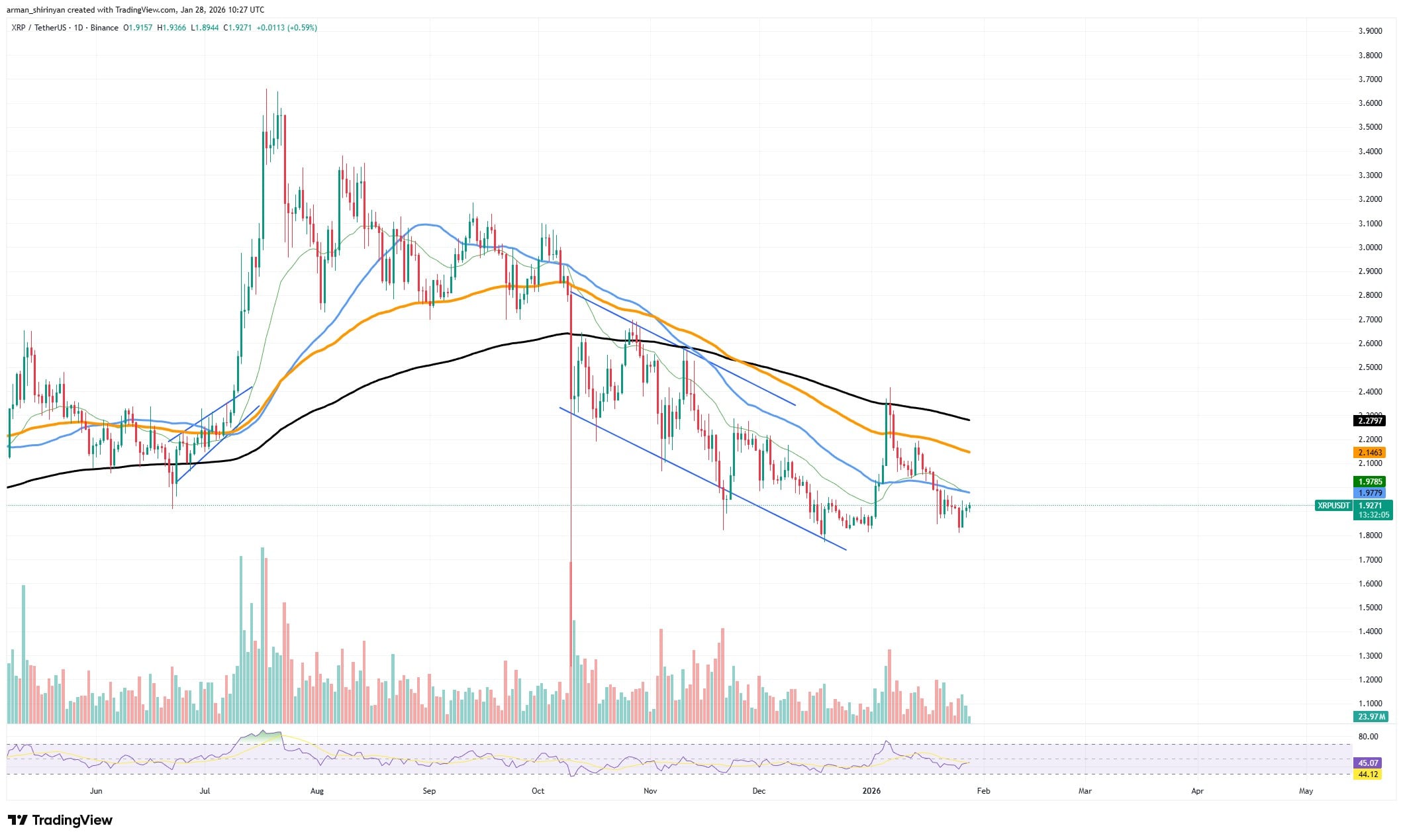
Even though the price of XRP is still technically low, the market should not ignore this kind of fundamental growth, particularly when viewed in a broader adoption context. Instead of following price appreciation, user growth usually comes before it, acting as a leading rather than lagging indicator.
One of the purest demand-side metrics is the creation of new accounts, especially because it reflects real onboarding. Opening a new account necessitates intent, cost and commitment, in contrast to transaction spikes that can be skewed by bots, wash activity or internal shuffling between existing wallets.
A spike of over 3,000 new users indicates that new players are joining the ecosystem rather than just existing users becoming more active, which is a materially different signal.
More general network metrics support this expansion and reinforce the account-creation data. While successful transactions closely mirror total transactions, the total number of transactions executed stays high, hovering around two million per day on a consistent basis. It is important to focus on that ratio because it demonstrates that the network is not only busy but also operating effectively under load, free from congestion or increasing failure rates.
Adoption stepping up
Sustainable adoption requires both high success rates and healthy throughput, and XRP Ledger currently shows evidence of both. The average number of transactions per ledger, which has been steadily increasing over time, is another significant indicator worth monitoring.
This suggests that usage density is rising and that each ledger close is packing more economic activity rather than remaining sparsely utilized. A network that is in decline or has been abandoned does not look like this in practice. It is, instead, an example of consistent organic usage developing over time.
 Dan Burgin
 U.Today Editorial Team
