
Disclaimer: The opinions expressed by our writers are their own and do not represent the views of U.Today. The financial and market information provided on U.Today is intended for informational purposes only. U.Today is not liable for any financial losses incurred while trading cryptocurrencies. Conduct your own research by contacting financial experts before making any investment decisions. We believe that all content is accurate as of the date of publication, but certain offers mentioned may no longer be available.

Commenting on the launch of Starknet's strkBTC Bitcoin bridge, Cardano founder Charles Hoskinson stated that the sector of decentralized and private BTC bridges is the largest untapped niche in the industry and "a race we can win".
This ambitious rhetoric from Hoskinson perfectly matches the harsh reality of DefiLlama's on-chain data, which shows Cardano critically needs an inflow of external capital, and a move toward Bitcoin could give the network exactly the missing network effect it lacks.
Right now, the network built around ADA shows a deep gap between the blockchain's speculative valuation and its actual usage. The ADA token is trading at $0.25, giving the project an impressive $9.14 billion market capitalization.
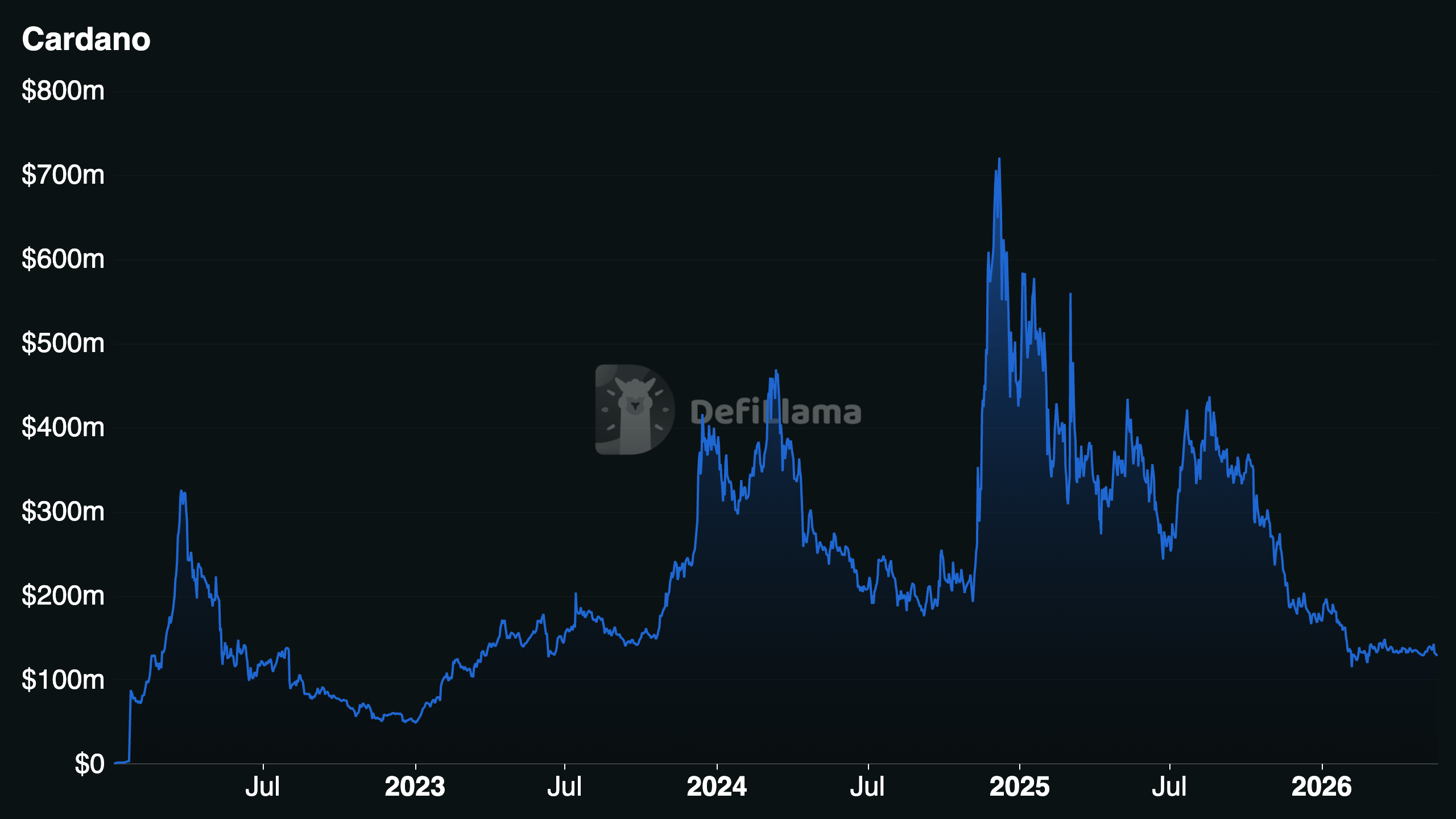
However, the total value locked (TVL) in Cardano's DeFi sector stands at just $127.81 million, nearly 80% below the peak levels of late 2024, while the network's daily revenue amounts to a symbolic $477.
Plans to outpace Starknet and capture Bitcoin volume
To win this race against Starknet, which is only beginning to roll out its three-phase strkBTC bridge, Cardano is putting a major trump card on the table in the form of Midnight, the private blockchain launched in March. This sovereign partner network is built on a UTXO architecture, making it structurally compatible with Bitcoin and allowing it to import BTC liquidity through ZK protocols.
This makes the slogan "This Is a Race We Can Win" look more like Hoskinson's strategic plan to fill Cardano's underutilized smart contracts with external capital in order to defend its multibillion-dollar valuation.
Pressure around Cardano is also intensifying due to internal tensions in key markets, as Hoskinson simultaneously faced a backlash from Japanese delegates. The Cardano founder has been forced to publicly fight back against resurfaced rumors claiming that the Japanese community was originally formed by phone scammers during the ICO era.
Hoskinson harshly dismissed those claims as completely false, citing the official audit of early-sale vouchers. However, the sheer depth of these disputes highlights just how high the stakes are for Cardano and him specifically - and for the crypto industry overall - in May 2026.
 Dan Burgin
 U.Today Editorial Team
