
Disclaimer: The opinions expressed by our writers are their own and do not represent the views of U.Today. The financial and market information provided on U.Today is intended for informational purposes only. U.Today is not liable for any financial losses incurred while trading cryptocurrencies. Conduct your own research by contacting financial experts before making any investment decisions. We believe that all content is accurate as of the date of publication, but certain offers mentioned may no longer be available.

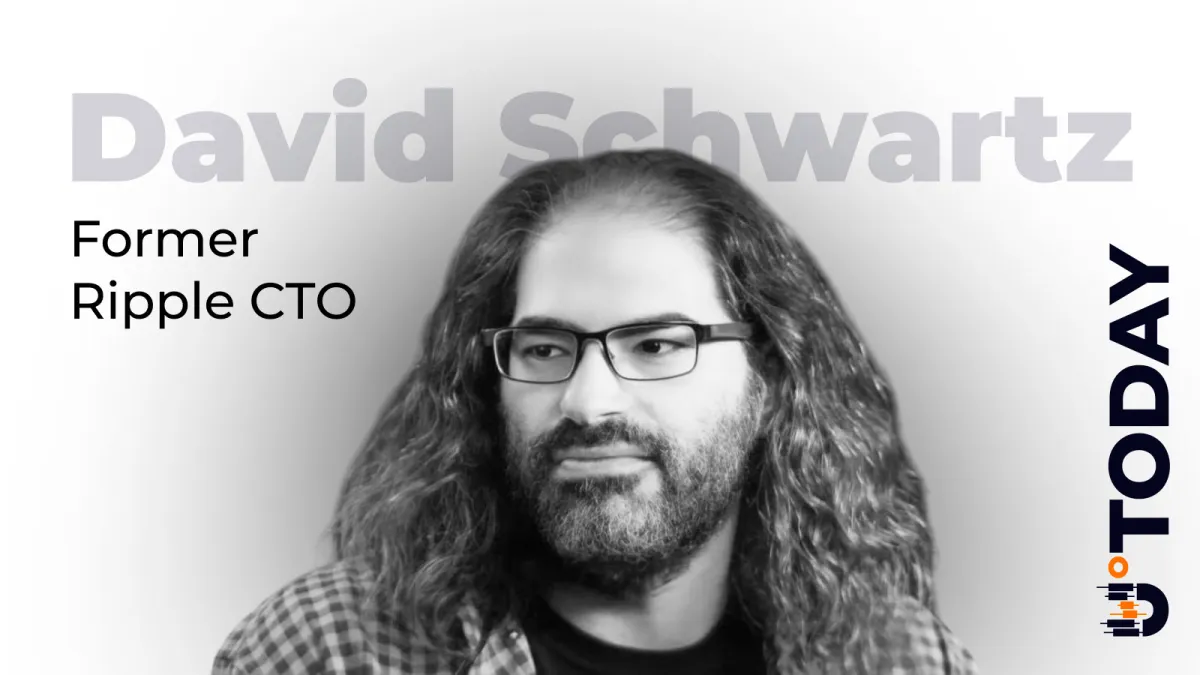
The question of XRP staking found its way into a discussion on X, of which Ripple CTO Emeritus David Schwartz was a part.
An X user referred to a 2025 X discussion stemming from a clip from the XRP Apex 2025 event in which Ripple CTO Emeritus responded to a question on a hypothetical protocol incentive model that could work with the XRPL and asked: "When/Can we stake our XRP on the XRPL and earn yield from transaction fees on the network?"
Schwartz answered this with an analogy: "Do you want to be your own bank or do you want someone else to pay you to be their bank?" The response matters as the XRP Ledger does not currently have native staking capabilities.
This might imply XRP holders being their own bank when they hold XRP in their wallets; staking would involve another party having control over their coins, which would now "pay them to be their bank." Schwartz did not, however, explain further what he meant.
XRP staking?
In most blockchain networks, staking is used to align incentives among validators and token holders.

The XRP Ledger does not use a proof-of-stake consensus mechanism like networks such as Ethereum and hence does not have native staking. The XRPL employs the consensus model (Proof of Association), which puts trust and stability first over financial incentives. Validators participate in the network because they care about its health.
XRP native staking would need two things: a source of staking rewards and a way to distribute them. At the moment, transaction fees are burned, which is an intentional design choice to keep the supply deflationary and keep the network efficient.
There is, however, organic experimentation with XRP staking and yield programs from exchanges and DeFi protocols, including Uphold, Flare, Doppler Finance, and Axelar, suggesting that the community is finding ways to engage with XRP within its existing design.
 Dan Burgin
 U.Today Editorial Team
