


ZMO entered the cryptocurrency market in August 2026 with a proposition that differs from the traditional exchange model. Rather than focusing exclusively on adding more assets, markets, or increasingly sophisticated trading tools, the new platform is built around simplifying how users interact with them.
The exchange combines cryptocurrency spot and futures markets with stock futures and a range of simplified trading products under what it calls a 1-Click Trading model. Alongside conventional trading infrastructure, ZMO offers automated strategies, customizable trading bots, API connectivity and earning products.
Established exchanges have generally responded to growing demand by adding more features and increasingly advanced interfaces. ZMO is taking the opposite approach, attempting to reduce the number of decisions and interactions required to access those features.
What Is ZMO?
ZMO is a custodial cryptocurrency exchange and stock futures platform headquartered in Apia, Samoa. The exchange supports more than 450 tradable assets and combines conventional spot and futures markets with simplified trading and automation products.
ZMO's main differentiator is therefore not a proprietary blockchain or decentralized infrastructure. The platform has no native blockchain or decentralized wallet. Instead, its focus is on the trading experience itself.
| Product | Description |
|---|---|
| Spot trading | Conventional cryptocurrency trading across 450+ assets |
| Futures trading | Cryptocurrency & stock futures with leverage of up to 100x |
| Up or Down | Simplified short-term prediction markets covering crypto and stocks |
| AutoTrader | Automated crypto & stock strategies developed by professional traders |
| Smart Earn | Staking and automated earning products |
| Trading Bots | Customizable automated trading tools |
| API Trading | Programmatic access for advanced users and developers |
Key takeaways
The central idea behind ZMO is reducing complexity. Traditional futures platforms can require users to navigate multiple order parameters, contract specifications, margin settings, and trading interfaces. ZMO attempts to abstract some of this complexity through simplified products.
Its 1-Click Futures product, for example, provides a streamlined interface for accessing futures markets, with leverage of up to 100x. All the user has to do is decide how much he/she wants to invest, leverage, and whether to go long or short.
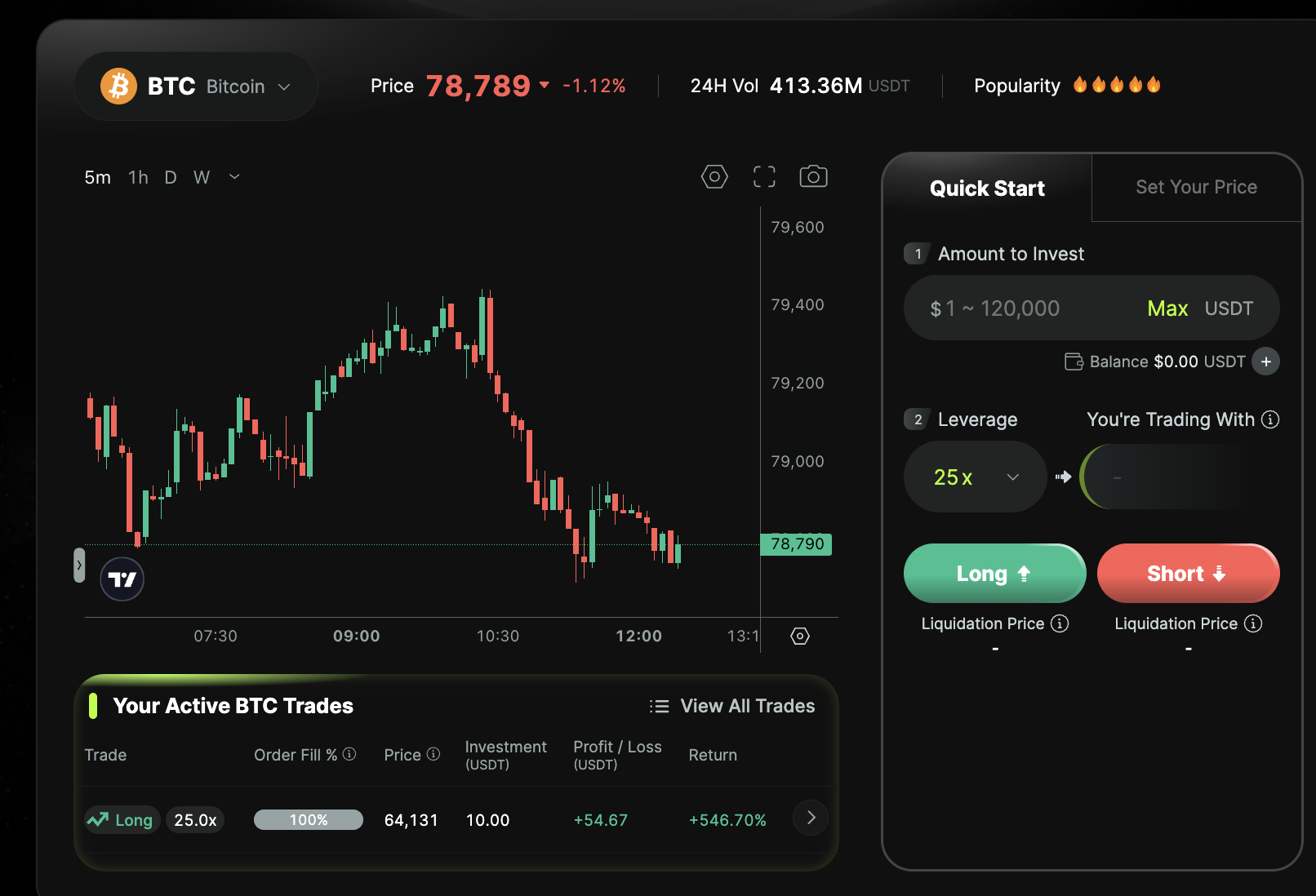
The company applies the same philosophy to its Up or Down product, where users make simple, short-term predictions on supported crypto and stock prices.
The approach is designed to make it easier for newer users to gain exposure to crypto and stock assets.
At the same time, simplifying the interface does not eliminate the underlying risks associated with the products themselves.
Up or Down: Short-Term Prediction Markets
Up or Down is one of the clearest examples of ZMO's attempt to simplify trading. Rather than presenting users with a conventional derivatives interface, the product offers a simple way for the user to predict crypto and stock prices within a 3-15 minute period.
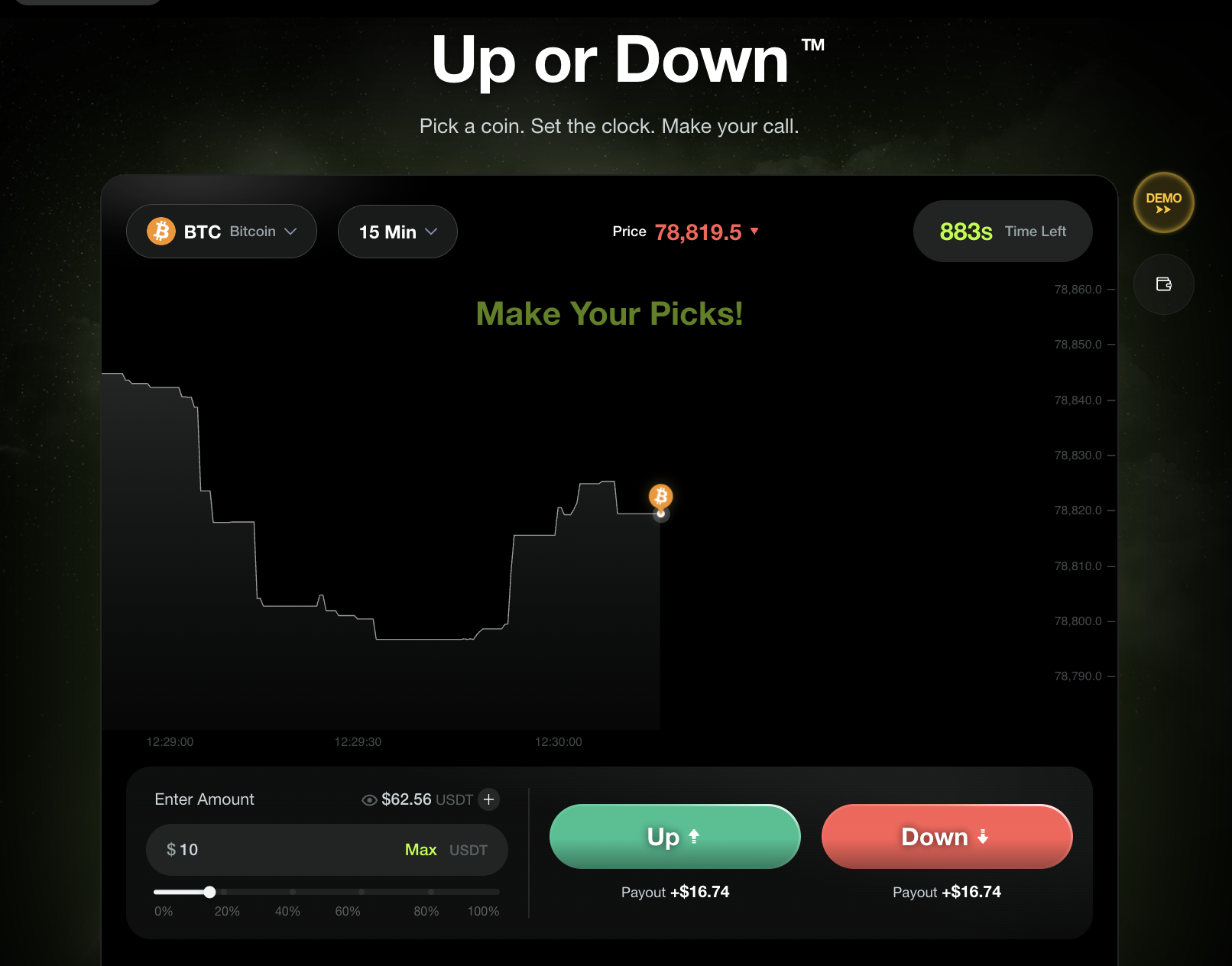
The concept is relatively straightforward: users assess whether an asset is likely to move in a particular direction. They decide how much money they want to put down, and click Up or Down. Once the timer runs out, the winnings get paid out instantly if they win.
The product extends beyond cryptocurrencies, with ZMO also positioning it around stock-related markets. Users can bet on U.S. tech stock prices such as Apple, Robinhood and Meta.
While spot trading involves buying and selling the underlying digital asset, simplified directional products focus on the expected movement of an asset over a specified period.
AutoTrader: Investing in Thousands of AI Trading Strategies
Automation is another major part of ZMO's proposition. Through AutoTrader, the exchange provides access to AI-automated strategies created by professional traders. According to ZMO, users can choose from thousands of strategies based on different approaches and market conditions, across both cryptocurrencies and stocks.
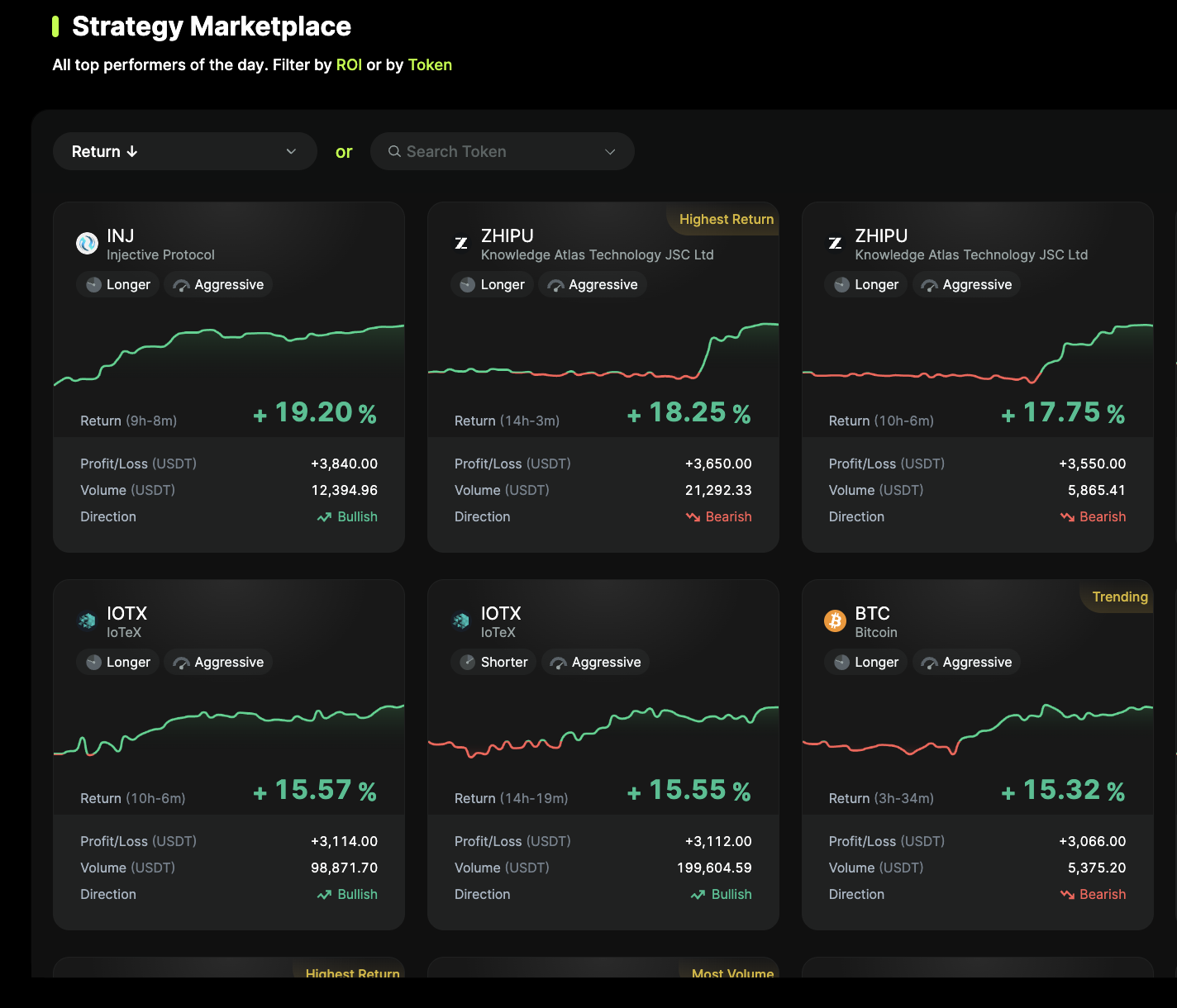
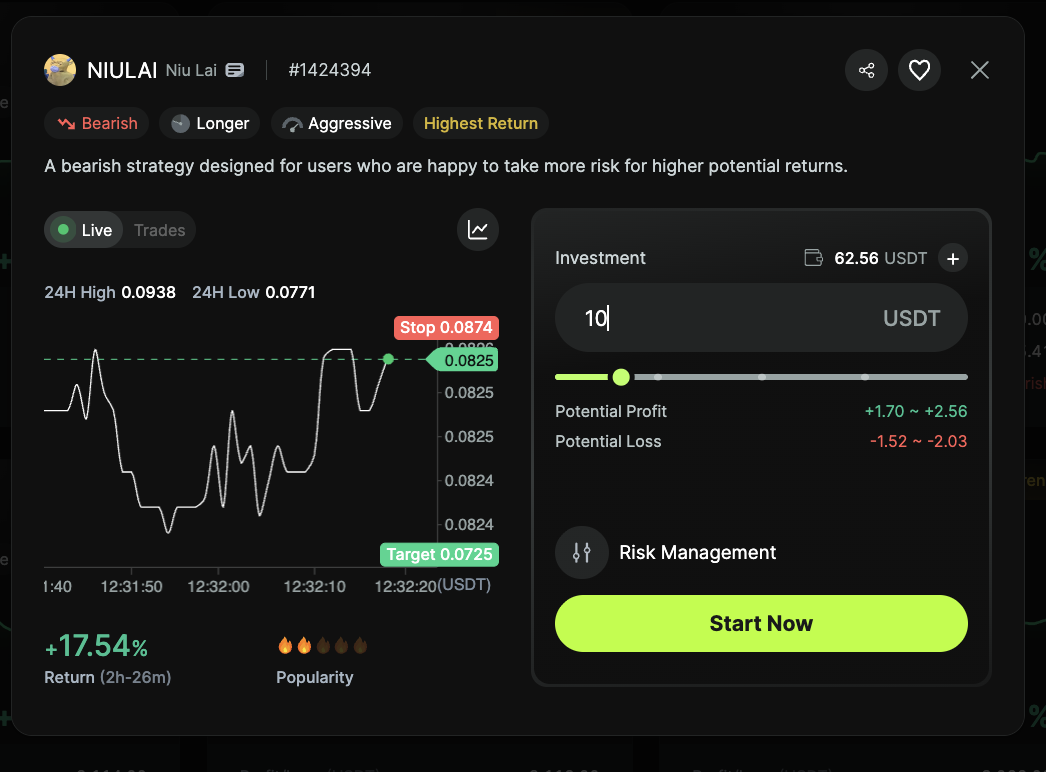
The concept resembles a strategy marketplace rather than a conventional trading bot. Instead of building an algorithm from scratch, users can select an existing automated strategy. Once they pick a strategy, they just have to decide how much they want to invest and have the option to tweak take-profit and stop-loss conditions if they choose to.
For experienced participants, ZMO also offers customizable trading bots and API connectivity. This creates two distinct approaches to automation: simplified access to pre-built strategies and more flexible infrastructure for users who want greater control.
The distinction is important because automated trading does not guarantee positive results. Strategy performance can vary substantially depending on market conditions and historical performance should not be interpreted as a guarantee of future results.
Smart Earn and broader ecosystem
ZMO also goes beyond trading through Smart Earn, which provides staking and automated earning functionality.
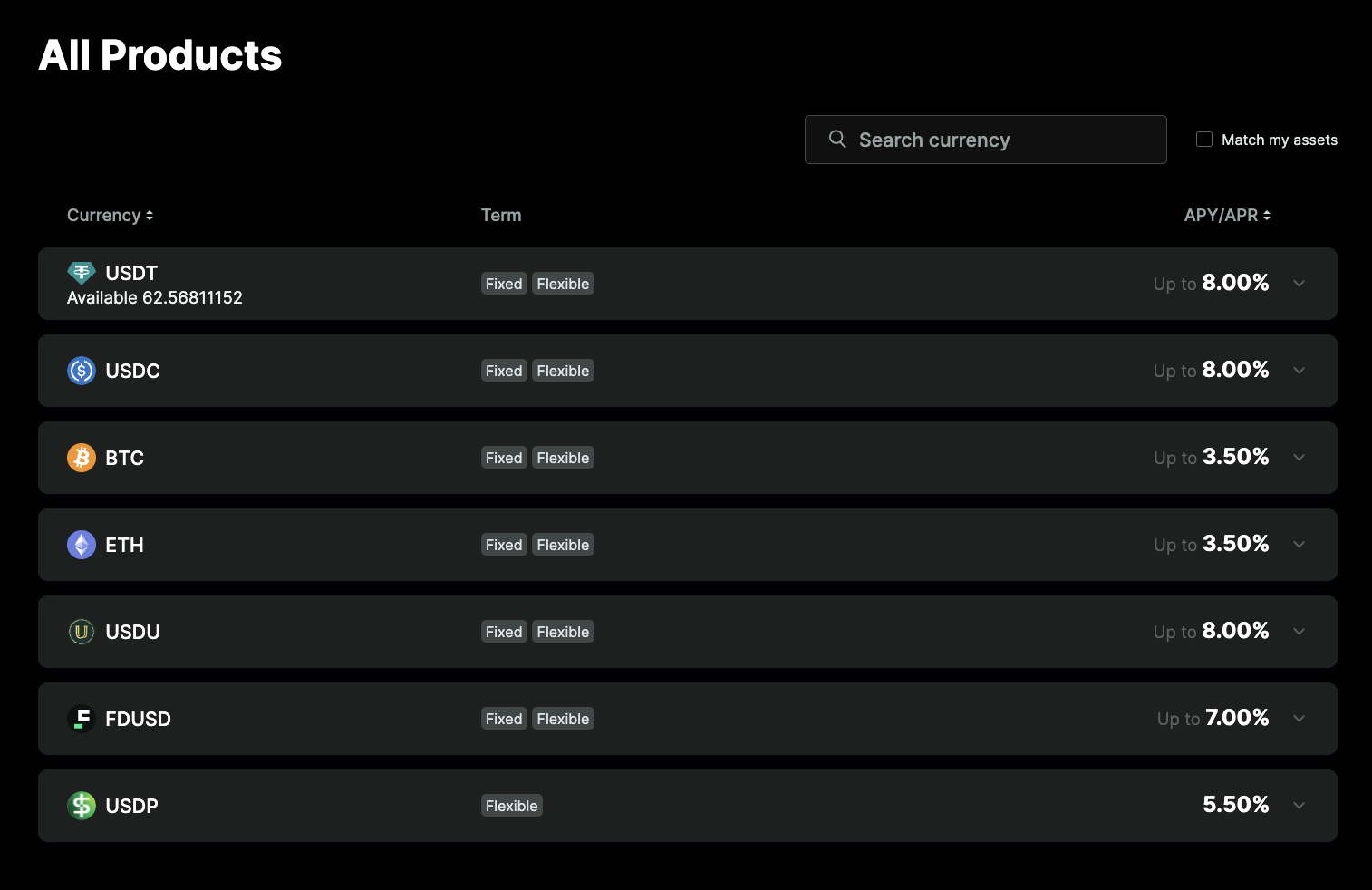
This contributes to the platform's broader attempt to create a single environment for different types of crypto activity. Users can theoretically access spot markets, derivatives, automation and earning products without moving between separate platforms.
The strategy resembles that of larger exchanges, although ZMO's approach is more heavily centered around simplifying interaction with those products.
Despite its emphasis on simplified products, ZMO does not eliminate conventional trading. The exchange supports more than 450 tradable assets across spot and futures markets. API access and customizable bots provide additional functionality for experienced users who prefer greater control over their trading workflows.
This gives the platform two distinct layers. Newer users are presented with simplified products, while more experienced participants can use conventional interfaces and automation tools.
Rewards and incentives
ZMO launched with a Rewards Hub intended to encourage early platform activity. The launch campaign offered bonuses of up to $2,652 for eligible users participating before September 14, alongside a referral program offering commissions of up to 25%.
These incentives are part of ZMO's customer acquisition strategy and should be viewed in the context of the platform's early development. Promotional rewards can encourage initial adoption, but they do not provide evidence of long-term platform performance.
Pros and considerations
ZMO's most distinctive feature is its focus on simplicity. The 1-Click Trading philosophy is applied across several product categories rather than being limited to basic spot transactions.
The platform also combines simplified products with more conventional infrastructure. API trading, customizable bots and a broad spot and futures environment mean that experienced users are not necessarily restricted to the simplified interface.
ZMO operates as a custodial exchange, meaning users do not directly control their trading assets through a decentralized wallet within the platform. This creates the familiar counterparty and platform risks associated with centralized exchanges.
Product availability can also depend on jurisdiction and applicable regulations, particularly because ZMO combines cryptocurrency markets with stock futures.
Why ZMO Matters
ZMO's launch reflects a broader change in how crypto platforms are approaching user experience.
As exchanges accumulate more products, interfaces can become increasingly difficult for newcomers to navigate. ZMO's response is to abstract some of that complexity rather than adding another layer of functionality.
Whether this model becomes a major trend remains uncertain, but the concept is notable. The exchange is attempting to make the interface simpler while retaining access to sophisticated underlying infrastructure.
Verdict
ZMO is an interesting new entrant built around a clearly defined product philosophy. Its 1-Click Trading model provides a consistent theme across simplified futures, directional products, automation and earning tools, while conventional spot and futures markets, APIs, and customizable bots provide additional depth.
ZMO stands out less because it offers a completely new category of financial products and more because of how it attempts to package existing crypto trading infrastructure. Its combination of simplified interfaces, automation, stock futures, conventional markets and API functionality gives the exchange a distinct identity from the outset.
For the industry, ZMO provides an interesting case study in whether simplification rather than additional functionality can become the next major direction for crypto exchange design.
 Dan Burgin
 U.Today Editorial Team
