
Disclaimer: The opinions expressed by our writers are their own and do not represent the views of U.Today. The financial and market information provided on U.Today is intended for informational purposes only. U.Today is not liable for any financial losses incurred while trading cryptocurrencies. Conduct your own research by contacting financial experts before making any investment decisions. We believe that all content is accurate as of the date of publication, but certain offers mentioned may no longer be available.

Crypto exchange SBI VC Trade, owned by Japanese financial giant SBI Holdings, has just crossed the mark of 2 million registered accounts, revealing a notable trend in its latest report: right now, amid the yen's historic decline, local businesses have begun actively buying Bitcoin and XRP to pay bonuses and dividends to their own shareholders.
Cryptocurrency is usually associated with retail traders, but in Japan the situation has changed because of the weak national currency, which is forcing companies to look for new ways to protect capital and diversify reserves through the premium corporate service SBIVC for Prime.
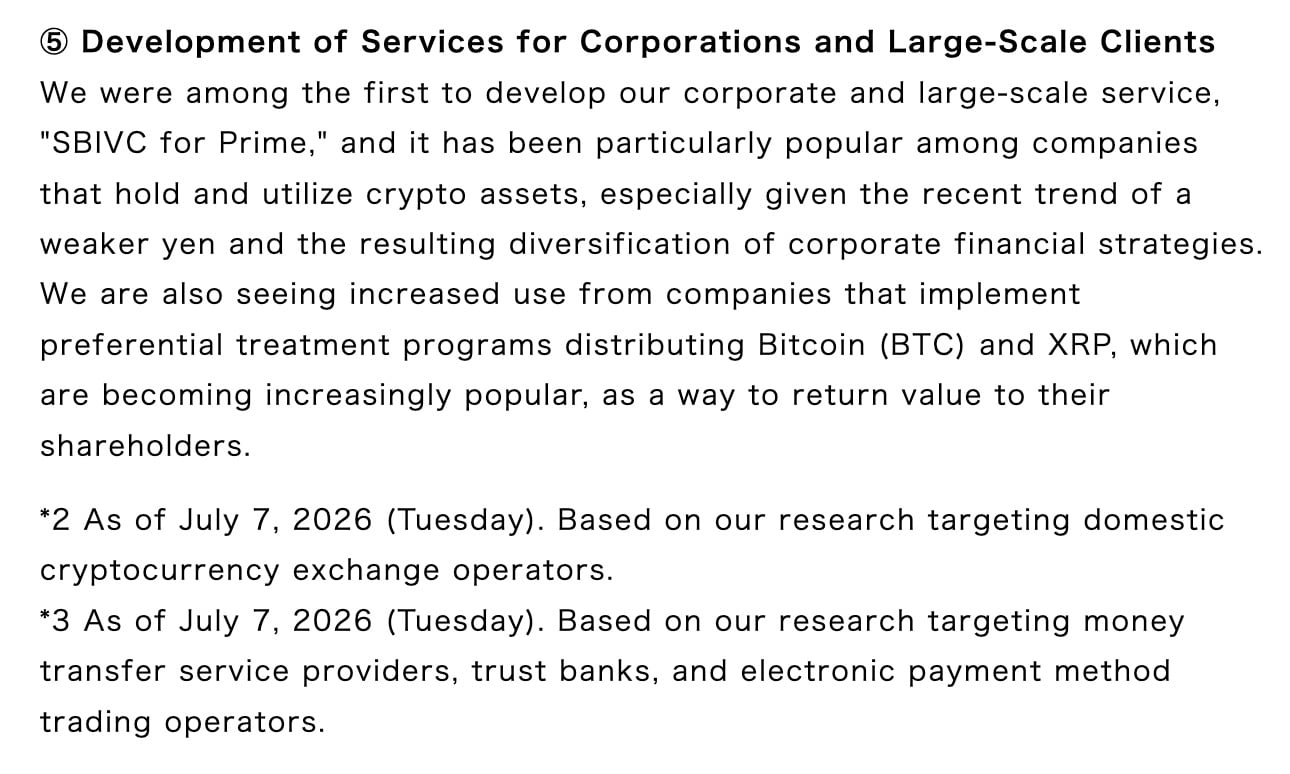
However, companies are not buying Bitcoin and XRP for classic exchange speculation, but for a new national practice in which corporations include cryptocurrency in their shareholder loyalty programs. Judging by registration dynamics, the company says this incentive tool is working flawlessly.
In addition, SBI claims first place in the country by the number of coins available for staking, giving businesses an additional source of passive income.
How SBI and Ripple are quietly cornering Japan's on-chain market
The round figure of 2 million accounts, recorded on July 6, also became the result of aggressive market consolidation, since this number was formed through the merger of accounts from the VCTRADE and BITPOINT platforms after the April acquisition of BITPoint Japan.
At the same time, SBI is literally taking over the developing stablecoin market, having launched last month Japan's first regulated trading of Ripple's dollar-pegged token RLUSD and the yen trust token JPYSC.

The full green light for Ripple assets is explained by the fact that the two companies are connected through the joint venture SBI Ripple Asia, which has been gradually moving Japan's huge 30-trillion-yen prepaid payments market onto the blockchain. To cement this success, the company immediately rolled out a lending service for the new tokens, allowing users to earn on lending in digital dollars.
The conglomerate's ultimate goal is obvious — overtake its main historical competitors by client base, including Coincheck, which still leads with 2.62 million accounts, and bitFlyer, build a full-fledged on-chain ecosystem, including one based on Ripple and XRPL technologies, and become the number one crypto exchange in Japan.
 Dan Burgin
 U.Today Editorial Team
