
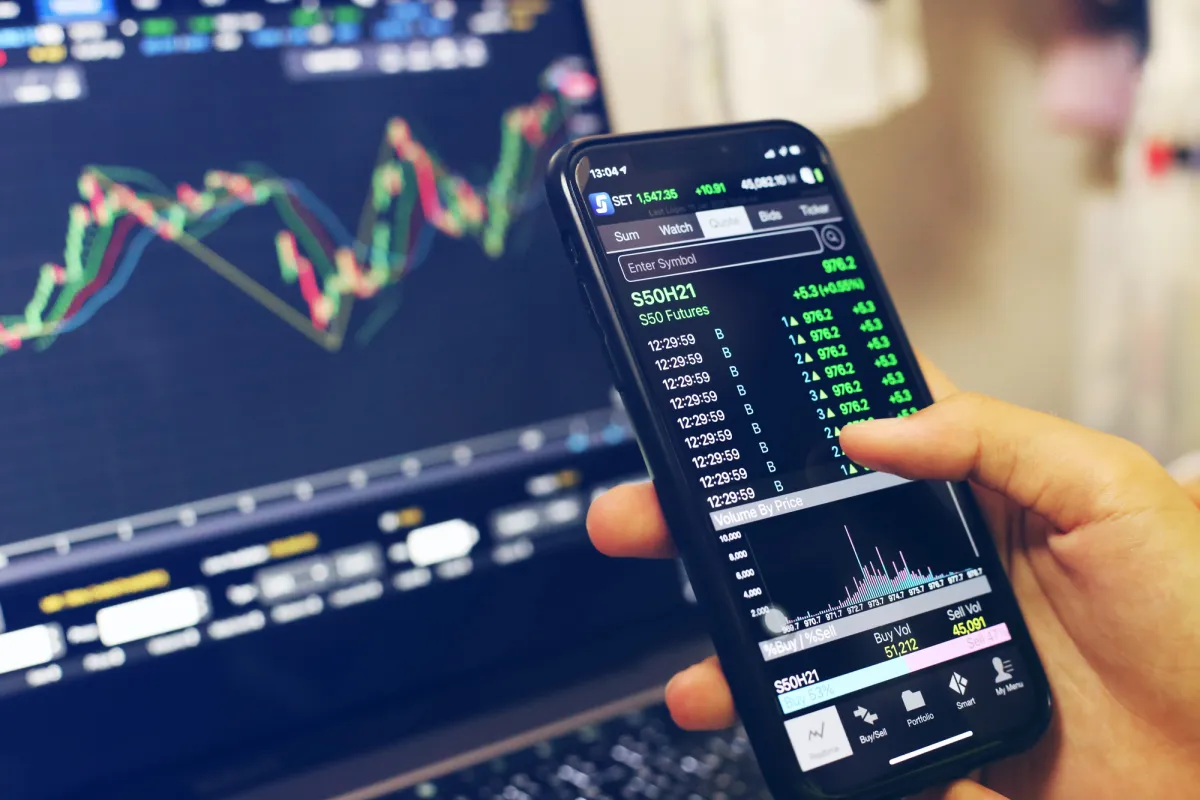

In 2026, U.S. stocks have become a new battleground for crypto exchanges competing for user attention.
The numbers help explain why. According to The Guardian, citing LSEG data, AI hardware and storage names have posted outsized gains in the first half of 2026. SanDisk is up 780% year to date, Micron 296%, Western Digital 240%, and Seagate 226%.
The S&P 500, by comparison, has gained 7.4%. As capital flows into the AI hardware sector, trading U.S. stocks is no longer just about long-term portfolio allocation. It has become an event market traded around earnings, supply chains, and policy announcements.
Tariffs, rate decisions, and geopolitical risks can reshape expectations before the open, after the close, or over the weekend.
When opportunities appear outside regular trading hours, users need a tool that lets them act on their views immediately.
This is why Stock Futures are back in the conversation. While spot U.S. equities offer direct exposure to corporate earnings and policy decisions, Stock Futures offer two-way positioning, leverage, and around-the-clock trading, making them better suited to express short-term market views.
Trading opportunities are expanding beyond individual stocks
Over the past two years, trading in U.S. technology stocks has become increasingly driven by events that affect entire sectors and supply chains.
Take AI semiconductors as an example. Market attention has expanded well beyond NVIDIA to the broader supply chain. As demand for AI training and inference grows, investors are repricing companies across the entire ecosystem. The same investment theme can extend across GPUs, HBM, DRAM, NAND, chip packaging, storage, data centers, and cloud services.
Micron's latest earnings offer a perfect illustration. Investopedia reported that Micron's fiscal Q3 2026 revenue reached 41.46 billion dollars, well above expectations, sending the stock up as much as 13% after-hours trading.
The report also lifted the broader market, with Nasdaq 100 futures rising 2.1% and S&P 500 futures gaining 0.7%. The market reaction extended beyond Micron, boosting broader risk sentiment.
The bigger picture is a rally across AI hardware stocks. Storage and chip names including SK hynix, Samsung, Micron, SanDisk, and Western Digital surged in the first half of 2026, as capital rotated from software narratives into AI hardware and storage.
This creates a more complex trading environment. Beyond choosing an individual stock, traders also need to assess how an event may affect the company, its suppliers and peers, related ETFs, and the broader Nasdaq index.
How to trade events with stock futures
In event-driven markets, platform capability determines whether a view can be converted into a trade. Several crypto exchanges now offer Stock Futures.
MEXC stands out for the lowest fees, the widest asset coverage, and the highest leverage: 0-fee trading, more than 200 Stock Futures contracts, 24/7 access, and up to 200× leverage on popular names such as MU, SNDK, and NVDA.
For crypto users, these features translate into lower costs for testing trading ideas, longer trading windows, and higher capital efficiency. Event trading typically breaks down into three scenarios:
- Earnings: Ahead of earnings from names like NVIDIA, Micron, and Apple, the market has usually priced in expectations around revenue, margins, guidance, and supply chain shifts. Users who expect earnings to exceed forecasts can take a directional position before the release. If the market confirms a trend after the report, they can follow the after-hours or next-day move. Spot trading also allows users to participate, but Stock Futures let users trade both long and short.
- Policy shocks: Tariff changes, Fed commentary, export controls, and geopolitical flare-ups often occur outside regular U.S. trading hours. For crypto users, waiting for the market to open means the first round of repricing is already done. A 24/7 trading window allows immediate action. When export control news hits AI chips and semiconductor equipment, users can express a view through individual-stock or index futures first, then adjust once the U.S. market officially opens.
- Sector rotation: AI is a theme that rotates continuously. Capital may crowd into logic chips in April, shift to memory in May, then spread to data centers, cloud, or power infrastructure. Stock Futures let users go long the emerging themes while trimming or hedging exposure to the old one.
MEXC platform data after Micron's earnings illustrates the pattern. According to a recent MEXC trading review, Micron became the platform's most traded asset that day, outperforming all other equity and index futures, with volume up roughly 142% from the previous session.
SanDisk, SK hynix, and the DRAM ETF rose by about 83%, 28%, and 35% respectively. Together, these four AI storage names accounted for 44% of trading volume among the day's top 10 Stock and Index Futures.
More notably, capital flows showed a clear thematic focus. From June 22 to 24, ahead of Micron's earnings release, trading volume in AI storage names on MEXC rose 28%, the DRAM ETF gained 92%, and SOXL climbed 51%, while broad U.S. index futures volume fell about 55%.
Users were positioning around the storage theme before the release, concentrating on the supply chain rather than the wider market.
This is the event-driven playbook for Stock Futures: Identify the event, assess which parts of the supply chain may be affected, and then express the view through an individual stock, a sector, an ETF, or an index.
Why stock futures fit event-driven trading
Three product characteristics make Stock Futures a natural fit for event trading: two-way positioning, 24/7 market access, and capital efficiency.
First, Stock Futures support both directions by design. When earnings top expectations, users can go long a stock or its sector. When results disappoint, policy shocks hit, or rotation begins, they can go short. Hold real stocks for long-term growth. Trade Stock Futures for short-term catalysts.
Second, Stock Futures bridge the gap outside regular market hours. Regular U.S. trading hours run from 9:30 am to 4:00 pm Eastern. Pre-market, after-hours, and overnight sessions are expanding, but liquidity, spreads, and instrument coverage remain uneven.
For traders in Asia and across the crypto market, many earnings releases, policy headlines, and breaking news arrive late at night or on weekends local time. Waiting for the market to open often means the move is already priced.
Third, Stock Futures allow traders to deploy capital more efficiently during key market events. On a crypto platform, users can switch between instruments quickly through USDT margin, a unified account, and leverage, without holding shares long term or moving funds across platforms.
The same mechanics amplify risks as well. In high-volatility events, position management matters more than being right on direction.
The role of stock futures in the US stocks product suite
Stock Futures serve a distinct purpose. They provide exposure to price direction only, while shareholder rights and dividends remain with real equity products.
Users who want to hold Apple, NVIDIA, or Tesla for the long term are better served by real stock products. MEXC's RealStocks offers real U.S. equity trading through the licensed broker Atomic Vaults, providing asset ownership and shareholder rights.
Pre-IPO Launchpad provides access to companies before they go public. Stock Futures are designed for event-driven trading. Together they cover the full spectrum of U.S. stocks participation, giving crypto users with different risk preferences a way to capture opportunities on a single platform.
The biggest advantage is that users no longer need to switch between multiple platforms. Hold RealStocks for long-term conviction in a company. Trade Stock Futures around earnings, policy, and rotation. Turn to Pre-IPO Launchpad for early access to pre-listing names like OpenAI or Anthropic. The product suite lowers the friction of accessing global assets.
Conclusion
Within the U.S. Stocks product suite, Stock Futures are the primary tool for short-term, event-driven trading.
As U.S. equity markets become increasingly driven by earnings, policy, supply chains, and macro expectations, users need to act quickly across instruments, directions, and time windows.
Stock Futures bring a familiar trading format into the U.S. equity event market, covering the short-term trade while RealStocks carry long-term ownership.
During earnings seasons, policy announcements, and periods of sector rotation, Stock Futures may become one of the most direct tools for participating in U.S. stock volatility.
Disclaimer: This article is for informational purposes only and does not constitute investment advice. Futures trading involves leverage and high volatility and may result in loss of principal. Availability of U.S. stock products may be restricted by local regulations in certain jurisdictions. Past performance does not guarantee future results. Users should make decisions prudently based on their own risk tolerance.
 U.Today Editorial Team
 Dan Burgin
