

Disclaimer: The opinions expressed by our writers are their own and do not represent the views of U.Today. The financial and market information provided on U.Today is intended for informational purposes only. U.Today is not liable for any financial losses incurred while trading cryptocurrencies. Conduct your own research by contacting financial experts before making any investment decisions. We believe that all content is accurate as of the date of publication, but certain offers mentioned may no longer be available.

As the year draws to a close, Shiba Inu is under subtle but significant pressure. SHIB appears weak based solely on price action; it is still in a protracted downtrend, trading below all significant moving averages and failing to recover important resistance levels. Volatility is reduced, momentum is muted and any brief upturns have been fleeting.
Something brewing for SHIB
Roughly 130 billion SHIB have been added to exchange reserves in the past day. This structural change in liquidity merits consideration, particularly at this point in the trend. Since it may indicate that a sale is being planned, an increase in exchange reserves is frequently interpreted as bearish. However, it is true that interpretation is lacking.
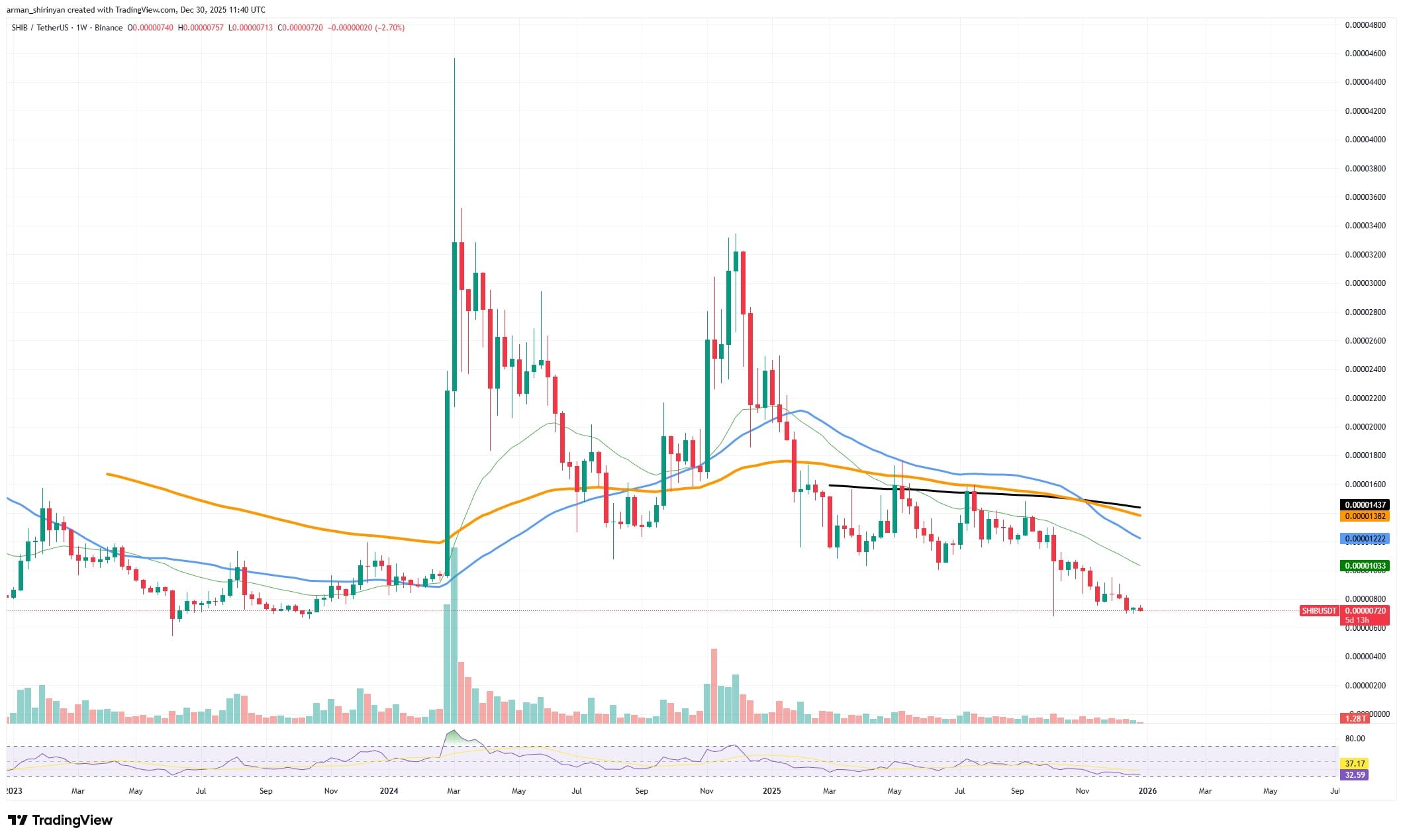
The price of SHIB has already been declining for several months, and it is currently close to long-term compression zones, where selling pressure has traditionally lessened. Large reserve inflows at low prices frequently correspond with position rearranging and accumulation-driven liquidity placement rather than impending dumping.

Transaction activity and transfer counts are increasing rather than plummeting. This implies that even when prices decline, participation stays constant. In other words, SHIB is being repositioned rather than abandoned. Technically speaking, the long-term trend line is still flattening rather than accelerating downward, and SHIB is significantly extended below its medium-term averages.
Selling not guaranteed
During the decline, volume has decreased, which typically indicates weariness rather than a resurgence of aggressive selling. In situations like this, markets covertly accumulate inventory prior to an increase in volatility. The main risk is still clearly visible. The stabilization thesis may be refuted if SHIB breaks lower due to an aggressive sale of the additional exchange supply into thin liquidity.
This would force the price into unexplored negative territory and postpone any potential rebound until well into 2026. However, if that supply is either absorbed or remains idle, the opposite occurs. Sharp upside movements can be triggered by even modest demand as liquidity increases and downside pressure decreases.
 Dan Burgin
 U.Today Editorial Team
