
Disclaimer: The opinions expressed by our writers are their own and do not represent the views of U.Today. The financial and market information provided on U.Today is intended for informational purposes only. U.Today is not liable for any financial losses incurred while trading cryptocurrencies. Conduct your own research by contacting financial experts before making any investment decisions. We believe that all content is accurate as of the date of publication, but certain offers mentioned may no longer be available.

The number of daily payment transactions on the XRP Ledger has recently surpassed 1.5 million, indicating a clear expansion of activity. This milestone supports the idea that XRPL is becoming popular outside of retail speculation, especially in institutional and enterprise-driven use cases. It also shows a consistent rise in network usage.
XRP's network stabilizes
The increase in payments coincides with a comparatively steady increase in active users, suggesting that growth is caused by wider network participation rather than isolated spikes. Recent months’ transaction data indicates a steady upward trend, with sporadic spikes indicating spikes in demand rather than transient anomalies.
Generally speaking, this kind of activity profile is linked to increasing real-world usage, as opposed to purely speculative cycles.
It seems that institutional adoption is a major factor in this growth. The recent increase in transaction volume indicates that XRP Ledger’s long-standing positioning as an infrastructure layer for cross-border payments and liquidity solutions is gaining traction.
Increased payment counts are frequently associated with remittance flows, enterprise-level settlement activity and backend integrations, all of which support ongoing network demand.
XRP's ecosystem grows
Emerging technologies are also starting to be incorporated into the XRPL ecosystem, especially in the field of autonomous systems. Additionally, AI agents can now use the x402 standard to transact directly on the XRP Ledger. Agents can now execute payments in XRP and RLUSD natively, thanks to this facilitator, adding a new level of automated economic activity.
This transition to transactions powered by machines is an example of a structural evolution. XRPL is positioning itself as a platform, where programmable agents can communicate, settle payments and function continuously, rather than depending exclusively on human-initiated transfers.
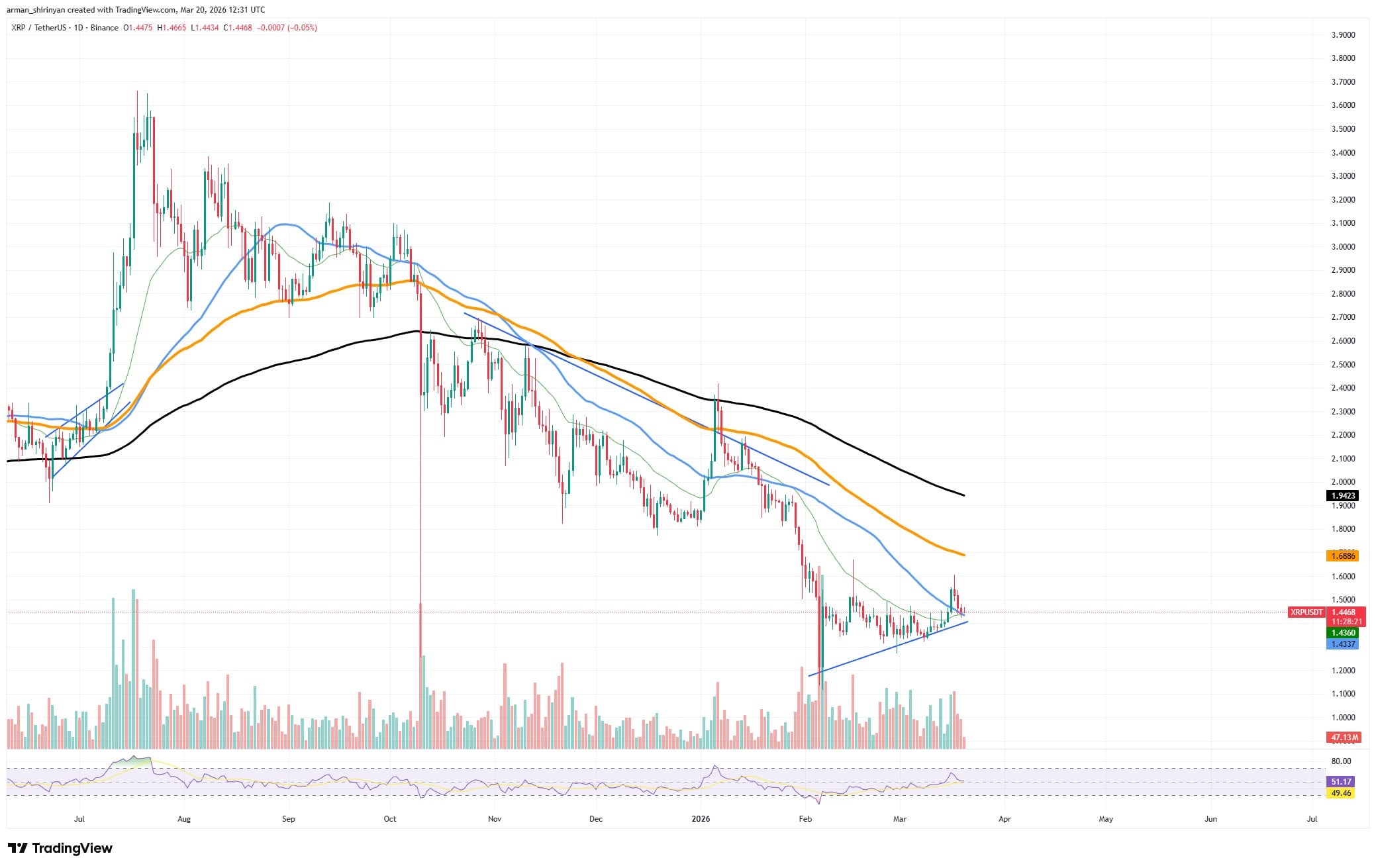
In the short term, XRP’s price structure is still under pressure, reflecting broader market conditions, even though on-chain metrics are improving. The difference between network activity and price action is noteworthy, though. Even though short-term technicals are still unpredictable, sustained growth in payments and adoption may offer a more robust long-term valuation.
 Dan Burgin
