
Disclaimer: The opinions expressed by our writers are their own and do not represent the views of U.Today. The financial and market information provided on U.Today is intended for informational purposes only. U.Today is not liable for any financial losses incurred while trading cryptocurrencies. Conduct your own research by contacting financial experts before making any investment decisions. We believe that all content is accurate as of the date of publication, but certain offers mentioned may no longer be available.

Recently XRP’s burn rate has seen multiple notable spikes, with transaction fees momentarily rising and removing more XRP from circulation. At first glance, this could appear to be a bullish supply shock narrative. In actuality, the data presents a different picture.
Burn rate is passive
Rather than being a long-term trend, the burn spikes are clearly visible in brief bursts. Around the middle of March, fee-related burns increased dramatically, peaking during times of high network activity.
These peaks, however, soon subsided and returned to baseline levels. This behavior shows that the burn mechanism of XRP is reactive rather than structural. Instead of acting as a constant deflationary force, it is totally dependent on transaction throughput.
This is further supported by the transaction success count. Successful transactions surpassed 2.6 million during a brief surge in activity, but this momentum was short-lived. The subsequent decline implies that the network is not sustaining the usage level necessary to sustain a persistent burn narrative.
Bears control narrative
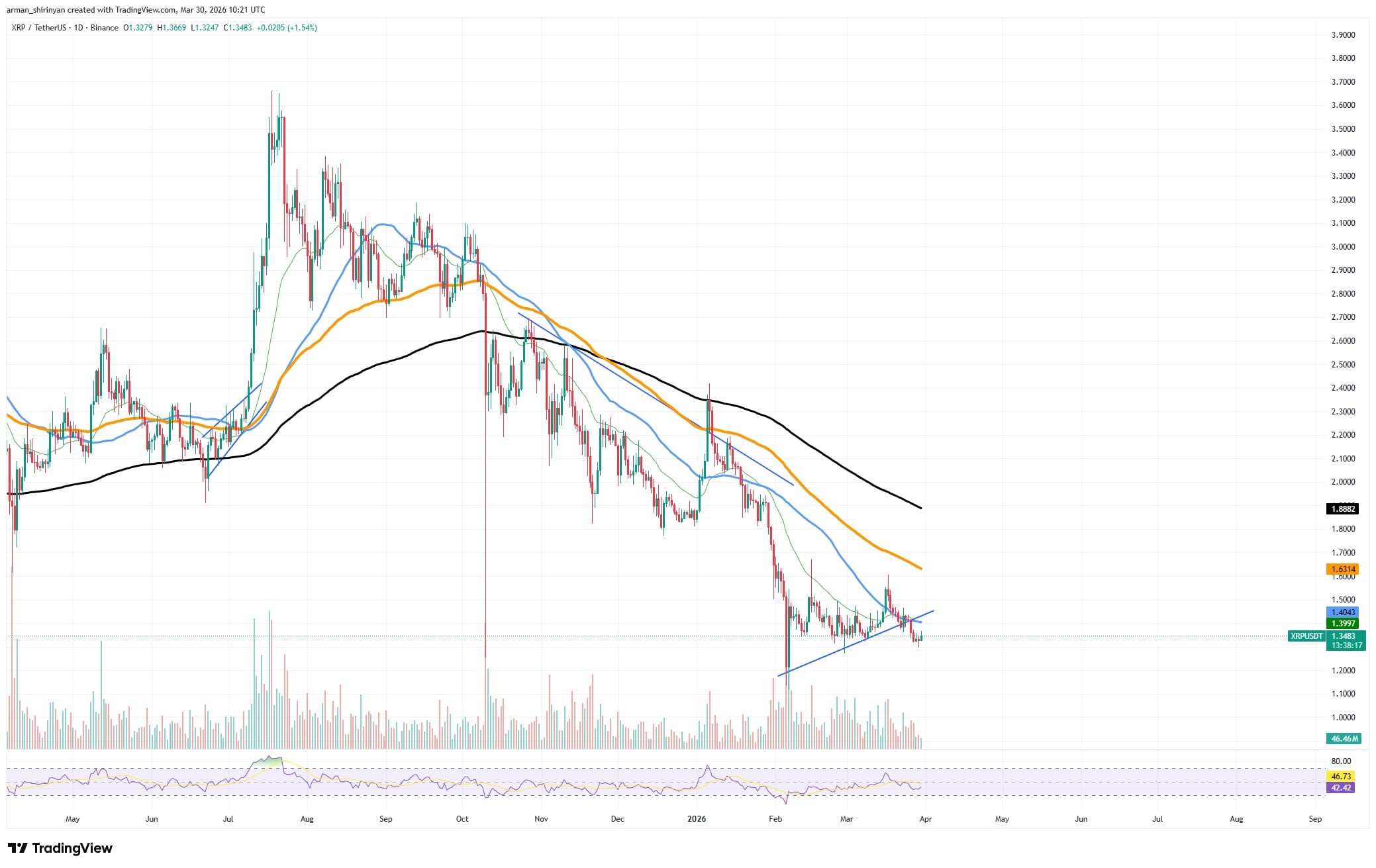
XRP’s weakness is still evident in its price. The asset’s descending structure is still present, but it is trading below important moving averages. The price is testing that support zone once more after the recent attempt to push higher from an ascending support line failed to result in a breakout. This is consistent with the on-chain data, which shows that short-term activity spikes do not correspond to long-term strength.
This discrepancy explains why the market’s perception of the burn mechanism has not stuck. Investors typically price long-term trends rather than singular occurrences. The supply dynamics and long-term valuation of XRP are not significantly affected by a few days of increased burning caused by transient activity.
Expectations must be tuned down for the future. As of right now, XRP’s burn mechanism cannot serve as a significant bullish catalyst. The network would require steady high-volume usage over long stretches of time in order for that to change.
Until then, tokenomics will not be the main factors influencing price; instead, market structure and general sentiment will. Both continue to lean bearish at the moment.
 Dan Burgin
 U.Today Editorial Team
