
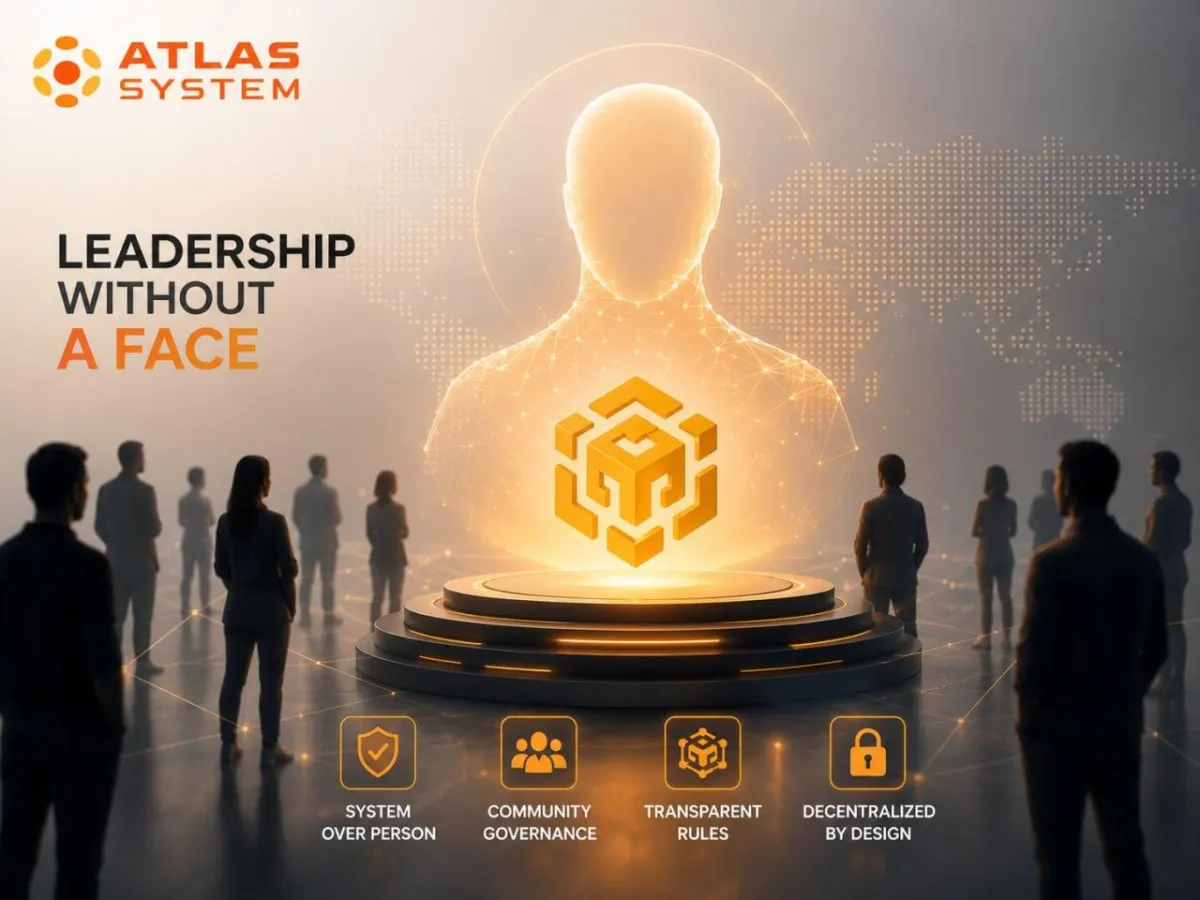

Atlas System has not appointed an autonomous artificial intelligence as its chief executive. According to the project's own materials, the Architect represents a real founder who remains involved in strategic decision-making alongside the Atlas team. The digital persona acts as the project's public voice, explaining its principles, technical architecture and long-term direction. It does not independently control the company, make unsupervised decisions or replace human management.
That distinction matters. Calling the Architect an "AI CEO" would create the impression that an algorithm runs the platform. The reality described by Atlas is different: human leadership remains in place, while the founder's public identity is presented through a controlled digital interface. The project publicly uses the title Founder & System Architect of Atlas, rather than placing a traditional CEO figure at the center of its communications.
Moving Attention Away From the Founder
In many technology and crypto companies, the founder becomes the main source of trust. Users follow interviews, social media posts and public appearances, sometimes giving more weight to a leader's reputation than to the product itself.
Atlas is trying to reverse that hierarchy. The project argues that users should focus on published rules, smart contracts, transaction history, documentation, audits and disclosed risks. The Architect is positioned as a narrator and designer of the system, not as a celebrity whose personal image becomes inseparable from the platform.
This approach reflects a wider Web3 ideal: systems should be judged by verifiable mechanics rather than personal promises. But replacing a founder's face with a digital persona does not remove the founder's influence. It only changes how that influence is presented.
The Story Behind the Architect
According to project materials, the Architect previously worked in multilevel marketing organizations and gained experience in building referral structures, training teams and developing international communities. That experience also exposed what he saw as a weakness in traditional network businesses: participants may build valuable organizations without controlling the rules or long-term future of the company.
The second part of the founder's stated background is technical. He worked with software architecture, blockchain infrastructure, smart contracts and digital distribution systems. This experience influenced the design of Smart Cycle, where participation rules and transaction logic are intended to be defined in code rather than managed entirely through internal administration.
The third influence came from time spent in African countries, where the founder observed community-based mutual support systems. Atlas System presents these practices as a social foundation for its model: groups combine resources and support one another according to shared rules, especially where conventional financial services are limited.
These claims form the project's founder narrative, but they are currently presented through project materials rather than a publicly identified individual whose professional history can be independently reviewed.
What the Digital Founder Model Changes
The Architect model changes the project's communications. It allows Atlas to maintain a consistent public voice without turning the founder's private identity into a central marketing asset. It may also reduce the risk that every product decision becomes linked to one person's public reputation or personal behavior. A digital persona can communicate across languages and formats, explain technical ideas and maintain a recognizable identity without requiring the founder to appear publicly.
The model may also help present itself as an ecosystem rather than a founder-led startup. The Architect becomes a role that represents the platform's design philosophy, while the community and technical infrastructure remain at the center of the story.
What It Does Not Change
A digital public face does not make leadership decentralized. Atlas System acknowledges that strategic decisions are still made by the real founder and the project team. Smart contracts may automate certain processes, but people continue to manage development, communications, infrastructure and broader governance decisions.
This creates an accountability question:
- Who approves statements delivered by the Architect?
- Who controls the digital persona?
- Who can change its message?
- Who is legally responsible for the platform's activities?
- Who controls administrative permissions and operational decisions?
The project's argument is that users should not trust a face. That is reasonable. But users still need to know where authority sits. In a Web3 system involving financial contributions, partner structures and smart contracts, anonymity or pseudonymity can increase the importance of other forms of verification. Public code, contract addresses and on-chain records can show how parts of the system operate, but they do not identify who bears legal or operational responsibility when problems arise.
Identity Is Not a Substitute for Transparency
The Architect should not be treated as proof that Atlas System is decentralized, safe or sustainable. The project itself says the digital image is not a reason for blind trust. The more credible interpretation is that Atlas is experimenting with a different public leadership model. It is separating the founder's private identity from the platform's public narrative while continuing to rely on human management behind the interface.
Whether that approach strengthens or weakens trust will depend on what Atlas discloses beyond the avatar. A project can avoid a cult of personality while still explaining who controls key decisions, how authority is limited and what mechanisms exist for accountability. Without that information, removing the founder's face may appear less like decentralization and more like distance.
Atlas System has not replaced its founder with artificial intelligence. It has replaced the traditional founder persona with a digital representation. The bigger question is whether Web3 users will judge that model by its stated philosophy, or by how clearly the people behind it remain accountable.
About the Project
Platform: https://atlas-system.io/
X: https://x.com/AtlasSystemWeb3
Facebook: https://www.facebook.com/profile.php?id=61590728242235
TikTok: https://www.tiktok.com/@atlas_system_official
Telegram Channel: https://t.me/atlas_system_official
Youtube: https://www.youtube.com/@Atlas_system_official
GitHub: https://github.com/atlas-system-dev/atlas-smart-cycle-v1
Disclaimer: This is sponsored content. The information on this page is not endorsed or supported by U.Today, and U.Today is not responsible or liable for any inaccuracies, poor quality, advertising, products or other materials found within the publication. Readers should do their own research before taking any actions related to the company. U.Today is not responsible, directly or indirectly, for any damage or loss caused or alleged to be caused by or in connection with the use of or reliance on any content, goods or services mentioned in the article.
 U.Today Editorial Team
 Dan Burgin
