
Disclaimer: The opinions expressed by our writers are their own and do not represent the views of U.Today. The financial and market information provided on U.Today is intended for informational purposes only. U.Today is not liable for any financial losses incurred while trading cryptocurrencies. Conduct your own research by contacting financial experts before making any investment decisions. We believe that all content is accurate as of the date of publication, but certain offers mentioned may no longer be available.

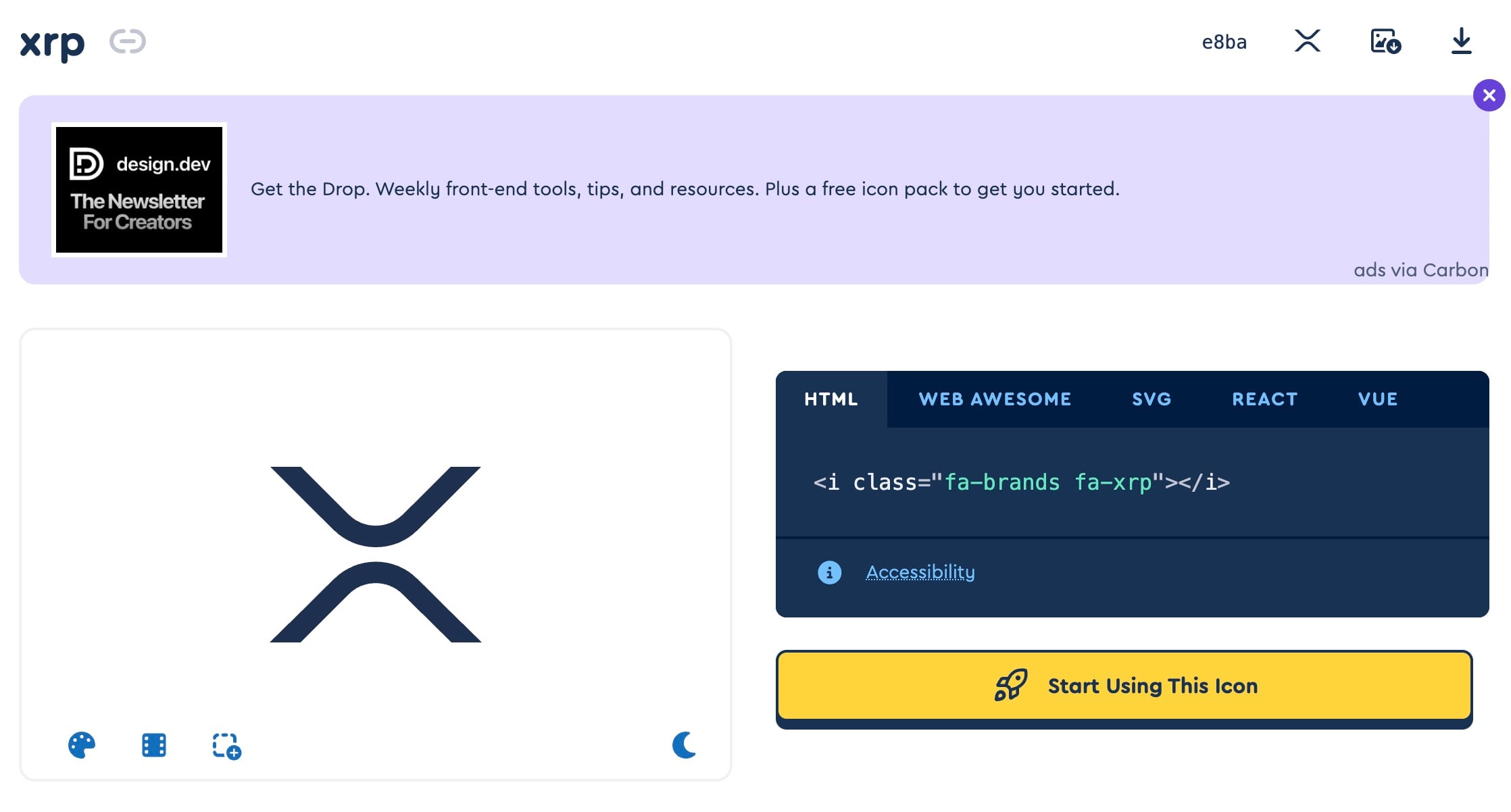
XRP developers are celebrating a quiet but important victory in the fight for digital recognition. After seven years of continuous requests, GitHub discussions and mass voting, the globally popular icon toolkit Font Awesome has finally integrated not only the token's logo, but the XRP Ledger's logo as well.
In its latest 7.3.0 release, which came out in June 2026, official brand icons for the XRP token and the XRPL network appeared.
For those far removed from web development, the scale of the event may seem insignificant, but in the IT industry, it is a serious marker of legitimacy. Bitcoin and Ethereum had been present in the Font Awesome catalog for years, while builders in the XRP ecosystem had to find workarounds — searching for, adapting and self-hosting custom SVG files.
The history of this campaign dates back to 2018, when the first GitHub thread requesting the addition of the logo was created.
By 2020, the campaign had gained maximum momentum, with token holders and application developers organizing mass voting and constantly pushing the topic to the top of discussions.
How one line of code solves a 7-year problem for XRP
For a long time, however, the requests remained unanswered, which regularly sparked discussions within the community about possible bias from major IT platforms toward the Ripple ecosystem. The latest update has finally closed this long-running chapter.
The practical value of this step is enormous, as Font Awesome holds a massive share of the market and provides graphics for approximately 28 million live websites.
Adding the icon to its library means that from now on, any web designer, cryptocurrency wallet developer or DeFi analytics service creator can display the official XRP logo on screen with a single simple line of standard CSS code, completely solving the problem of interface standardization.
Crypto platform Bithomp, which actively supported this initiative throughout the past several years, was among the first to react to the release and shared direct links to the new interface elements and the search page.
After years of waiting, XRP has officially established its brand in the global web infrastructure, proving that persistent community pressure can change industry standards.
 Dan Burgin
 U.Today Editorial Team
