
Disclaimer: The opinions expressed by our writers are their own and do not represent the views of U.Today. The financial and market information provided on U.Today is intended for informational purposes only. U.Today is not liable for any financial losses incurred while trading cryptocurrencies. Conduct your own research by contacting financial experts before making any investment decisions. We believe that all content is accurate as of the date of publication, but certain offers mentioned may no longer be available.

Four months after FIP.16 was authorized by Flare governance with 98.06% support, the proposal is starting to yield quantifiable network-wide changes. Rather than making a single adjustment, FIP.16 redesigned several aspects of Flare's economic structure, including protocol-generated revenue, transaction burns, staking incentives and FLR inflation.
Enforcing inflation drop
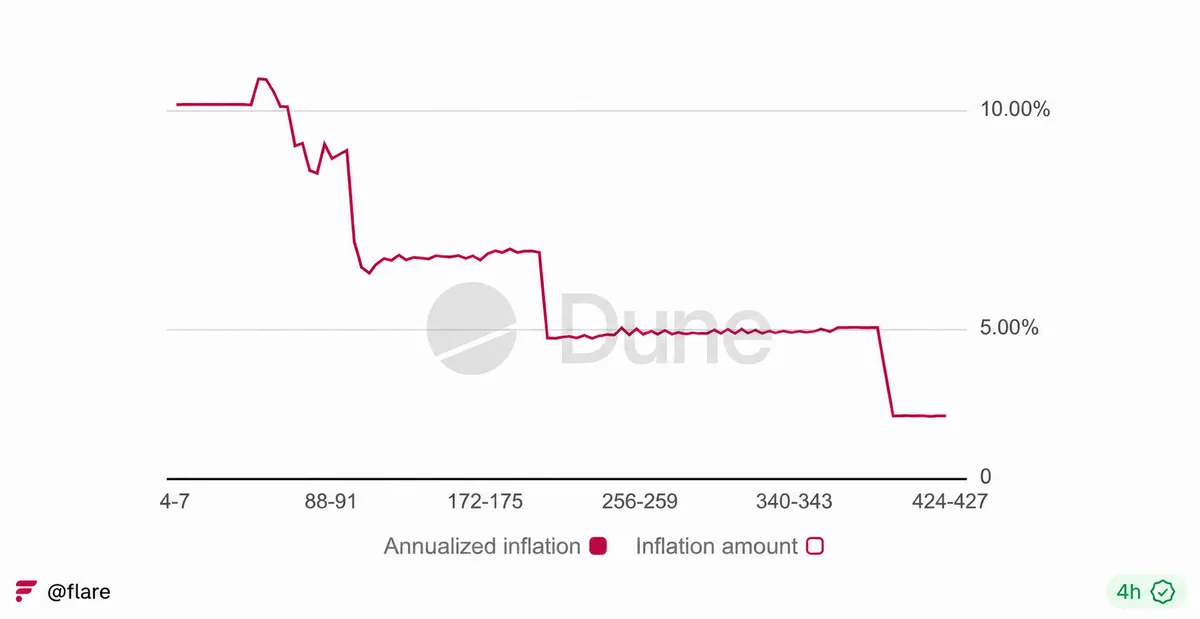
The biggest change occurred in May, when the annual issuance cap dropped from 5 billion to 3 billion FLR and annual FLR issuance was lowered from 5% to 3%. With an inflatable supply of about 87 billion FLR, current gross issuance amounts to approximately 2.6 billion tokens per year.
Crucially, the calculation base can also decline. The inflatable supply does not include tokens accumulated by the Flare Income Reinvestment Entity, or FIRE, burned FLR or unearned rewards held in penalty pools. Another supply-side mechanism was added by the hard fork in July. Flare raised the base transaction fee from 25 gwei to 500 gwei, with the fee being burned.
Burn rate surges
More than 40% of the approximately 15.6 million FLR burned through transaction fees so far this year came after the July 14 upgrade. Staking has demonstrated an even more noticeable response. There are now about 21.5 billion FLR staked, up from roughly 16 billion in July. By late August, staked tokens accounted for about 46% of the combined staked and delegated supply, up from approximately 32% in April.
FIP.16 increases the significance of locked capital in network security by giving P-chain stake five times the signing weight of C-chain delegation.
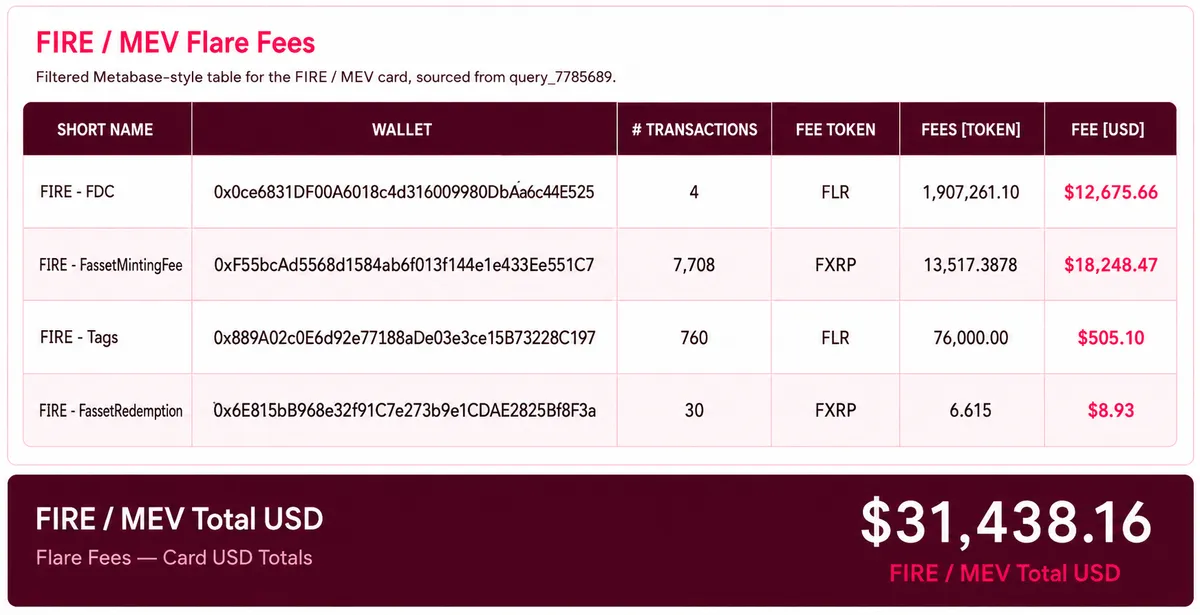
FIRE, meanwhile, creates a new revenue framework while maintaining a much smaller economic footprint. The entity has received about $31,438 since May, with $18,248 coming from FAssets minting fees and $12,676 from FDC requests.
Other sources of income, such as MEV capture, Smart Account fees and Confidential Compute fees, are planned for later stages. For Flare, the early significance of FIP.16 therefore lies more in structural changes than in absolute revenue. Issuance has decreased, burns have increased, the composition of staked and delegated FLR has shifted, and network activity can now generate revenue that could eventually replace some incentives currently funded through inflation.
 Dan Burgin
 U.Today Editorial Team
