
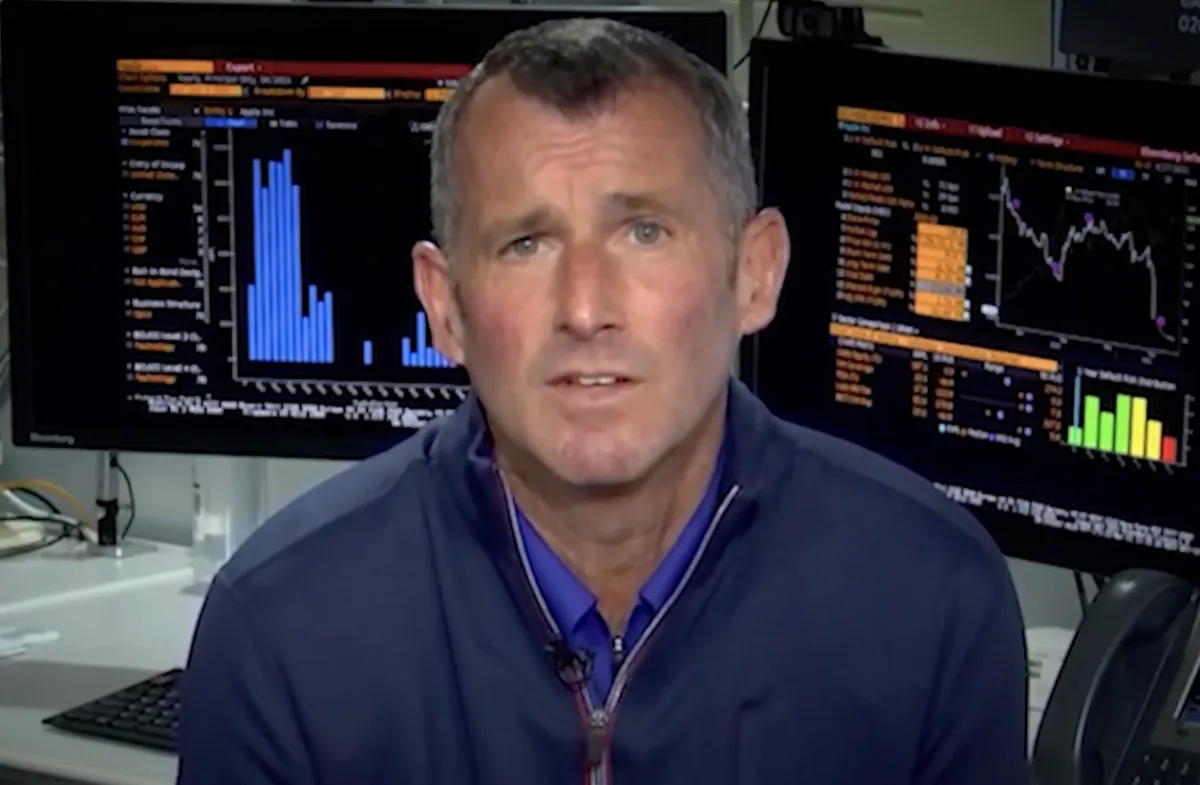

Former U.S. Securities and Exchange Commission (SEC) official John Reed Stark has warned that the cryptocurrency industry faces a "ticking clock" due to rapid advances in quantum computing.
Stark claimed that two recent developments should concern "every financial professional" and particularly long-term Bitcoin holders.
According to the former SEC enforcement attorney, quantum computing progress could create significant future risks due to crypto's integration into traditional finance.
In his post, Start pointed to two recent events. The first involved IBM CEO Arvind Krishna, who recently told CNBC's Jim Cramer that within "3-4 years, we should all be 'rather paranoid'" about the quantum threat.
The second was the publication of an article by Duke University's Lee Reiners. The publication argued that financial regulators should begin preparing contingency plans for digital assets that are vulnerable to quantum breakthroughs.
Merging with traditional finance
According to Stark, the timing is particularly concerning because crypto infrastructure is becoming increasingly embedded within mainstream finance.
"The quantum-vulnerable blockchain infrastructure is being integrated deeper into the traditional financial system every month: spot ETFs, bank custody, stablecoin legislation," he wrote.

This makes the issue more dire than it would have been several years ago. "The trend line is hard to dismiss," Stark stated.
Not another Y2K scare
Stark rejected comparisons between today's quantum concerns and the infamous Y2K computer bug. "Make no mistake about it -- this is no Y2K bug-like situation," he wrote.
Stark argued that this outcome resulted from years of aggressive regulatory oversight (not luck).
"All went fine (thankfully) but only because the SEC spent all of 1998 and 1999 fiercely enforcing Y2K Bug disclosure from, and Y2K Bug remediation by, all SEC-registered entities, especially brokerage firms, clearing firms and national exchanges."
Meanwhile, he has taken issue with the SEC's current lack of engagement on quantum computing risks. "Sadly, don't expect the cavalry to ride in from the SEC," he wrote.
The former regulator criticized SEC Chairman Atkins, who "spent years before his appointment on the other side of the table." This is a reference to his work at the Token Alliance and consulting relationships with crypto firms.
"He is no watchdog. He is the industry's own man, installed in the regulator's chair," he said.
Ongoing quantum debate
The quantum threat has become one of the main sources of bearishness within the crypto community. Last week, as reported by U.Today, D-Wave CEO Alan Baratz argued that sufficiently advanced quantum computers will eventually outperform hardware used in Bitcoin mining.
That said, the crypto industry is not asleep at the wheel. On July 21, Galaxy Digital launched its Bitcoin Quantum Readiness Initiative. On July 27, Blockstream revealed that quantum security has become the first major research focus of the Bitcoin Research Consortium.
At the same time, JAN3 CEO and longtime Bitcoin advocate Samson Mow recently cautioned developers against rushing into post-quantum signature schemes. Immature cryptographic systems could actually expose Bitcoin to more risks from AI-assisted attacks.
 Dan Burgin
 U.Today Editorial Team
