
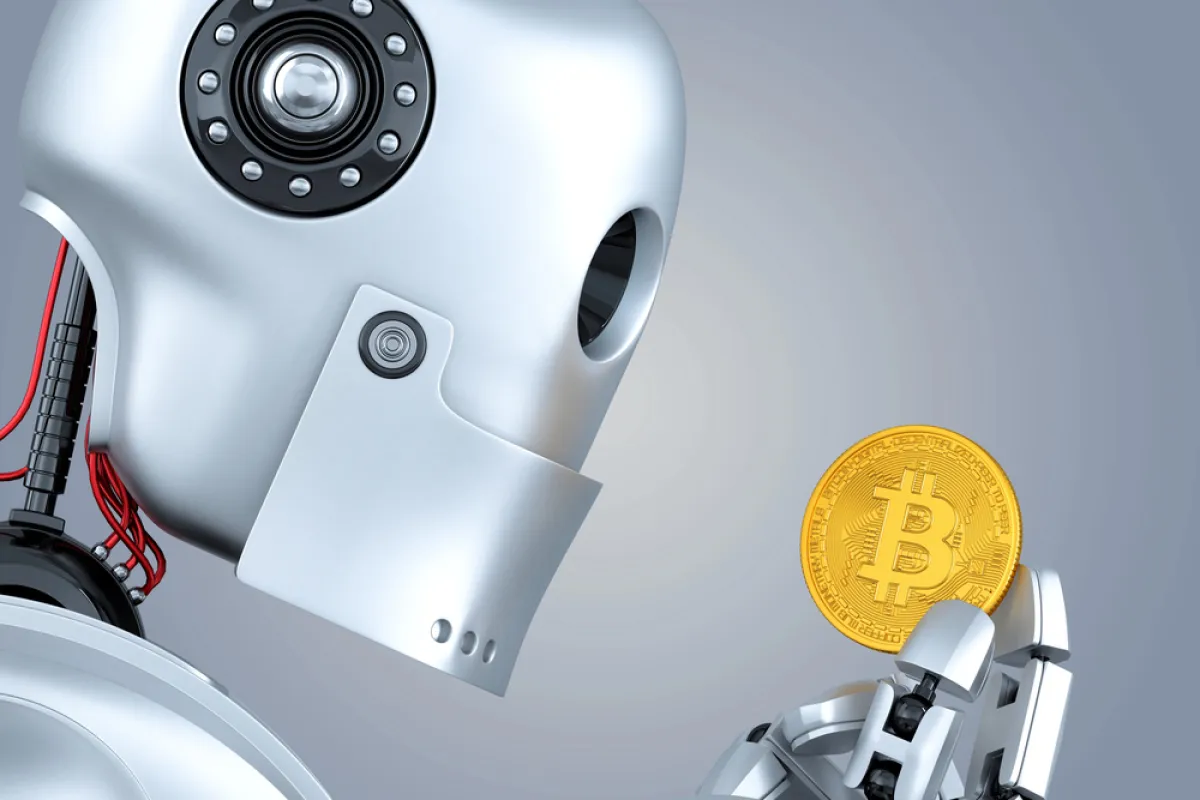

Brian Armstrong, chief executive officer at cryptocurrency exchange giant Coinbase, has rejected the idea that investors should pivot to artificial intelligence from crypto.
In a social media post on Elon Musk's X network, Armstrong stressed that it is not a zero-sum game. "I used to hear versions of this, and it's the wrong way to think about the world. It's zero-sum, scarcity thinking," he said.
Crypto, which is a general-purpose technology, does not actually compete with the next big thing, Armstrong says.
In fact, according to the crypto billionaire, AI actually makes crypto more important, given that AI agents will actually need their own financial infrastructure. "AI agents will need their own financial infrastructure and will eventually transact far more per day than all humans combined," Armstrong stated.

Coinbase is already in the process of building the aforementioned infrastructure that those AI agents will use. "We pioneered this with the x402 protocol, Base, and USDC, which now power the vast majority of all agentic payments," Armstrong noted.
Taking attention away from crypto
Many analysts believe AI is currently stealing capital, talent, and public attention from crypto.
According to the OECD, AI companies attracted 61% of global venture capital investment in 2025, totaling nearly $259 billion.
In fact, a whopping 41% of all US venture funding went to AI startups, with companies of the likes of OpenAI and Anthropic securing massive funding rounds.

Galaxy Research, the research arm of Mike Novogratz's crypto firm, has noted that fundraising for crypto-focused VC funds has become much harder due to investors throwing money at AI.
Crypto venture deal counts have fallen to their lowest level in roughly five years, recent data shows.
Still, it is entirely possible that AI is currently drawing talent and investment away from crypto while also creating new promising cases for blockchain technology.
A recent survey by researchers from multiple universities argues that meaningful AI–crypto integration is still in its early stages.
 Dan Burgin
 U.Today Editorial Team
