

Disclaimer: The opinions expressed by our writers are their own and do not represent the views of U.Today. The financial and market information provided on U.Today is intended for informational purposes only. U.Today is not liable for any financial losses incurred while trading cryptocurrencies. Conduct your own research by contacting financial experts before making any investment decisions. We believe that all content is accurate as of the date of publication, but certain offers mentioned may no longer be available.

Bitcoin's rise to $79,214 as per Binance not only marked the highest price level since February, but also triggered a cascade of short position liquidations. According to CoinGlass, the resulting liquidation imbalance became one of the most aggressive this month at 4,362%.
The move began amid declining oil prices, the S&P 500 holding at all-time highs, and a six-day streak of inflows into the U.S. BTC ETFs totaling $1.54 billion. However, the main "fuel" behind the push above $79,000 was not only buying pressure, but also the forced closure of bearish positions.
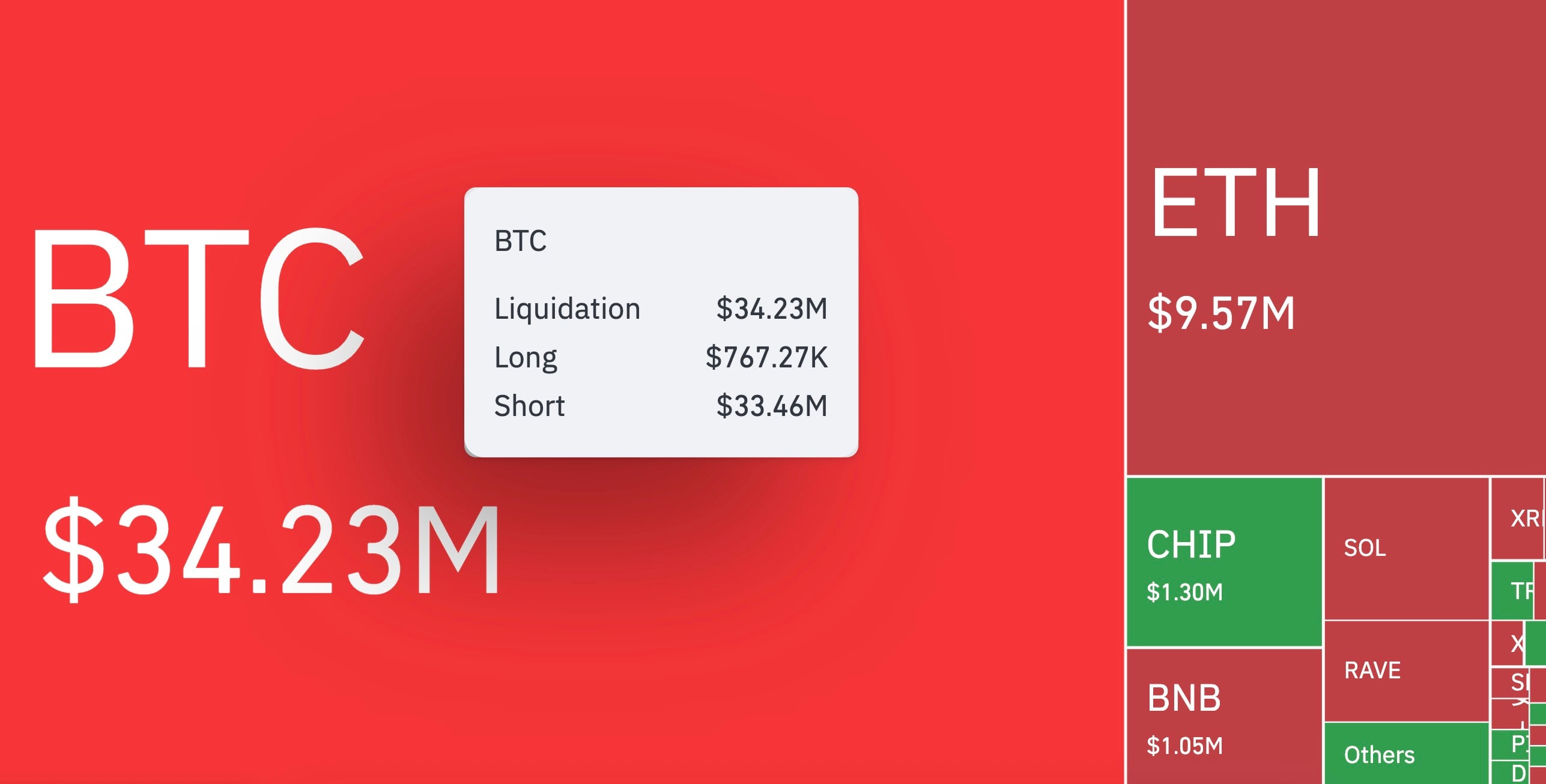
Decoding the 4,362% imbalance behind BTC's $79,000 move
CoinGlass data reveals a critical divergence: out of $34.23 million in total Bitcoin liquidations within an hour, a massive $33.46 million came from short positions. This means that 97.7% of all losses were borne by bears betting against the rally. Overall, in the past 24 hours, total market liquidations reached $394.32 million, with the overwhelming majority again hitting short positions.
The final element in this setup is the abnormally negative funding rate, which persists despite the rally. According to CryptoQuant data, with Bitcoin at $78,400, funding dropped to -0.02% - meaning bears are aggressively pressing the market, paying a 0.02% premium every eight hours, or about 22% annually, just to maintain short exposure.
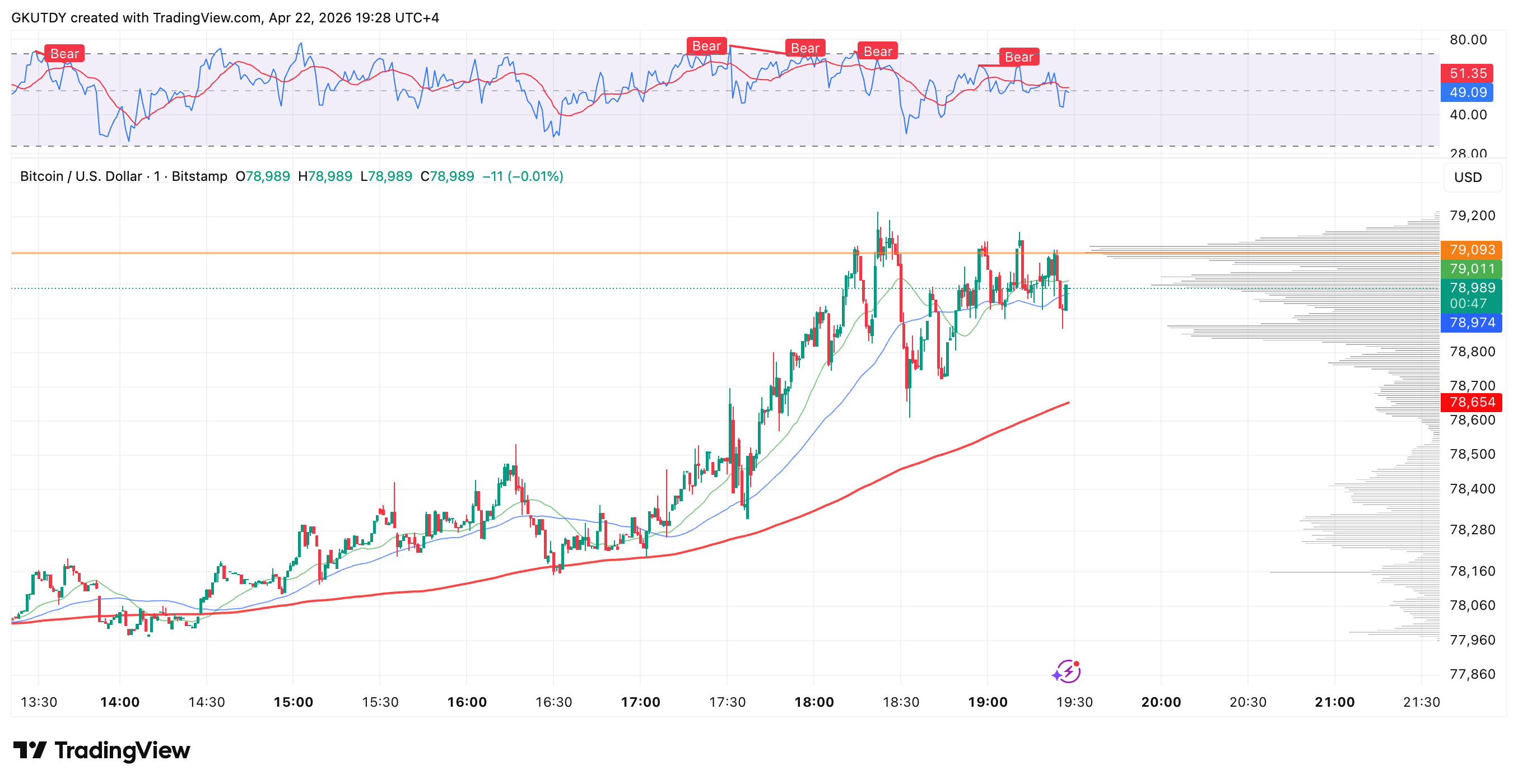

At the moment, BTC is consolidating around $79,000. As previously reported by U.Today, on the weekly timeframe, Bitcoin has opened a path toward $96,600 after breaking above the Bollinger Bands midline. Whether bears have enough resilience to stay in the market longer than price moves against them remains the key intrigue.
 U.Today Editorial Team
 Dan Burgin
