

Disclaimer: The opinions expressed by our writers are their own and do not represent the views of U.Today. The financial and market information provided on U.Today is intended for informational purposes only. U.Today is not liable for any financial losses incurred while trading cryptocurrencies. Conduct your own research by contacting financial experts before making any investment decisions. We believe that all content is accurate as of the date of publication, but certain offers mentioned may no longer be available.

Shibarium recently saw a dramatic increase in the number of transactions, with daily activity rising drastically and momentarily indicating a resurgence of ecosystem momentum. On the surface, this kind of growth is easily interpreted as increasing adoption. A healthier network, more users and increased demand are typically implied by more transactions.
The issue is that those transactions’ underlying makeup presents a different outlook. A closer examination of the transaction feed reveals that a significant amount of activity is made up of zero-native-value operations.
Not what it seems
Every transaction that was visible in the observed sample had the label "Value 0 BONE," and most of them were classified as contract calls rather than direct wallet transfers. Methods like commit and transmit, along with recurrent destinations like CommitStore and OffRamp, were linked to the most frequent interactions.
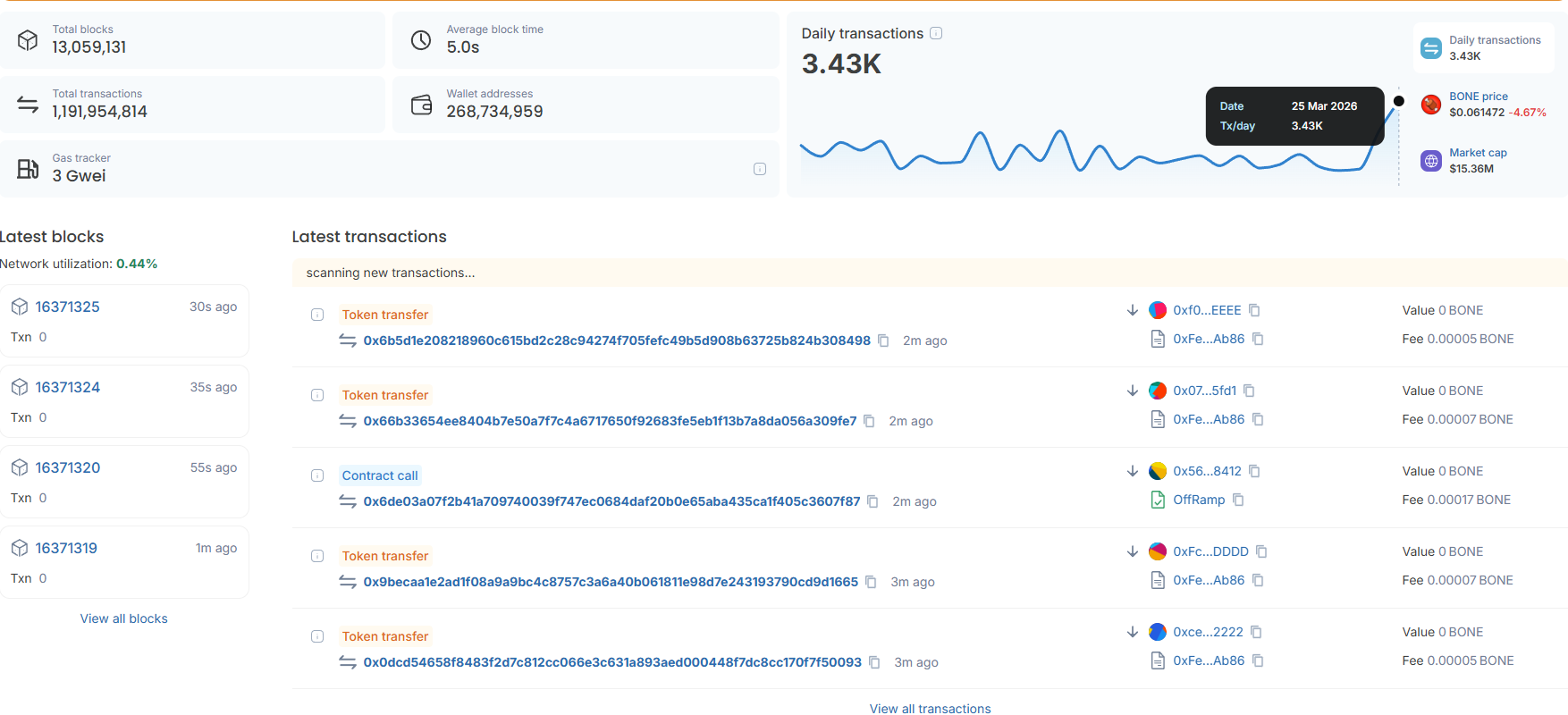
These transactions are not pointless, but they are also not typical user behavior. A zero native value simply indicates that the primary transaction field did not contain any BONE tokens. Rather than being economic transfers, these operations are interacting with smart contracts, and in this particular instance, they seem consistent with infrastructure-level processes.
Cross-chain communication systems, especially those that resemble Chainlink’s CCIP architecture, are linked to CommitStore and OffRamp.

Transactions like commit and transmit are a part of the batching, message delivery and validation processes between chains in that framework. Instead of individual users transferring money, they are carried out by automated systems or decentralized oracle networks.
Why it looks inflated
This distinction is important because it alters the way that transaction volume should be understood. Automated contract calls have the potential to greatly inflate activity metrics without accurately reflecting user demand. Although it gives the impression of a busy network, this activity might not result in higher liquidity, more users or higher economic throughput.
 Dan Burgin
 U.Today Editorial Team
