
Disclaimer: The opinions expressed by our writers are their own and do not represent the views of U.Today. The financial and market information provided on U.Today is intended for informational purposes only. U.Today is not liable for any financial losses incurred while trading cryptocurrencies. Conduct your own research by contacting financial experts before making any investment decisions. We believe that all content is accurate as of the date of publication, but certain offers mentioned may no longer be available.

Shiba Inu is once again approaching a critical supply zone, and this time, the on-chain signals are leaning bearish.
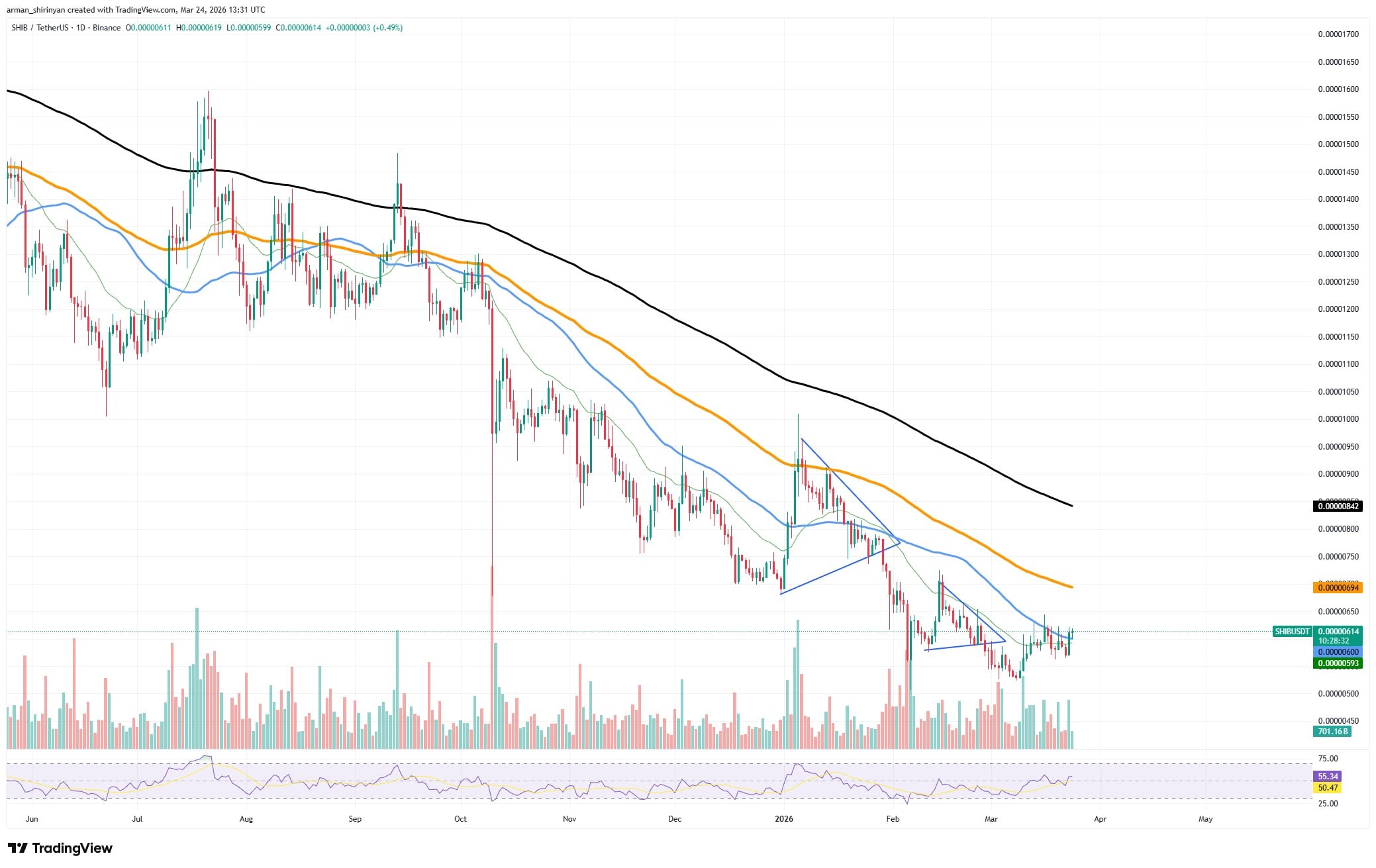
From a price perspective, SHIB is still trapped in a broader downtrend. The asset continues to trade below its key moving averages, with the 50 EMA acting as immediate resistance and the 100/200 EMAs far above, reinforcing the long-term bearish structure.
While recent price action shows a slight attempt to stabilize, forming short-term consolidation and minor higher lows, there is no confirmed trend reversal in place. The more concerning development is happening off-chart.
Exchange reserves have climbed back toward the 81 trillion SHIB level, effectively returning to where they were before the last major price drop. This increase is being driven by a fresh influx of tokens — approximately 181 billion SHIB moved onto exchanges in a short time frame. That kind of movement is rarely neutral.
When tokens flow into exchanges, they typically signal intent to sell or at least prepare for liquidity events. It increases available supply on the market, which can suppress price or trigger downward pressure if demand does not match it. In SHIB’s case, this comes at a particularly fragile moment, where the price is already struggling to reclaim key resistance levels.
Timing matters
Instead of seeing accumulation during consolidation, the market is seeing rising exchange balances. That creates a structural imbalance: more potential sellers entering the market while the price is still below resistance. Historically, this combination tends to resolve to the downside unless there is a strong external catalyst to absorb the supply.

From a technical standpoint, SHIB is also failing to show decisive strength. The repeated inability to break and hold above the 50 EMA suggests that bullish momentum is still weak. Without that reclamation, any short-term bounce remains corrective rather than impulsive.
Investors should be cautious
If exchange reserves continue rising and SHIB fails to reclaim its short-term resistance, the probability of another leg down increases significantly.
On the flipside, the only way to invalidate this bearish setup is through strong demand and a clear breakout above resistance, supported by volume that can absorb the incoming supply.
 U.Today Editorial Team
 Dan Burgin
